

The technique entered Japan from China (Tang-dynasty 唐 + 揚 = Tang-style frying) but the modern dish dates to 1920s–30s industrial-canteen cooking. The decisive shift came in postwar Oita Prefecture (Kyushu): in 1960s Nakatsu and Usa cities, broiler chicken farms drove a local boom in shop-counter karaage, defining the marinade-heavy, soy-forward Kyushu style that became the national default.
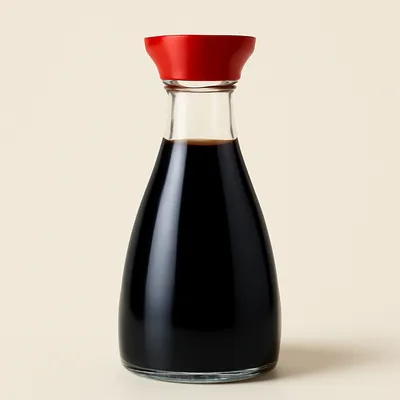
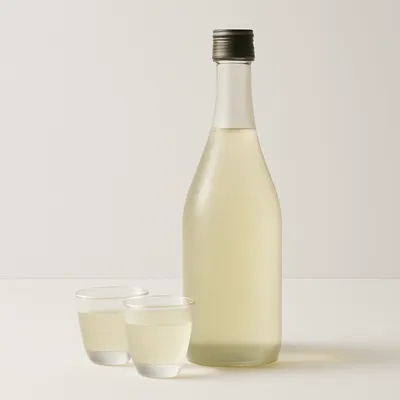
Oita prefecture's Nakatsu and Usa cities both claim the modern recipe — chicken thigh marinated in soy, sake, ginger, garlic, dredged in potato starch, double-fried at 160°C then 180°C for the shatter.
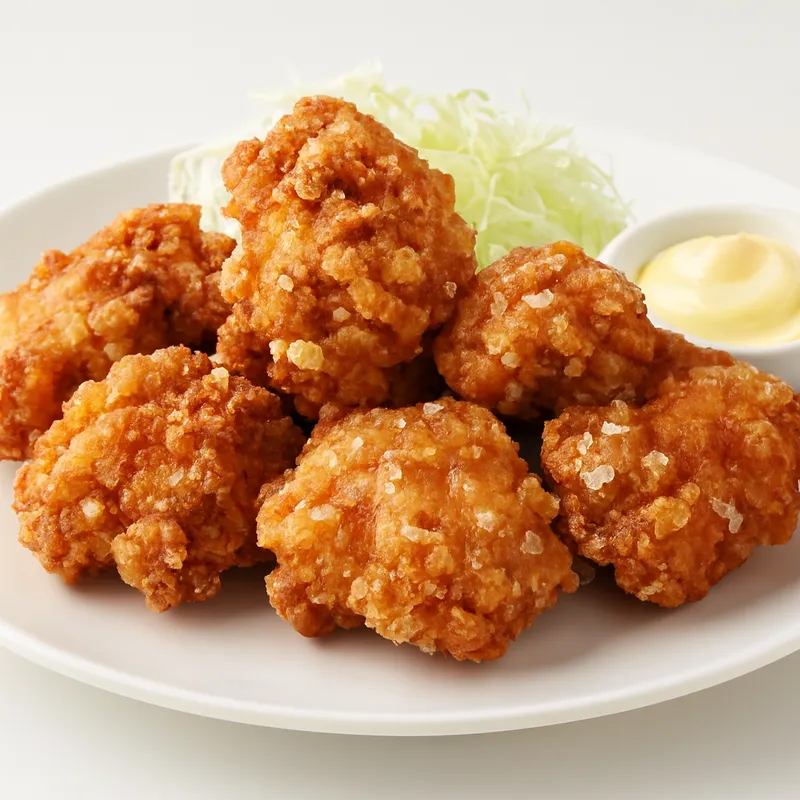
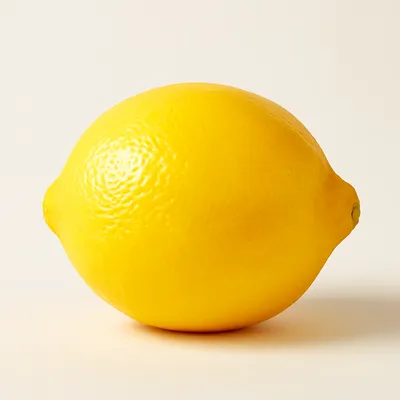
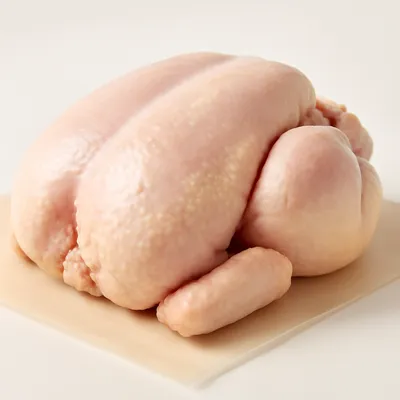
Bite-size chunks of dark-meat chicken, marinated in soy, ginger, garlic, sake, then tossed in potato starch and fried. The shell is shatter-thin and pale gold, not dark — Japanese frying runs cooler than American. Squeeze lemon over, dip in Kewpie mayo if you like. Inside, the meat stays juicy from the marinade. Cold karaage is what bento boxes were made for.
Potato starch (katakuriko), not flour, is what makes karaage karaage. Starch granules form a glassy lattice that crackles instead of softening; flour goes leathery. Two-stage frying — 160°C to cook through, brief rest, then 180°C for color — is standard at counter shops; it gives the shell time to dry between dunks. Single-fry karaage either burns outside or weeps inside.
Variations
Nakatsu style (Oita) is garlic-heavy and runs no batter; Usa style adds heavier ginger; Hokkaido zangi is wetter-marinated and bigger-cut; Nagoya tebasaki is the spicy fried wing variant.
On the Palate
Where Karaage sits in the Japanese flavor cloud
Coat in potato starch, not flour, and double-fry (through at ~160°C, rest, then crisp at ~180°C) — that glassy starch shell is what makes karaage crackle instead of going soft.
Ingredients




How it's made
5 steps · 30 min active + 30 min waiting
- 15 min
In a bowl, combine soy sauce, sake, grated ginger, and minced garlic. Add the chicken pieces and massage the marinade into the meat. Let it marinate for at least 30 minutes to infuse the flavors.
- 210 min
After marinating, pat the chicken pieces dry with paper towels. Coat each piece thoroughly in a mixture of potato starch, ensuring an even layer for a crisp finish.
Watch outThe surface should feel dry to the touch before the starch goes on; any wet spot will sog the crust there.
- 310 min
Heat oil in a deep pan to 170°C (340°F). Fry the chicken pieces in batches, ensuring they are not overcrowded. Cook until golden brown and crispy, turning occasionally.
Watch outFirst fry: bubbles are steady and lazy and the pieces are barely blond — pull them before they color, they finish on the second dip.
- 42 min
Remove the chicken from the oil and drain on paper towels to remove excess oil. Allow to rest for a few minutes to retain crispness.
Watch outA short rest lets steam escape so the second fry can crisp; skip it and the shell stays limp.
- 53 min
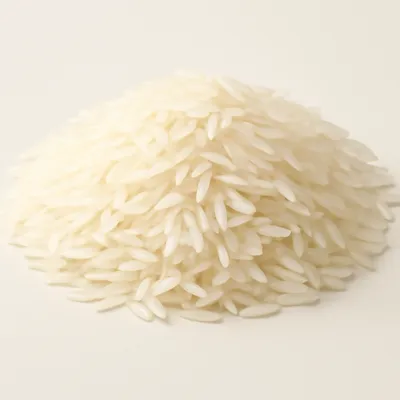
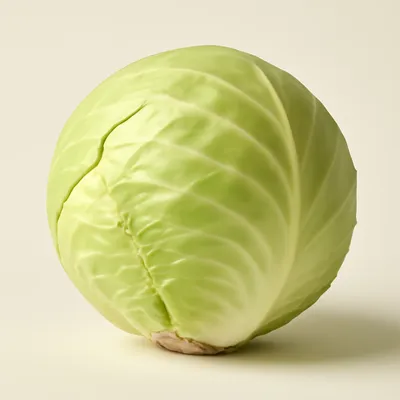
Serve the karaage hot with lemon wedges on the side for a zesty finish. Pair with rice and shredded cabbage if desired.
Archive tool suggestions — not reviewed
These legacy suggestions have not been evidence-reviewed and are not presented as required tools.