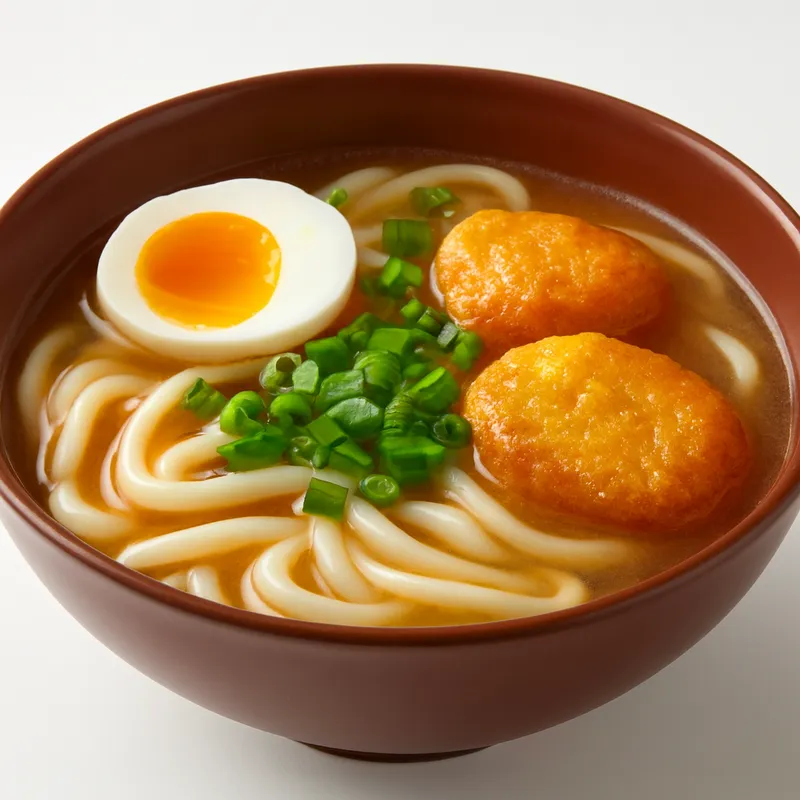
A rich, creamy pork bone broth with a soy sauce base, served with tender pork belly, bamboo shoots, and a perfectly soft-boiled egg.





Ramen in Kurume, Fukuoka began in 1937 at a yatai stall called Nankin Senryō, where the broth was originally a clear pork-bone soup seasoned with soy. The opaque, emulsified white tonkotsu broth came later — reportedly by accident around 1947 at a different Kurume stall, Sankyū, when the cook over-boiled the pot and found the cloudy result delicious. Shoyu tare was layered on later as the style spread through Kyushu. Hakata (central Fukuoka) refined the thin straight noodle and the kaedama (noodle refill) custom in the postwar years.
Tonkotsu was an accident — Kurume's Nankin Senryō yatai stall, 1937, over-boiled the bone pot. The white comes from violent boil emulsifying fat and collagen, not long simmer; a gentle simmer leaves you with clear Chinese bai tang.
An opaque, milk-white pork broth darkened a shade by shoyu tare at the bottom of the bowl. Straight, firm Hakata-style noodles; chashu pork belly, menma, scallion, half a soft-boiled egg yolk just-runny. The broth coats the lip after a sip — that's the collagen. Slurp fast; the noodles go soft in two minutes.
The white color comes from violent boiling, not long simmering: 8–12 hours at a rolling boil emulsifies pork-bone fat and collagen into the water. A gentle simmer leaves a clear broth like Chinese bai tang — different beast. The shoyu tare is the seasoning; the broth itself is barely salted, which is why a spoonful straight from the pot tastes flat.
Variations
Hakata-style at Ichiran and Ippudo runs the thinnest straight noodle and codified the kaedama refill; Kurume's Daiho keeps the original heavier broth; Kumamoto adds black-garlic mayu oil; Onomichi-style flips to a chicken-and-niboshi shoyu base.
On the Palate
Where Tonkotsu Shoyu Ramen sits in the Japanese flavor cloud
Ingredients




How it's made
5 steps · 4 hours
- 139 min
Prepare pork bone broth by simmering bones for several hours until creamy.
Watch outKeep the bones at a hard rolling boil, not a gentle simmer — only violent boiling emulsifies the fat and collagen and turns the broth milky white; a quiet simmer stays clear.
- 239 min
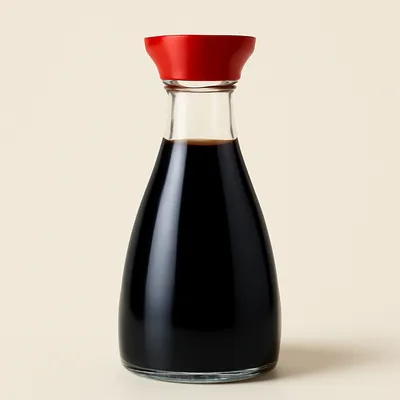
Add soy sauce to the broth for depth of flavor.
Watch outThe soy tare carries the salt — taste after adding it, not before; plain broth from the pot tastes flat on purpose.
- 3116 min
Cook wheat noodles until al dente, then drain.
Watch outPull the noodles at al dente and drain well — they keep softening in the hot broth, so a hair firm out of the water is right.
- 431 min
Slice pork belly and cook in the broth until tender.
- 515 min
Serve noodles in a bowl, add broth, and top with pork belly, bamboo shoots, green onions, garlic, sesame, and a soft-boiled egg.
Archive tool suggestions — not reviewed
These legacy suggestions have not been evidence-reviewed and are not presented as required tools.