The birthplace of tonkotsu ramen: Kurume, Fukuoka. The original 1937 version, created by Tokio Miyamoto at a yatai stall, with a thicker, richer, more intensely porky broth than the refined Hakata style. Noodles are thicker and straighter. The ancestor of all tonkotsu ramen worldwide.
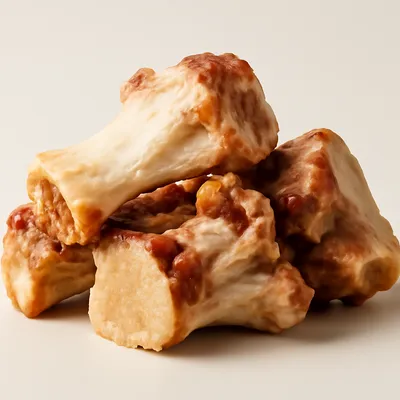





Kurume ramen, from Kurume in Fukuoka Prefecture, is the birthplace of tonkotsu ramen. Wikipedia documents its invention in 1937 by Tokio Miyamoto, a yatai street-food vendor. The milky-white broth, which defines all tonkotsu ramen, was refined by Katsumi Sugino, who accidentally overcooked the bones. Kurume's version is thicker, richer, and more intense than the Hakata refinement; the noodles are thicker and less firmly cooked.
A bowl of Kurume ramen is thick, cloudy, and intensely porky — the broth darker and heavier than Hakata's, with a strong marrow-and-bone character. The noodles, thicker and straighter, hold the heavy broth in their texture. This is tonkotsu at its most primal — before refinement, before standardization.
Kurume ramen rests on the prolonged hard boil of pork bones. Bones are boiled vigorously — not simmered — for up to ten hours, emulsifying every drop of fat, marrow mineral, and dissolved gelatin into the broth. The vigorous boil, which would cloud any stock, is the defining technique: the violent agitation breaks the fat into sub-micron droplets that remain permanently suspended, producing the characteristic opaque white. This is harder and longer than Hakata's version, giving a thicker, more viscous broth.
Variations
Hakata (lighter, thinner noodles) is the refinement; Kurume is the original. The prolonged hard-boil pork-bone broth is the constant.
On the Palate
Where Kurume Ramen sits in the Japanese flavor cloud
Ingredients
Serves 4
How it's made
6 steps · 30 min
- 15 min
Cover pork bones with water; bring to a hard rolling boil.
- 2600 min
Boil vigorously for 8-10 hours, replenishing water.
Watch outKeep it at a hard rolling boil for 8-10 hours, not a gentle simmer — the violent agitation is exactly what breaks the fat into the milky, opaque broth; a calm simmer stays thin and clear.
- 35 min
The broth should be thick, cloudy, and intensely pork-flavored.
- 45 min
Strain; season with soy sauce and salt.
- 53 min
Cook thick straight noodles.
- 63 min
Ladle broth; add noodles, chashu, scallion, and egg.
Archive tool suggestions — not reviewed
These legacy suggestions have not been evidence-reviewed and are not presented as required tools.



