A dense, fragrant glutinous rice cake from Shishi in Quanzhou, made from ground rice slurry steamed with white sugar, winter melon strips, kumquat peel, and spice. Silky, yielding, and floral-sweet, it has been produced in Shishi's villages since the Ming dynasty and carried to Southeast Asia by Hokkien migrants as a taste of home.



Sweet cake production near Shishi is said to date to the Wanli reign of the Ming dynasty (1573–1620), when villages prepared steamed glutinous rice confections as New Year ritual offerings — a folk tradition held to span more than four hundred years. The tradition became commercialized around 1855 (Qing Xianfeng 5) when Wang Gonghou opened the Yixing Sweet Cake Workshop, establishing a production method of more than twenty steps still followed today. During the Guangxu reign (1875–1908), Shishi migrants carried the cakes to the Philippines, Indonesia, Malaysia, and Singapore, where they became a staple of Hokkien New Year celebrations. The saying 'steam cakes for a prosperous New Year' expresses the confection's symbolic role. It is now listed as a municipal-level intangible cultural heritage of Quanzhou city.
The first impression is cool, silky, and yielding — the cake collapses gently under the teeth without sticking. Winter melon strips contribute a translucent, lightly candied chew. Kumquat peel and spice release fragrance in layers, finishing in a clean, mild sweetness with a faint citrus-bitter lift.
Glutinous rice consists of nearly pure amylopectin (above 98 percent), which gelatinizes fully at 75–85 °C and on cooling forms a tightly cross-linked gel with high cohesion — the source of the cake's characteristic elasticity and non-stickiness relative to short-grain rice. Soaking the rice for 48–72 hours pre-hydrates the starch granules, reducing steam time and ensuring uniform texture throughout. Winter melon strips, candied before incorporation, retain structural integrity because their pectin-rich cell walls are stabilized by sugar. Kumquat peel releases limonene and other citrus terpenes during steaming; they diffuse throughout the cake and mask raw starch off-notes while contributing the characteristic citrus fragrance.
Variations
Fresh sweet cake is eaten at room temperature but also popular pan-fried in a thin film of oil until the exterior caramelizes and crisps. A deep-fried version coated in egg white appears at temple fairs. Savory salt cake variants in some Shishi households incorporate dried shrimp and scallion, served alongside congee as a breakfast side.
On the Palate
Where Shishi Sweet Glutinous Rice Cake sits in the Chinese flavor cloud
Ingredients
Serves 8
How it's made
8 steps · 40 min
- 12900 min
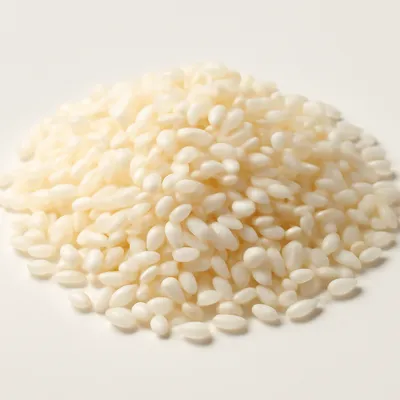
Soak 500 g glutinous rice in cold water for 48 hours (change water twice daily); drain and grind with just enough fresh water to produce a thick, creamy slurry.
- 210 min
Strain the slurry through damp muslin, pressing firmly to remove husks and fibre; the finished slurry should coat a spoon in a thin, opaque film.
Watch outJudge the slurry by how it hangs: it should coat the spoon in a thin opaque film — too watery and the cake steams up loose and won't hold its springy slice.
- 310 min
Soak 80 g dried winter melon strips in warm water for 10 minutes, then drain well; soak 40 g kumquat peel in warm water to reduce bitterness, squeeze and cut into fine pieces.
- 410 min
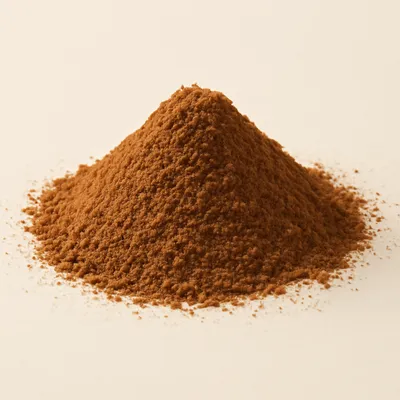
Stir 200 g white sugar into the strained slurry until fully dissolved; fold in winter melon strips, kumquat pieces, and a quarter teaspoon of five-spice powder until evenly distributed.
- 55 min
Line a round bamboo steamer basket with damp muslin; pour in the mixture to a depth of about 4 cm; smooth the surface gently.
- 670 min
Steam over vigorously boiling water for 60–70 minutes, replenishing boiling water every 20 minutes; the cake is done when a skewer inserted in the centre comes out clean and the surface feels firm and springy.
Watch outTest with a skewer in the centre — it comes out clean and the top springs back under a finger when it's set; pull it early and the middle stays wet and gummy.
- 7250 min
Remove from heat and cool at room temperature for at least 4 hours until the cake sets fully; unmould and slice into pieces about 1 cm thick.
- 810 min
Serve at room temperature, or pan-fry slices in a thin film of oil on medium heat until golden and lightly caramelized on both sides.
Archive tool suggestions — not reviewed
These legacy suggestions have not been evidence-reviewed and are not presented as required tools.