Suide County's unique fermented mung-bean jelly — grey-amber, bouncy, and denser than ordinary cold jelly thanks to an overnight wild fermentation that retains the dark sediment (黑芡) from the milling process. Served cold in strips with garlic paste, chili oil, vinegar, and braised pork head meat. A 2021 Yulin municipal intangible heritage.




Suide black jelly evolved from the mung-bean cold jelly (凉粉) common across northern Shaanxi, but with a distinctly local innovation: rather than discarding the dark sediment (黑芡) — residual pigment and starch from the mung-bean skins that settles after filtering the slurry — Suide makers retained it and allowed the combined starch to ferment overnight. The resulting gel is denser, more elastic, and carries a faint tartness absent in ordinary cold jelly. The craft was transmitted through family lineages; Liu Yawei, who learned from his father and grandfather since childhood, established a commercial workshop in 2015 and founded Yulin Yawei Food Co. in 2018, pioneering vacuum packaging and e-commerce distribution. The technique was listed as Yulin's sixth-batch intangible cultural heritage in 2021, with Liu recognised as official inheritor in 2022.
Cold, faintly tangy, and bouncy — firmness somewhere between silken tofu and a chilled rice cake. The flavour of the jelly itself is quietly neutral, which lets the garlic heat, chili oil warmth, and vinegar brightness stack clearly on top of each other. Braised pork head meat adds savoury richness and a soft, gelatinous contrast.
Large mung-bean starch has an unusually high amylose content (ca. 35%), providing a firm, resilient gel base. During the 7–8-hour wild fermentation, lactic acid bacteria produce lactic acid, lowering the slurry's acidity and partially disrupting starch granule crystallinity so that gelatinization upon cooking is more complete. As the cooked gel cools, the abundant amylose chains lose thermal energy and re-order into a semi-crystalline network (retrogradation), locking in the characteristic bouncy, sliceable texture — firmer than ordinary cold jelly. The 黑芡 pigments, primarily residual polyphenols (catechin-type) from the mung-bean hulls, contribute the grey-amber hue; trace polyphenol antioxidants slow lipid oxidation in the seasoning oils, keeping the dressed dish stable for several hours after service.
Variations
Plain green-bean cold jelly (凉粉) is the simpler sibling — no fermentation, lighter colour, less bounce. A winter hot version simmers black jelly strips in pork bone broth with chili flakes and scallion. Some vendors substitute braised lamb offal (卤羊杂) for pork head meat as topping, leaning into the northern Shaanxi pastoral tradition.
On the Palate
Where Suide Black Mung Bean Jelly sits in the Chinese flavor cloud
Ingredients
Serves 4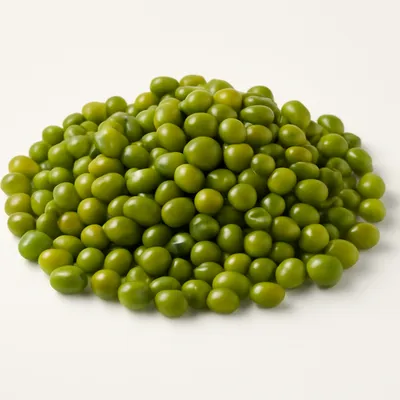
How it's made
7 steps · 25 min
- 15 min
Rinse large mung beans thoroughly; soak in cold water for 9–10 hours (overnight) until fully swollen and the skins begin to loosen.
- 220 min
Drain and grind the soaked beans in batches on a stone mill or blender with added water; filter through fine cloth, collecting both the pale milky liquid and the dark sediment (黑芡) that settles at the bottom — combine both in a bucket.
- 35 min
Leave the combined slurry to ferment at room temperature for 7–8 hours; skim off the foam that forms on the surface, keeping the fermented base below.
Watch outFerment 7-8 hours and skim the surface foam — the mild sourness comes from this; skip it and the jelly tastes flat, but let it go too long and it turns sharp.
- 415 min
Bring a large pot of water to a vigorous boil; slowly pour in the fermented slurry in a thin stream while stirring constantly with a long wooden paddle in a clockwise direction to prevent scorching.
Watch outStream the fermented slurry into boiling water while stirring one direction nonstop — dump it in and it clumps and scorches on the bottom.
- 530 min
Reduce to low heat; continue stirring for about 30 minutes until the mixture becomes a translucent, thick gel; stir in a small pinch of alum (白矾, about 1 g per kg of product) and mix thoroughly.
- 65 min
Pour the cooked gel into flat-bottomed basins; leave undisturbed at room temperature for 2–3 hours until fully set; the surface should appear grey-amber and spring back when pressed.
- 710 min
Unmold; cut into thick strips or slabs; dress with garlic paste, chili oil, and rice vinegar; top with braised pork head meat shreds; serve cold immediately.
Archive tool suggestions — not reviewed
These legacy suggestions have not been evidence-reviewed and are not presented as required tools.



