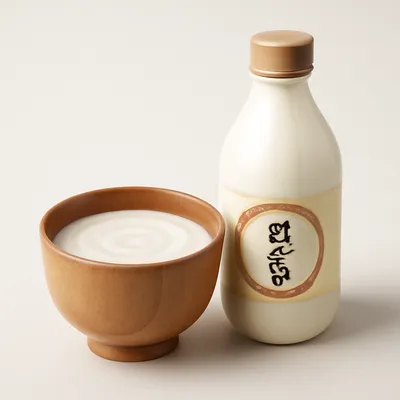
Hongeo-samhap is the defining ceremonial plate of southwestern Jeolla, built around three elements eaten together in one bite: a slice of fermented (ammoniated) skate, a slice of boiled pork belly, and a fold of aged kimchi. The skate is the centrepiece — ray flesh aged until it turns pungent and alkaline — while the fatty pork and sour, ripe kimchi blunt and frame its sharpness. It is the signature dish of the Mokpo and Naju (Yeongsanpo) area, served chilled with no cooking required at the table, and is almost always taken with a bowl of makgeolli, a pairing the region calls hong-tak.


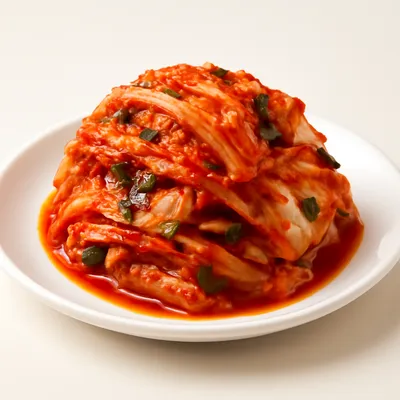


Fermented skate is documented in Jeong Yak-jeon's marine treatise Jasaneobo, written during his exile on Heuksando in 1814, which records that people of the Naju region ate aged skate and that its broth was prized for clearing the effects of drink. The fermentation itself is widely traced to the old Yeongsanpo river port: skate caught off Heuksando was shipped up the long Yeongsan River, and by the time the boats reached the inland market the fish had naturally ripened, so the inland trade grew up around the fermented form. The three-part samhap pairing of skate, boiled pork and aged kimchi is a later table custom — the rich meat and sour kimchi were added to temper the skate's pungency — though the exact date it became fixed is unrecorded.
The skate hits first: a sharp ammonia rush up the nose, then flesh that is soft yet faintly cartilaginous, almost chewy at the wing edges. The boiled pork belly arrives mild, warm and fatty, and the aged kimchi cuts through both with sour crunch — the three textures and the ammonia, fat and acid resolving into one balanced mouthful. A swallow of cool, slightly fizzy makgeolli closes it and rinses the burn. First-timers feel the alkaline sting in the sinuses; regulars chase exactly that.
Skate is a cartilaginous fish that regulates its body salts by storing large amounts of urea and trimethylamine oxide (TMAO) in its flesh. As the fish ages, bacteria such as Micrococcus break the urea down with the enzyme urease into ammonia (NH3); the TMAO becomes trimethylamine. The accumulating ammonia drives the flesh strongly alkaline — above pH 9 — which suppresses the ordinary spoilage and food-poisoning bacteria, so the skate ripens into a controlled fermentation rather than rotting. Traditionally the fish was packed in straw and held cool; the ammonia is what stings the nose, and the boiled pork and kimchi are deliberately chosen to buffer it.
Variations
The same fish appears alone as samples of plain hoe (raw fermented skate slices) or in hongeo-jjim (steamed), and the broth is cooked into hongeo-aetang, a soup with the liver. Pungency is graded by how long and how cold the fish was aged — Heuksando-caught fish ripened hard is the strongest, milder versions use shorter ageing. The pork-and-kimchi samhap format is echoed across the region in other 'three-harmony' plates built on a fermented or cured centrepiece.
On the Palate
Where Hongeo-samhap sits in the Korean flavor cloud
Ingredients
Serves 4

How it's made
7 steps · 30 min
- 12 min
Obtain skate that has been fermented (ammoniated) by a specialist; the home cook buys it already aged rather than ripening it.
- 28 min
Slice the fermented skate across the grain into bite-size pieces, including some of the soft wing cartilage.
- 355 min
Simmer a block of pork belly in water with aromatics until fully tender, about 50-60 minutes, then cool slightly and slice thin.
Watch outSimmer the pork belly until fully tender, about 50–60 minutes — soft, thin-sliced pork is the mellow layer that balances the ammonia punch of the skate.
- 45 min
Set out well-aged, sour napa kimchi, cutting it into folds or strips sized to wrap a bite.
- 53 min
Arrange skate, pork and kimchi together on a platter so each can be taken in one stack.
- 62 min
To eat, layer a slice of skate, a slice of pork and a fold of kimchi, dip lightly in salted-shrimp or chili-soy sauce, and eat in a single bite.
Watch outEat each stack of skate, pork and kimchi in one bite — the three together (samhap) is the whole point, taming the skate's sharp ammonia into balance.
- 71 min
Pour cool makgeolli alongside and drink between bites as hong-tak.
Archive tool suggestions — not reviewed
These legacy suggestions have not been evidence-reviewed and are not presented as required tools.