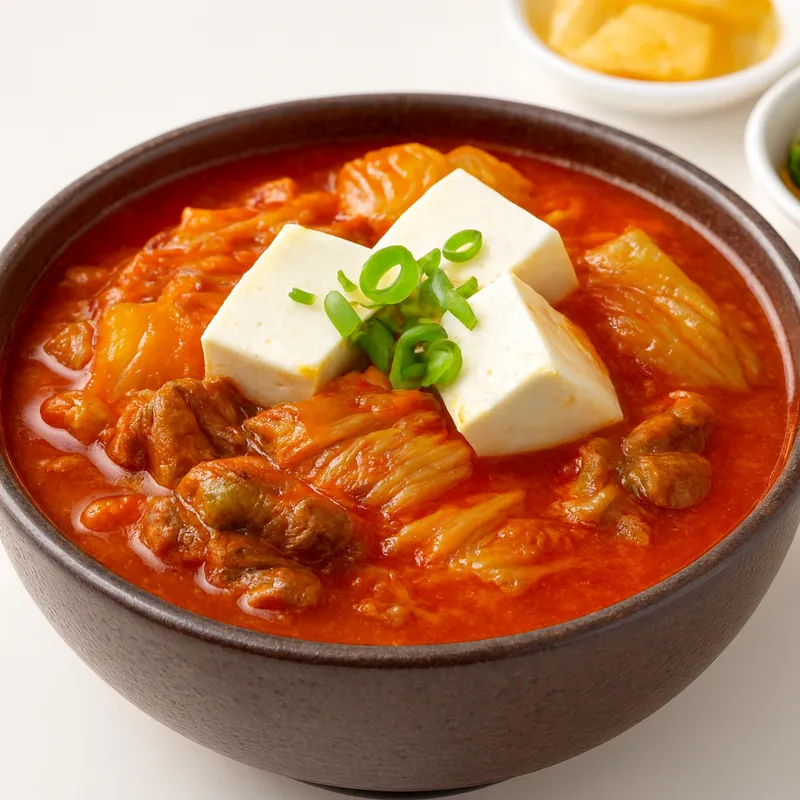
Kongnamul-gukbap is a peppery soybean-sprout rice soup that Jeonju, in Jeolla, treats as its hometown dish and national reference. Rice is served in a clear, garlicky anchovy-and-sprout broth seething with soybean sprouts, scallion and chili, and is eaten above all as a hangover and morning dish. In the old Nambu Market style the rice is not boiled hard in the pot but warmed by toryeom — hot broth ladled over and poured off the bowl several times — and a small dish of suran, an egg poached softly in broth, is set on the side to eat between spoonfuls. Toasted gim, salted shrimp and chili paste are the usual accompaniments.




Soybean sprouts have long been a Jeolla staple, and Jeonju — a city famed for its bean sprouts and its cooking — is regarded as the national home of soybean-sprout rice soup. The dish is documented as a Jeonju specialty in references on regional Korean food, where two service styles are distinguished: the Nambu Market style, in which the rice is warmed by toryeom and served barely simmering with a side of suran, and a boiled style cooked together in an earthenware pot. Its reputation as a hangover cure is long-standing and is the reason it is eaten in the morning, often with the lightly fermented rice drink moju; the exact date the dish took shape is unrecorded.
Spoon in and the broth is hot, clean and savoury, edged with garlic and a chili-and-scallion warmth rather than a deep burn. The soybean sprouts stay crisp and snap between the teeth, the rice grains sit loose and soft in the liquid, and toasted gim crumbled in adds a salty, sea-like fragrance. The suran on the side is soft enough to slip whole into the mouth, its yolk smoothing the heat. It eats light and bracing — the kind of bowl meant to clear a heavy head.
Soybean sprouts are the point. As the soybean germinates it synthesises compounds absent in the dormant bean, among them the amino acid asparagine, which is concentrated in the fine root tails — the part Korean cooks are careful not to trim away. Asparagine is the reason the soup is reputed to ease a hangover: it is said to aid the body in clearing acetaldehyde, the toxic by-product of alcohol. The broth itself is built clean and fast from dried anchovy and the sprouts, kept clear rather than emulsified; in the Nambu Market method the rice is heated only by repeated toryeom so the grains stay separate and the sprouts keep their snap.
Variations
The two great styles are the Nambu Market version — barely simmered, toryeom-warmed, suran on the side — and the boiled style cooked bubbling in a stone pot, sometimes with the egg cracked straight in. Cooks adjust the chili and add salted shrimp for seasoning instead of salt. Beyond the rice soup, the same sprouts appear as kongnamul-guk (the plain soup without rice) and as the seasoned side kongnamul-muchim.
On the Palate
Where Kongnamul-gukbap sits in the Korean flavor cloud
Ingredients
Serves 2


How it's made
7 steps · 20 min
- 115 min
Simmer dried anchovies (and optional kelp) in water for about 15 minutes, then strain to a clear stock.
- 22 min
Rinse soybean sprouts, leaving the fine root tails on, and add to the stock with a lid on so they do not develop a raw, beany smell.
Watch outAdd the sprouts with the lid on and leave it on — lifting it mid-cook lets in air that turns them raw and beany-smelling.
- 37 min
Boil the sprouts about 5-7 minutes until crisp-tender, seasoning the broth with salted shrimp, minced garlic and chili.
Watch outBoil the sprouts just 5-7 minutes to crisp-tender — the fine root tails carry the asparagine, so don't trim them off.
- 44 min
Separately poach an egg gently in a little broth to make soft suran, and set it in a small bowl.
- 53 min
Place cooked rice in a serving bowl; in the Nambu Market style, ladle hot broth over and pour it off several times (toryeom) to warm the rice through.
- 61 min
Fill the bowl with the sprout broth and sprinkle with scallion, chili and crumbled toasted gim.
- 71 min
Serve at once with the suran and extra chili paste, eating the egg between spoonfuls.
Archive tool suggestions — not reviewed
These legacy suggestions have not been evidence-reviewed and are not presented as required tools.