Tianpei is a traditional fermented-grain summer cooler from Gansu and the Hehuang valley of the Gansu-Qinghai borderland. Whole grains — naked oats or wheat in Gansu, highland barley on the Qinghai plateau — are hulled, boiled until just done, cooled, then mixed with a sweet fermentation starter and left warm for a few days until the starch turns sweet and faintly winey. The result is chewy grains afloat in a sweet, lightly boozy juice, eaten chilled by the bowl on a hot day and sold from carts on the streets of Lanzhou. It is a close cousin of the rice-based laozao, but made with whole highland grains that keep their bite.

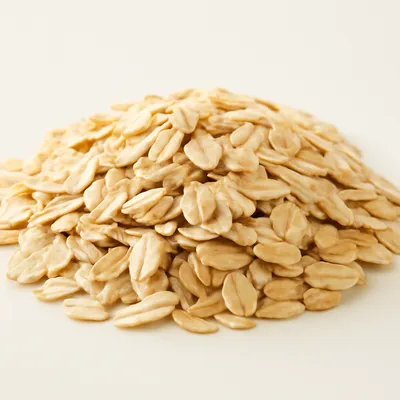


Tianpei belongs to the northwest's old tradition of grain-fermenting, shared across Lanzhou, Linxia and Tianshui in Gansu and Xining in Qinghai, where it is praised as a dish with an ancient, rustic feel. Its character follows the land: the plateau grows cold-hardy highland barley, the river valleys grow oats and wheat, and all of them can be coaxed sweet by a starter culture. The name itself records the method — pei (醅) is an old word for unfiltered, unstrained wine-mash, used by Tang poets like Du Fu and Bai Juyi, so tianpei means literally the sweet mash before it is strained. In Lanzhou the season opens after Qingming and peaks around the Dragon Boat Festival, when rural households still make their own; a well-known folk rhyme runs, sweet tianpei, sweet, old folk and children swallow at the sight, one bowl two bowls whets the appetite, three bowls four and it stands in for a meal.
Each spoonful is plump whole grains suspended in a cloudy, pale juice. The grains stay firm and chewy — this is the point of using barley or oats over soft glutinous rice — with a clean sweetness up front and a gentle winey warmth behind it, the faint tingle of a low alcohol that never tips into sour. Served cold it is cooling and bracing; the juice drinks almost like a sweet, mild grain wine while the kernels give something to chew. A bowl is meant to refresh in summer heat, equally at home as a between-meal sweet.
Tianpei is a two-stage ferment driven by a sweet starter. The grain is boiled to about eight-tenths done and cooled to body temperature before the starter goes in — too hot and it kills the cultures, too cold and the ferment stalls. The starter carries molds (rhizopus and its kin) and yeasts: the molds saccharify the grain, breaking starch down into glucose for the sweetness, while the yeasts convert some of that glucose to alcohol for the faint wine note, and protein breaks down toward amino acids that round out the flavor. The mash is then held warm — traditionally on a heated kang or by the stove — for three to five days, exactly the warmth the cultures need; once a clean wine aroma rises, it is ready. The difference from rice laozao is the substrate: whole hulled barley or oats ferment slower and stay chewy where polished glutinous rice goes soft.
Variations
The grain shifts with the place: highland barley is the prized choice in Qinghai, while Gansu cooks often use naked oats or wheat, and the texture changes with each. How it is served also varies — eaten straight as a chewy sweet, or thinned with cold water and a little extra sugar into a cooling summer drink, sometimes over ice or with a few goji or pieces of fruit. The whole-grain ferment sets it apart from rice-based laozao and jiuniang; barley tianpei in particular keeps a firmer bite and a more pronounced wine aroma than soft rice versions.
On the Palate
Where Tianpei sits in the Chinese flavor cloud
Ingredients
Serves 6How it's made
8 steps · 30 min
- 120 min
Hull the highland barley (or naked oats / wheat) to remove the husk, then rinse it clean.
- 2720 min
Soak the grain in cold water overnight until fully swollen.
- 345 min
Boil the grain over high heat, then lower and simmer until about eight-tenths cooked, with the kernels tender but still whole.
- 440 min
Drain and spread the grain out to cool to lukewarm, around body temperature.
Watch outCool the grain to lukewarm, body temperature, before mixing in the starter — too hot kills the cultures, too cold and the ferment stalls.
- 515 min
Grind the sweet starter to a powder and mix it evenly through the cooled grain, adding a splash of cool boiled water to help distribute it.
- 610 min
Pack the grain into a clean jar, smooth the top, press a small well in the center, and seal.
- 75760 min
Keep the jar warm — by a stove or on a heated surface — at a steady warm temperature for 3 to 5 days until a clear wine aroma rises and sweet juice gathers.
Watch outKeep the jar steadily warm three to five days until a clear wine aroma rises and sweet juice gathers — that's the sign it's done.
- 830 min
Move the finished tianpei to the fridge to halt the ferment; serve cold by the bowl, thinned with cold water and sugar if you like.
Archive tool suggestions — not reviewed
These legacy suggestions have not been evidence-reviewed and are not presented as required tools.



