Tender Cantonese mochi balls—coconut milk-infused glutinous rice dough steamed soft, wrapped around sweet bean paste, and tumbled in shredded coconut—a bite of pure South China sweetness.




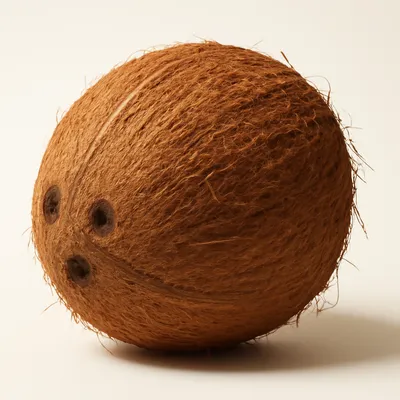
The ci (glutinous rice cake) tradition stretches back to pre-Qin antiquity: the Zhouli records glutinous rice-based ritual offerings, establishing the foundational technique of cooking glutinous rice into a pliable mass. Throughout the Jiangnan and Lingnan regions, stone-mortar pounding of steamed glutinous rice into ci was a central part of harvest and new year rituals. The modern Cantonese nuo mi ci—distinguished from northern ci pa by its use of glutinous rice flour and coconut milk rather than whole-grain pounding—reflects the Pearl River Delta's maritime trade history: coconut cultivation in Guangdong expanded significantly through Southeast Asian commerce from the 17th century, and shredded coconut became a standard ingredient in Hong Kong and Guangdong sweet shops by the early 20th century, fusing with the local glutinous rice pastry tradition.
A nuo mi ci is small enough to pop in the mouth in two bites. The shredded coconut on the outside is dry and slightly chewy; the skin beneath is silky-soft and elastic, stretching without tearing. Inside, the bean paste is dense and sweet. Coconut fragrance threads through every layer. Best warm from the steamer; the skin stays pliable even at room temperature, never hardening.
Glutinous rice flour (waxy rice starch) is composed of nearly 100% amylopectin—a highly branched starch polymer. When mixed with liquid and steamed, the granules fully gelatinize: amylopectin chains absorb water, swell, and their branch points form hydrogen-bond crosslinks creating a cohesive, extensible gel. Critically, amylopectin retrogrades (recrystallizes) far more slowly than amylose-rich regular rice starch, so the mochi stays soft and pliable at room temperature rather than hardening. Coconut milk contributes medium-chain fatty acids (principally lauric acid), which lubricate the starch network and add richness and smoothness. The shredded coconut coating absorbs surface moisture, preventing the balls from sticking together.
Variations
Sesame paste filling is equally traditional; black sesame gives a dramatic dark-centered cross-section. Taiwan's mochi (ma shu) and Japanese daifuku share the same amylopectin physics but use different fillings and presentation. Modern Cantonese dessert shops offer mango, matcha, and taro-flavored skins. Yunnan's 'er kuai' is a related steamed-and-pounded rice cake made from regular (non-glutinous) rice, eaten savory with chili and sesame sauce.
On the Palate
Where Glutinous Rice Mochi Ball sits in the Chinese flavor cloud
Ingredients
Serves 4
How it's made
7 steps · 20 min active + 20 min waiting
- 15 min
Whisk glutinous rice flour, cornstarch, sugar, coconut milk, and 80 ml water together in a bowl until completely smooth and lump-free; the batter should pour slowly like heavy cream.
Watch outWhisk until dead smooth — any lumps steam into hard grains that never soften in the finished mochi.
- 22 min
Pour the batter into a lightly oiled heatproof deep plate or small cake pan.
- 318 min
Steam over medium-high heat for 15–18 minutes, until the mixture is fully set—opaque white, firm to a light touch, and pulling away from the sides when the plate is tilted.
Watch outIt's done when the top turns opaque white, springs back to a light touch, and pulls from the sides — undercooked centre stays gluey and translucent.
- 45 min
Spread shredded coconut in an even layer on a tray. Let the steamed mochi cool until warm but handleable; oil your hands lightly.
- 53 min
Scoop walnut-sized portions; flatten each gently in your palm.
- 65 min
Place a rounded teaspoon of red bean paste (or sesame paste) in the center; gather the edges of the mochi skin around the filling and pinch tightly shut.
- 72 min
Roll the sealed ball in the shredded coconut until fully and evenly coated; serve at room temperature on the day of making.
Archive tool suggestions — not reviewed
These legacy suggestions have not been evidence-reviewed and are not presented as required tools.


