Tender white fish slices sheathed in crackling starch armour and glazed in a lustrous amber sweet-sour sauce — one of the Four Imperial Grasp-Fried dishes perfected by Qing court cook Wang Yushan and still served at Fangshan Restaurant in Beihai Park.




One of the Four Imperial Grasp-Fried dishes created by Qing court cook Wang Yushan, nicknamed Zhuachao Wang by Empress Dowager Cixi. Wang's father had been granted the honorary title Xiangshan Shan Wang for guarding the Fragrant Hills, and Wang entered the palace kitchens as a junior fire attendant. Tradition holds that when Cixi lost appetite one evening, Wang improvised a golden-crusted stir-fry; the eunuch serving it, pressed for a name, blurted that it had been made by the son of Xiangshan Shan Wang and called it grasp-fried. Cixi was delighted and elevated Wang to imperial chef, from which he developed the full suite of four dishes — also including pork loin, kidney, and prawn — celebrated as the finest of Qing court delicacies. The suite passed to the public through Fangshan Restaurant at Beihai Park, established in 1925 by former palace cooks.
A crunch gives way to a velvety white fish interior; then amber sweet-sour sauce floods the palate — restrained acidity, warm sweetness, and a clean saline finish.
Wet starch coats each fish slice in a thin amylose film. Immersed in 200–210°C oil, surface moisture flashes to steam and inflates the crust, while starch granules gelatinise and then dehydrate into a rigid glassy shell via Maillard browning. The fish interior, insulated by this shell, poaches in retained steam at roughly 80°C rather than frying, keeping it moist. The finishing sauce — soy sauce, vinegar, sugar, Shaoxing wine, wet starch — thickens through starch gelatinisation on contact with heat, coating every surface in a glossy amber glaze.
Variations
Fangshan Restaurant uses mandarin fish for its firm, bone-free flesh. Home cooks substitute basa or tilapia. A Cantonese variant skips the vinegar, leaning sweet-saline. A Shandong version adds dried chilli and garlic to the sauce.
On the Palate
Where Imperial Grasp-Fried Fish Slices sits in the Chinese flavor cloud
Ingredients
Serves 3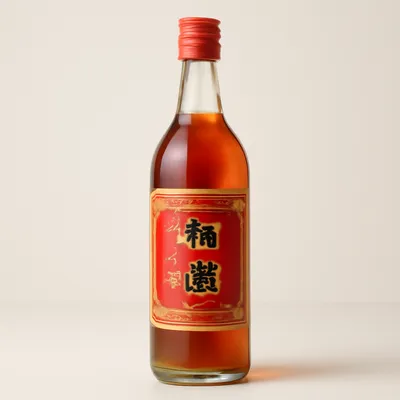



How it's made
8 steps · 15 min active + 10 min waiting
- 15 min
Slice boneless white fish fillets into pieces roughly 4 cm × 3 cm × 0.5 cm. Pat completely dry with paper towels.
Watch outPat the slices bone-dry — surface water thins the batter and makes the crust patchy instead of a full glassy shell.
- 210 min
Marinate fish with a pinch of salt and 1 tbsp Shaoxing wine for 10 minutes. Drain any pooled liquid.
- 33 min
Make batter: combine 3 tbsp potato starch, 2 tbsp water, and 1 egg white. Coat fish slices evenly so each piece is fully sheathed.
- 42 min
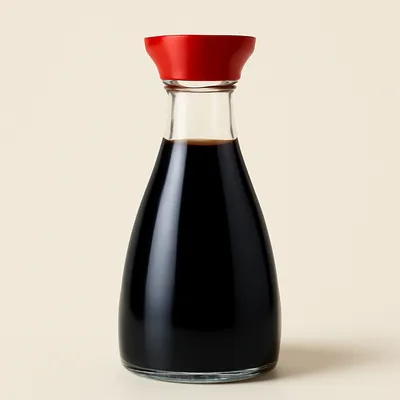
Mix sauce in a bowl: 2 tbsp soy sauce, 2 tbsp rice vinegar, 2 tbsp sugar, 1 tbsp Shaoxing wine, 1 tbsp water starch, 2 tbsp stock.
- 53 min
Heat 500 ml vegetable oil to 210°C. Slide fish slices in one by one — do not crowd. Fry 90 seconds until the crust hardens and turns pale gold. Remove and drain.
Watch outFry at 210°C until the crust hardens pale gold — too cool and the starch shell never crisps, it just goes soft and oily.
- 61 min
Raise oil to 220°C. Return fish for a 30-second second fry until deeply golden and crisp. Drain on a rack.
- 72 min
Discard oil except 1 tbsp. Stir-fry minced scallion and ginger until fragrant. Pour sauce mix into the wok and stir until it bubbles and thickens to a glaze.
Watch outCook the sauce until it bubbles and thickens to a glossy glaze before the fish returns — then toss just twenty seconds so the crust stays crisp.
- 81 min
Add fried fish, toss quickly for 20 seconds to coat every piece. Plate immediately and serve.

