
A banquet dish of Zhongxiang in Hubei, counted among the town's 'three wonders,' in which a paste of pork and fish is rolled in a thin egg-skin, steamed firm, sliced into red-rimmed rounds, and arranged on the plate as a coiled dragon — meat you eat but never see as meat. Lean pork and white fish are chopped and beaten with egg white, starch, and seasonings into a springy forcemeat, spread over a sheet of crepe-thin egg-skin, and rolled into a long sausage. The roll is steamed until set, then sliced crosswise and laid out overlapping in a spiral; the cut faces show pale forcemeat ringed by golden egg-skin. It is served warm, soft and resilient, savoury and faintly sweet.





Coiled dragon roll is the best-known of the Zhongxiang 'three wonders' and is tied to the town's most famous son. In 1521, on the death of the heirless Ming emperor Wuzong, the throne passed to Zhu Houcong — Prince of Xing, whose princely seat was at Anlu, present-day Zhongxiang — who travelled to Beijing and reigned as the Jiajing emperor; the dish is locally said to date from around that accession, giving it a lineage of roughly five centuries. The popular tale that a Zhongxiang cook invented it for the prince's send-off and that the emperor himself bestowed the name 'coiled dragon' is folk attribution and unverified, so it is best taken as one such story rather than fact. What is on record is recent: the craft of coiled dragon roll is inscribed on Hubei province's list of intangible cultural heritage. The name comes from the way the sliced rounds are arranged overlapping into the form of a coiled dragon on the plate.
Each round is a soft, dense disc of forcemeat ringed by a thin band of golden egg-skin, and it eats springy and tender at once — it yields under the tooth and bounces back, finely textured rather than coarse or crumbly. The flavour is savoury and rounded, the pork and fish blended so neither dominates and the fishiness is gone, with a faint natural sweetness and the egg-skin lending a soft richness at the edge. Warm from the steamer it is at its silkiest; reheated by steaming again it stays tender. Done well, the cut face is smooth and uniform, the egg-skin intact and gilded all around; done badly, the forcemeat is dense and gummy from heavy starch, the roll splits where the skin tore, or the paste is loose and watery for want of beating.
The roll's springy body is a salt-set forcemeat, the same protein gel that underlies meatballs and fish cake. Salt drawn into the chopped pork and fish dissolves their myofibrillar proteins out of the muscle into a sticky paste, and beating works those proteins into an aligned, water-holding mass; on steaming the proteins cross-link into a firm, elastic network that slices cleanly — under-beaten or under-set, it crumbles or weeps. Combining pork with white fish balances flavour and texture: the fish lightens and tenderises what would otherwise be a heavier all-pork paste, while egg white adds setting protein and starch holds moisture. The egg-skin is the engineering trick — a crepe-thin omelette, set just firm enough to wrap the soft paste, contains the roll so it holds a clean cylinder through steaming and gives every slice its gilded rim. Gentle, thorough steaming sets the whole without bursting the delicate skin.
Variations
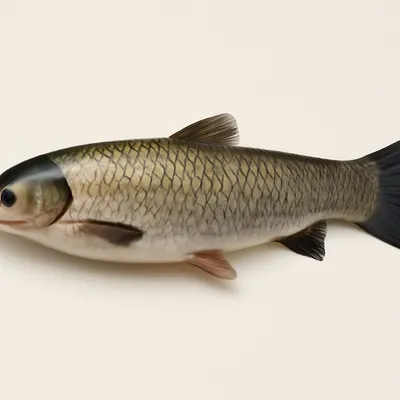
The forcemeat ratio is where households and shops differ: some lean heavily on pork for a denser, meatier roll, others raise the proportion of white fish (grass carp or similar) for a lighter, more delicate one, and the binder may be egg white with sweet-potato or other starch. The wrap is usually a single egg-skin, but some make it in layers or add a thin sheet of caul or extra egg wash; a few brush the finished slices with egg yolk for a brighter rim. Presentation ranges from the formal coiled dragon to a simple overlapping fan, and the rounds may be served plain-steamed, gently sauced, or re-steamed in stock. As one of the Zhongxiang 'three wonders,' it sits alongside the local 'rice tea' and arrowroot starch on the town's festive table.
On the Palate
Where Coiled Dragon Meat Roll sits in the Chinese flavor cloud
Ingredients
Serves 6

How it's made
7 steps · 50 min active + 30 min waiting
- 115 min
Chop lean pork and skinned, boned white fish separately into fine pastes, then combine; beat in salt in one direction until the mixture turns sticky and tacky.
Watch outBeat the salt into the chopped pork and fish in one direction until it turns sticky and tacky — that's the protein forming the gel that lets the roll slice clean instead of crumbling.
- 212 min
Beat in egg white, a starch slurry, ginger-and-scallion water, a little sugar, and seasonings, working the forcemeat until it is springy and holds together; chill briefly to firm it.
- 310 min
Make crepe-thin egg-skins: beat eggs, lightly thicken with a touch of starch, and fry into large, very thin omelette sheets.
- 48 min
Lay an egg-skin flat, spread an even log of forcemeat along one edge, and roll it up tightly into a long, even cylinder, sealing the seam with egg wash.
Watch outRoll the forcemeat tight in the egg-skin into an even cylinder and seal the seam with egg wash — a loose roll steams up with hollows and slices ragged.
- 528 min
Set the rolls on a tray and steam over rapidly boiling water until fully set and firm, about twenty-five to thirty minutes.
Watch outSteam over rapidly boiling water until fully set and firm, 25 to 30 minutes — under-set, it won't slice into clean rounds.
- 68 min
Cool the rolls slightly so they firm up, then slice crosswise on a slight angle into even rounds.
- 76 min
Arrange the slices overlapping into a coiled-dragon spiral on the plate, re-steam briefly to heat through, and serve warm.
Archive tool suggestions — not reviewed
These legacy suggestions have not been evidence-reviewed and are not presented as required tools.


