
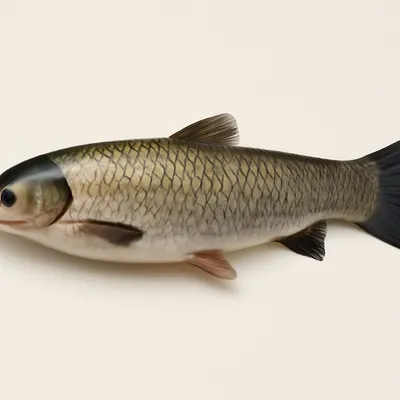
A signature dish of Hubei's Jingzhou plain, the land of fish and rice, made by turning white freshwater fish into a smooth paste and steaming it into a tender white cake — fish you eat but never see as fish. White-fleshed grass carp (or silver carp or black carp) is filleted, the skin and bones removed, and the meat scraped and chopped to a fine purée, then beaten with egg white, starch, and pork back-fat plus water until light and elastic. The paste is spread in a flat bed, steamed until set, and often finished with a thin omelette wash on top; it is sliced and either served plain or simmered in a clay pot layered with fish balls and meat cakes. The texture is soft, springy, and snow-white, faintly sweet from the fish.



Fish cake belongs to the eel-and-fish cookery of Jingzhou, the old Chu heartland on the middle Yangtze where lakes and rivers made freshwater fish the everyday staple, and it is counted among the city's noted banquet dishes — locals say a feast is no feast without it. Its making is old in the region, though the popular tales that trace it to a consort of the legendary Emperor Shun, or to a poem by the Qianlong emperor, are folk attribution rather than documented history, so the safe statement is only that it is a long-standing Jingzhou dish. What is on record is recent and official: the craft of Jingzhou fish cake was inscribed on Hubei province's representative list of intangible cultural heritage in 2009, and the name is also protected as a geographical-indication product. The dish defines the local wedding and festival table, where the steamed cake is sliced and combined with fish balls and other items into the composite platter known as 'flower cake' or the mixed meatball pot.
A slice comes off the knife clean-edged and snow-white, the top often tinted pale gold by its omelette skin. In the mouth it is soft but resilient — it gives, then springs back, never crumbling and never rubbery — with the fine, dense bounce of a well-set fish paste rather than the bland sponge of a poor one. The flavor is clean and gently sweet, the muddy river note of the carp scraped and rinsed away, the pork fat reading only as richness and silk rather than as fat. Simmered in the clay pot it drinks up the broth and turns even more tender. Done well, the cut face is smooth and glossy with no visible fiber or air holes; done badly, it is dense and gummy from too much starch, or loose and weeping from a paste that was never beaten to elasticity.
Fish cake is a salt-set protein gel, the same principle that underlies fish balls and surimi. Fish muscle is held together by myofibrillar proteins, chiefly myosin and actin; when the scraped paste is worked with salt, the salt dissolves these proteins out of the muscle fiber into a sticky sol, and continued beating in one direction aligns the unwound protein strands and whips in water and air so the paste swells and grows elastic — the local 'beating up to strength.' On steaming, the dissolved proteins cross-link and set into a continuous three-dimensional network that traps the water, giving the cake its springy, sliceable body; under-set or under-beaten, the network is weak and the cake weeps or crumbles. The egg white adds extra setting protein, the starch holds moisture and tenderness, and the pork back-fat melts into fine droplets that lubricate the gel and keep it from drying hard. Gentle, fully cooked steaming is essential — too fierce a heat blows holes and toughens the surface.
Variations
The base is white fish paste, but neighbouring counties each claim their own form: Jingzhou fish cake proper, the Jingmen version, and Qianjiang's 'flower cake' (花糕) are the best-known siblings, differing mainly in the ratio of fish to fat and starch and in the finishing. The everyday banquet form layers the sliced cake over fish balls and meat cakes and simmers it all in a clay pot as 'steamed-three' or the mixed meatball pot; festival tables build it into a tiered 'flower cake' platter. Grass carp is most common for its size and white flesh, but silver carp and black carp are also used; some cooks press the paste around an egg-yolk core or sandwich a layer of seasoned minced pork, and the top wash may be plain or yolk-gilded.
On the Palate
Where Jingzhou Fish Cake sits in the Chinese flavor cloud
Ingredients
Serves 6

How it's made
7 steps · 55 min active + 35 min waiting
- 112 min
Fillet a fresh white-fleshed grass carp; remove the skin, red bloodline, and all bones, keeping only clean white meat.
- 215 min
Scrape the meat off the membrane and chop it to a fine, smooth purée; rinse if needed to wash out any muddy taste, then squeeze dry.
- 318 min
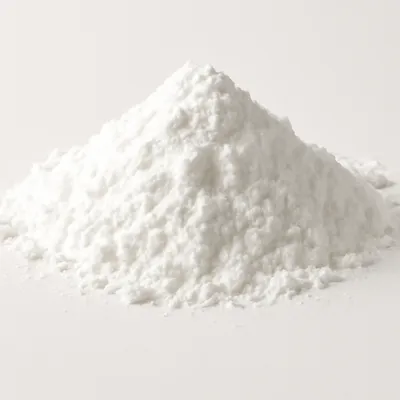
Add salt to the fish purée and beat hard in one direction until it turns sticky and pale, then beat in egg white, a little starch slurry, finely diced pork back-fat, ginger-and-scallion water, and cold water in batches until the paste is light, swollen, and elastic.
Watch outBeat the salted purée in one direction until it turns sticky and pale — that stiffening is the protein setting up, without it the cake won't gel firm.
- 44 min
Test a small spoonful in cold water — it should float; spread the paste evenly into an oiled flat tray to a thickness of two to three centimetres.
Watch outTest a spoonful in cold water — it should float; if it sinks the paste isn't beaten light enough and the cake will steam dense.
- 520 min
Set over rapidly boiling water and steam over strong heat until almost set, about twenty minutes.
Watch outSteam over a hard boil just until almost set, about twenty minutes — over-steam and the tender gel toughens and weeps water.
- 65 min
Brush the surface with a thin wash of beaten egg yolk and steam a few minutes more until fully set and the top is gilded.
- 76 min
Cool slightly, then slice the cake into neat pieces; serve as is, or layer the slices with fish balls in a clay pot and simmer in stock until tender.
Archive tool suggestions — not reviewed
These legacy suggestions have not been evidence-reviewed and are not presented as required tools.


