A prized Jingzhou banquet centerpiece: the silken, ivory maw of the Yangtze's long-whiskered catfish paired with a cloud of hand-minced chicken puree, ladled with a crystal-clear bone broth. Rare, gelatinous, and achingly delicate — the table's most important bowl.





Bijia fish maw comes from the long-whiskered catfish (Leiocassis longirostris) caught in a narrow stretch of the Yangtze near Shishou, Jingzhou — a natural backflow bay that produces fish with unusually thick, dense air bladders whose cross-section mirrors the silhouette of nearby Pen Stand Mountain, giving the ingredient its name. By the Song dynasty it was reputedly already a tribute delicacy; under the Ming Hongwu reign it was reputedly entered into the imperial tribute register, and sources note it was priced by the gram in later eras, earning the nickname 'golden belly' (金肚). The dish pairing the maw with hand-minced chicken puree appears in Qing-era Jingzhou banquet records as the opening prestige course. On 26 December 2011, the State Administration of Quality Supervision granted geographic-indication protection to Shishou bijia fish maw, restricting the designation to 14 townships along the Yangtze in Shishou. In December 2020, 鸡茸笔架鱼肚 was enshrined in the first 21 Hubei Chu Cuisine Standards (楚菜标准) as Jingzhou's flagship entry.
The maw dissolves on the tongue — a trembling, ivory square that gives way to bone broth and a whisper of chicken. Gelatinous warmth without weight. The soup beneath it carries everything.
Dried fish maw is nearly pure type-I collagen — protein content 76–84%, fat under 1%. Soaking for 8–12 hours rehydrates the cross-linked collagen matrix; gentle braising at 70–80°C uncoils the triple-helical collagen strands into soft gelatin without dissolving them entirely, producing the characteristic custard-like bite. The chicken puree (鸡茸) is emulsified with egg whites and cold broth before steaming: egg-white proteins denature at 60–65°C, trapping incorporated fat and stock into a silken, cloud-white foam — the 芙蓉 (hibiscus) texture that offsets the maw's translucent richness.
Variations
Shrimp Puree Fish Maw: river shrimp mousse replaces chicken, steamed into crystal-white fans. Red-braised Fish Maw (红烧鱼肚): a homelier Jingzhou preparation in master-stock soy brine, richer and more rustic than the banquet original. Sea Cucumber and Fish Maw Twin Treasure: a prestige pairing for major banquets — both gelatin sources braised in Jinhua-ham consommé, collagen layering upon collagen.
On the Palate
Where Bijia Fish Maw with Minced Chicken sits in the Chinese flavor cloud
Ingredients
Serves 4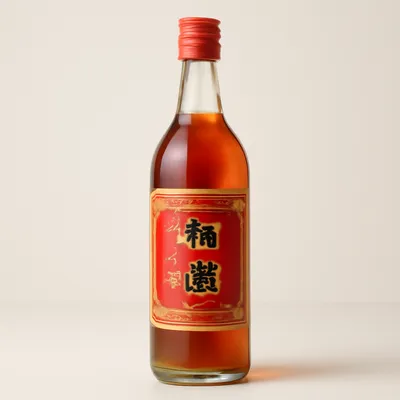
How it's made
7 steps · 20 min
- 1480 min
Soak dried bijia fish maw in cold water for 8–12 hours (or overnight) until fully softened and spongy; drain, rinse under cold water, and cut into 5 cm portions.
Watch outSoak the fish maw eight to twelve hours until fully soft and spongy — a firm core means it braises up rubbery instead of custard-tender.
- 25 min
Blanch fish maw in ginger-scallion water at 80°C for 2 minutes to remove any off-notes; drain and pat dry.
- 310 min
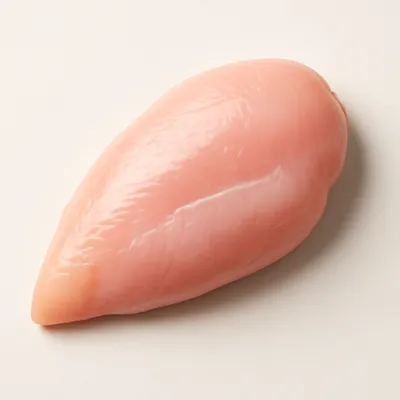
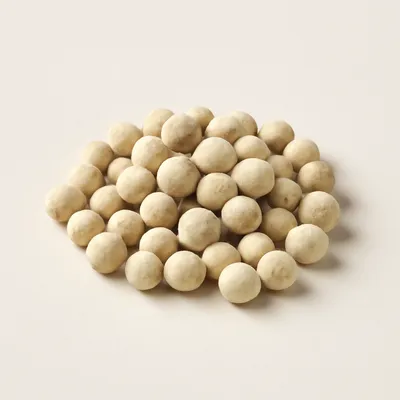
Make chicken puree: blend 200 g skinless chicken breast with 3 egg whites and 60 ml cold chicken stock until perfectly smooth; season lightly with salt and white pepper.
- 412 min
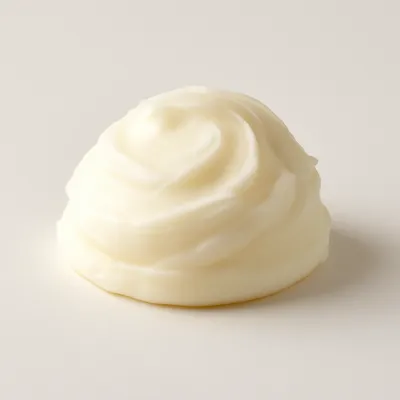
Pour chicken puree into a flat dish greased with lard; steam over gentle heat for 8 minutes until just set into a silken, cloud-white sheet. Cool slightly, then cut into rectangles to match the maw portions.
Watch outSteam the chicken purée gently just until it sets into a silken sheet — over-steam and it goes coarse and full of holes instead of cloud-smooth.
- 520 min
Simmer fish maw in rich chicken bone broth (with ginger slices and Shaoxing wine) at 75–80°C for 15 minutes, until translucent and fully gelatinized through.
Watch outBraise the maw at a low 75 to 80 degrees until translucent all through — a boil dissolves the gelatin too fast and it loses body.
- 65 min
Arrange alternating slices of fish maw and chicken puree on a deep plate; ladle over 120 ml of the strained, reduced clear broth.
- 73 min
Drizzle a light slick of rendered chicken fat over the top; garnish with finely shredded scallion. Serve immediately while the broth is hot.
Archive tool suggestions — not reviewed
These legacy suggestions have not been evidence-reviewed and are not presented as required tools.


