A celebrated Lanzhou banquet showpiece: silky chicken mousse is sculpted into goldfish forms, their flowing tails assembled from glossy black moss (fa cai). The name 发菜 echoes 发财 — 'getting rich' — making this an auspicious opener for wedding feasts and New Year banquets across Gansu.


Facai Black Moss Goldfish belongs to the Lanzhou grand banquet tradition where the first course signals the chef's artistry. Black moss (Nostoc flagelliforme), harvested from the arid grasslands of Gansu, Ningxia and Inner Mongolia, was prized as a luxury ingredient across northwest China for centuries. Guo Pu's Jin dynasty commentary on the Erya notes a 'stone hair' moss 'eaten east of the Yangtze,' traditionally taken to be this plant (though whether the early 'stone hair' always meant today's terrestrial black moss is debated); the northwest product is unambiguously documented by the Qing scholar Li Yu's Xianqing Ouji (1671), which records it being shipped to the Yangtze delta. Its auspicious homophone with 'getting rich' secured its place at every major celebratory table. The goldfish sculptural format is a longstanding feature of Gansu formal banquet cuisine. In 2000, China banned wild collection of black moss due to severe desertification caused by harvesting, and contemporary banquet kitchens work with cultivated alternatives.
The mousse fish is cloud-soft with a faint spring; press lightly and it collapses into a milky sweetness. The black moss tail yields a gentle slither before dissolving entirely. A clear broth glaze brings a clean, lingering umami finish that keeps the whole dish delicate rather than rich.
Chicken breast's myosin and actin proteins, beaten with egg white albumin and a small amount of starch, form an emulsified gel matrix. Gentle steaming at 85–90°C sets the proteins without expelling moisture, producing a custard-like tenderness. Black moss contributes long-chain polysaccharides from Nostoc flagelliforme that absorb water and render a characteristic silky slip on the palate. The thin starch-thickened broth glaze seals the surface and carries aromatics without adding weight.
Variations
Some Lanzhou chefs substitute silver carp paste for chicken, yielding a fishier note that recalls river banquets. A prawn version presses minced shrimp into the mousse body for pink-and-white contrast. Since the 2000 collection ban, modern banquet kitchens often substitute fine-shredded black fungus for the moss tail, visually indistinguishable at a distance.
On the Palate
Where Facai Black Moss Goldfish sits in the Chinese flavor cloud
Ingredients
Serves 4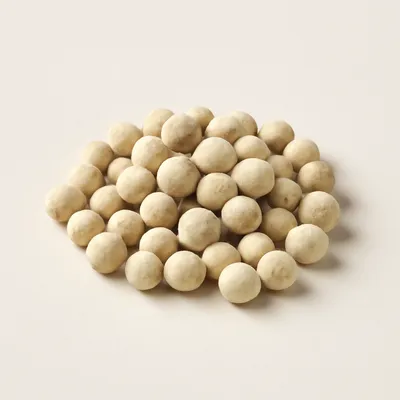
How it's made
6 steps · 45 min
- 18 min
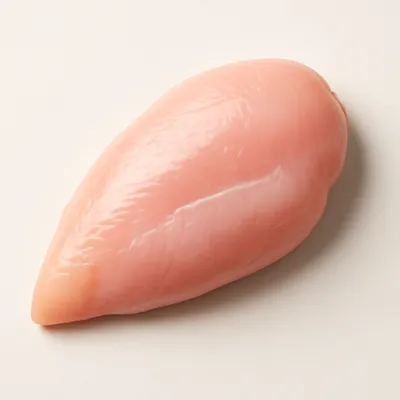
Remove all sinew and skin from chicken breast; mince finely, then pound with the flat of a cleaver for 5 minutes until completely smooth and glossy with no visible grain.
Watch outPound the minced chicken until it's completely smooth and glossy with no visible grain — that sticky sheen is the protein turning tacky, which is what holds the mousse together.
- 28 min
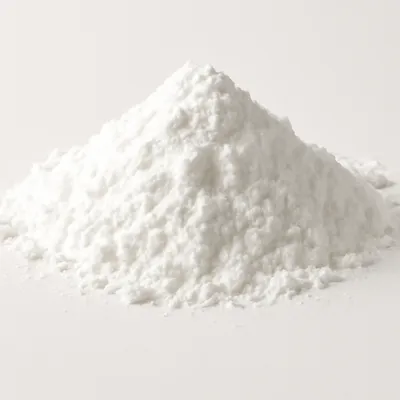
Beat 3 egg whites to stiff peaks; fold into the chicken paste in three additions, alternating with cold chicken stock, salt, white pepper and potato starch, until the mixture is silky and holds its shape.
Watch outFold the stiff-beaten whites in three additions alternating with cold stock until it's silky and just holds a shape — overmix and you knock the air out, so it steams up dense instead of custard-soft.
- 35 min
Soak black moss in cold water for 20 minutes; drain and gently separate into fine individual strands.
- 410 min
Oil your palms lightly; shape mousse into oval goldfish bodies about 6 cm long, pressing a shallow groove at the tail end; insert a fan of black moss strands as the tail and fins; press a wolfberry into the head as the eye.
- 58 min
Arrange the fish on a lightly oiled steaming plate; steam over medium heat at 85–90°C for 6–8 minutes until the mousse is fully set and opaque throughout.
Watch outKeep the steam gentle, around 85–90°C, for six to eight minutes until the mousse is set and opaque all through — a hard boil-steam drives out the moisture and toughens it.
- 64 min
Bring chicken stock to a gentle simmer; season with salt; whisk in a cornstarch slurry to a thin, glossy glaze; pour gently over the plated fish and serve immediately.
Archive tool suggestions — not reviewed
These legacy suggestions have not been evidence-reviewed and are not presented as required tools.


