
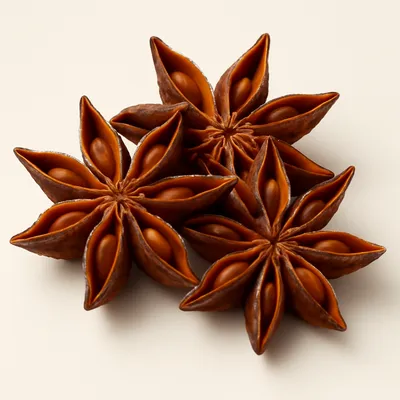
A traditional steamed dish (扣碗) of the Shangluo mountains in southern Shaanxi, built on pork belly and 商芝 — the local name for the dried wild bracken fern (蕨) of Mount Shang. The pork belly is boiled until partly done, brushed with honey or soy and fried so the skin colors and blisters, then sliced and packed skin-down into a bowl over a bed of rehydrated bracken with ginger, star anise, soy and stock. The bowl is long-steamed until the pork is meltingly tender, then inverted onto a plate so the glossy skin sits on top and the fern beneath has drunk up the rendered fat. The result is fat-rich but not cloying, the meat falling apart and the dark fern carrying an earthy mountain-vegetable note.





Shangzhi pork is a traditional dish of Shangluo (商洛) in southern Shaanxi, where 商芝 is the local name for the wild bracken fern that grows through the Shangluo hills; the fern takes its name from Mount Shang (商山) in Danfeng county. Botanically 商芝 is bracken (蕨, a Pteridium-type fern, the young fiddleheads — locally 拳芽 — dried for keeping), not a woody fungus; its purplish cast earns it the elegant alias 紫芝, which is the source of some confusion with the unrelated 灵芝 fungus. The dish is, by lore, linked to the Four Hoary-Heads of Mount Shang (商山四皓), four aged recluse-scholars who hid on the mountain in the late-Qin and early-Han years and were said to live on 商芝 / 紫芝, as in the lines of the 《采芝歌》: 'lush the purple fern, it can stay hunger.' That the dish itself is named for them is folk etymology rather than documented history; what is firmly recorded is simply that it is a Shangluo 扣碗 dish and that 商芝 is the dried bracken of Mount Shang.
Cut into the inverted mound and the pork belly gives way at once — skin gelatinous and glossy, fat gone translucent and soft, lean meat falling into shreds after the long steam, with no greasy slick because the bracken below has soaked it up. The fern itself is the foil: dark, slightly springy strands with a clean, earthy, faintly grassy mountain note and a whisper of the woods, savory from the pork juices it has absorbed. Soy, ginger and star anise sit warm underneath. Done well the meat melts and the fat does not feel heavy; done badly the belly is still firm and the fat waxy because it was under-steamed, or the bracken is slimy and over-soft, or it was not blanched and rinsed and so tastes harsh and astringent.
Two slow transformations carry the dish. The pork belly is layered fat, lean and skin held together by collagen; pre-boiling and frying set and color the skin, but it is the long, moist steam that does the real work — held at steaming heat for an hour or more, the tough collagen in skin and connective tissue slowly hydrolyses to gelatin, so the skin turns silky and the meat slumps into tender shreds, while the fat softens and partly renders out. Steaming skin-down in a bowl lets that rendered fat drip down into the bed of bracken rather than pooling around the meat, which is why the finished belly tastes rich but not heavy. The dried bracken meanwhile is rehydrated — soaked and usually blanched, which both softens the fibre and leaches out the harsh, astringent and bitter compounds of raw fern — and its now-open, spongy structure drinks up the pork fat and savory juices, trading its earthy flavor into the meat and taking richness in return. Inverting the bowl at the end simply presents the glazed skin on top with the flavored fern beneath.
Variations
The same idea appears across the southern-Shaanxi mountains as 蕨菜扣肉 — bracken-and-pork-belly steamed bowl — and it sits in the broad family of Chinese 扣碗 / 扣肉 dishes, kin to 梅菜扣肉 (with preserved mustard greens), 芽菜扣肉 and 干豆角扣肉, where a dried or pickled vegetable forms the fat-soaking bed beneath the pork. In Danfeng and the Shangluo area it is sometimes dressed up under the name 四皓商芝肉 after the local Four-Hoary-Heads lore. Cooks differ on whether to brush the skin with honey or with soy and dark caramel before frying, on the spicing (star anise, cassia, Sichuan pepper), and on whether the bracken is the only vegetable or joined by dried long beans; some braise the assembled bowl rather than steam it.
On the Palate
Where Steamed Pork Belly with Mount Shang Bracken sits in the Chinese flavor cloud
Ingredients
Serves 4
How it's made
7 steps · 45 min active + 1 hour 45 min waiting
- 130 min
Soak the dried bracken in warm water until soft, several hours or overnight, then blanch it in boiling water and rinse well to remove the harsh, astringent edge; cut into lengths.
Watch outBlanch the soaked bracken in a hard boil and rinse well until the raw astringent bite is gone — skip this and that harsh tannic edge stays in the finished dish.
- 225 min
Simmer a slab of pork belly with ginger, scallion and a little wine until partly cooked and the skin is firm, then lift out and pat the skin dry.
- 38 min
Brush the skin with honey or dark soy, then fry it skin-down in hot oil until it colors deep red and blisters; let it cool.
Watch outFry the honeyed skin skin-down in hot oil until it turns deep red and blisters into a tiger-skin pucker — that's the crackled skin the dish is named for.
- 46 min
Slice the pork belly into even pieces, keeping the skin on each, and lay them skin-down and overlapping in a steaming bowl.
- 55 min
Season the bracken with soy, salt, ginger and star anise, then pack it over the pork as a bed, and pour in stock to come partway up.
- 6110 min
Steam the bowl over high heat for one and a half to two hours until the pork is meltingly tender and the skin is silky.
Watch outSteam it long and hard, an hour and a half or more, until the meat slumps meltingly soft and the skin goes silky — under-steamed skin stays rubbery.
- 74 min
Pour off and reserve the juices, invert the bowl onto a plate so the glazed skin faces up, then thicken the juices lightly and spoon them over to serve.
Archive tool suggestions — not reviewed
These legacy suggestions have not been evidence-reviewed and are not presented as required tools.


