Glutinous rice steeped in four plant-based dyes — black Liquidambar leaves, red indigo grass, golden Buddleja flowers, purple wild indigo — then bamboo-steamed beside natural white rice into a vivid five-panel festival tray. The Buyi people of southern Guizhou prepare this dish each Third-Month-Third lunar festival, the five colors symbolizing the five grains and the bounty of the earth.
Five-color flower rice has been a living tradition among the Buyi people of Qiannan, southern Guizhou, for nearly a thousand years. Each year at the Third-Month-Third festival — the Buyi communal new year — families climb hillsides before dawn to gather wild Liquidambar leaves, red and purple indigo grasses, and Buddleja blooms. Premium glutinous rice is set aside from the previous autumn harvest specifically for this spring dyeing ceremony. National media coverage (Thepaper.cn, 2018) and ethnographic studies of the Maolankarst Nature Reserve document continuous transmission of this tradition in Luodian and Libo counties without interruption.
Five vivid bands of rice — ebony, scarlet, gold, violet, and ivory — arrive on a single tray, each chew releasing the faint herbal signature of its dye plant: a woody depth from Liquidambar, a honey-floral note from Buddleja, a mild vegetal bitterness from indigo grasses. The glutinous texture is springy and satisfying, each grain lightly sticky yet distinct.
Liquidambar leaves are rich in tannins and dark-pigment polyphenols that bind tightly to the starch matrix under heat, fixing a deep black hue. Buddleja officinalis flowers donate acteoside and luteolin glycosides responsible for the stable golden-yellow. The red and purple indigo grasses contribute anthocyanin-type pigments that dissolve into the soaking water and adsorb onto the dense amylopectin chains of glutinous rice — which has 80–85% branched starch and comparatively large inter-chain pore spaces, enabling deep pigment penetration during the 4–6 hour cold soak. The subsequent 25-minute steam gelatinizes the starch around the pigment molecules, locking colors in place so they do not bleed significantly when served.
Variations
Some Buyi families add a sixth color — orange from turmeric or gardenia fruit — for weddings and major celebrations. In Yunnan's Luoping County, where Buyi and Zhuang communities overlap, the tradition centers on black rice called wufan and the palette simplifies. Guangxi Zhuang communities celebrate the same Third-Month-Third festival with similar five-color glutinous rice, sometimes emphasizing blue-black from different local plants over yellow.
On the Palate
Where Buyi Five-Color Flower Rice sits in the Chinese flavor cloud
Ingredients
Serves 6How it's made
7 steps · 1 hour 30 min
- 15 min
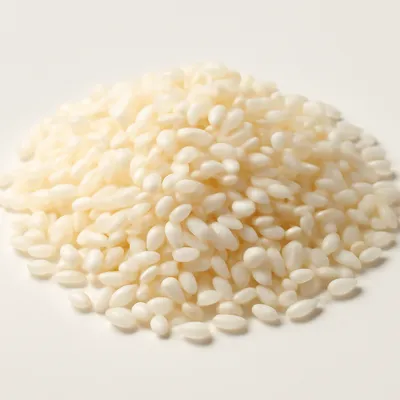
Wash 400g glutinous rice thoroughly; divide into 5 equal portions of about 80g each. Set one aside as the white portion.
- 230 min
Boil Liquidambar leaves (100g) in 500ml water for 25 minutes to extract black dye; separately boil red indigo grass, purple indigo grass, and Buddleja flowers in individual pots of 500ml water for 20 minutes each. Strain all four dye liquids and cool to room temperature.
- 3360 min
Submerge four rice portions each in its respective dye liquid; soak the white portion in plain water. Soak all five at room temperature for 4–6 hours until the rice has evenly absorbed the colors.
Watch outCold-soak each rice portion four to six hours until it takes the color evenly — the long soak drives the pigment deep into the grain.
- 45 min
Drain each portion and rinse lightly at the edge of a basin of clean water to remove surface dye; do not scrub or the color will fade.
Watch outRinse the dyed rice gently — don't scrub, or the surface color washes off and the finished rice turns pale.
- 55 min
Line a bamboo steamer with damp banana leaf or clean muslin. Arrange the five portions in distinct wedge sections so colors remain separated.
- 630 min
Steam over high heat for 25–30 minutes until fully cooked through; test the black section last as it takes longest.
- 75 min
Turn out onto a large flat bamboo tray or winnowing basket; fan briefly to cool and set the colors. Serve communally or pack in leaf bundles as festival gifts.
Archive tool suggestions — not reviewed
These legacy suggestions have not been evidence-reviewed and are not presented as required tools.


