Live three-spotted swimming crabs (三点蟹) butchered into thirteen pieces by eight precise cleaver cuts and cured in either sea salt or aged soy sauce for six to twenty-four hours. The result is shell-pink flesh with a viscous, cream-like roe that melts at body temperature — the most celebrated raw preparation on the Teochew cold table.
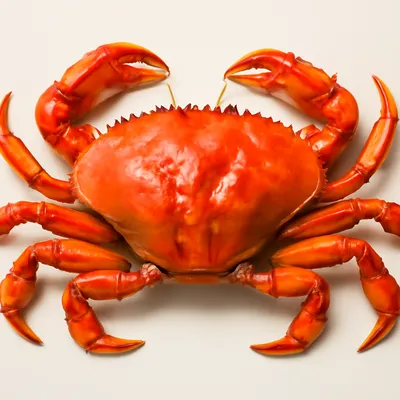




The Teochew fondness for raw crab is documented from at least the Song dynasty: scholar Gao Sisun's 蟹略 (c. thirteenth century) records 蟹生 — raw crab marinated with spices including hemp oil, cardamom, fennel, Sichuan pepper, ginger, salt and vinegar — as a refined crab delicacy, alongside the similar 洗手蟹 (hand-washing crab). The Qianlong-era Chaozhou Prefecture Gazetteer (Zhou Shuxun, 1736–1796) formally lists raw-marinated seafood as a prized local taste. Early Teochew fishermen packed surplus live catch in coarse sea salt to extend shelf life — a practical preservation technique that over time became a refined culinary art, with distinct sub-styles emerging in Shantou, Chaozhou and Jieyang. The three-spotted swimming crab (三点蟹), a portunid native to coastal South China, became the preferred species for its tender flesh and abundant roe.
Cold from the brine, the crab flesh clings to the shell with light resistance before yielding — not raw-slimy but set into a wobbly gel, faintly sweet, deeply briny. The roe is where the drama is: it spreads across the tongue like cold orange cream, intensely savoury, with a finish of rice wine and dried chilli.
Sea salt draws water from crab muscle cells by osmotic pressure, partially denaturing myosin and actin proteins without heat and converting the translucent raw flesh into an opaque, gel-like texture. In the soy-sauce variant, the crab's own digestive enzymes continue working under refrigeration, breaking down connective tissue to produce the characteristic creamy roe consistency. The baijiu pre-soak disrupts surface bacterial membranes; rice vinegar lowers the surface tissue acidity, suppressing Vibrio growth during the curing window. The entire process must take place at around 4 degrees Celsius.
Variations
The soy-sauce method (24 hours) produces a darker, more umami-forward result than the sea-salt method (6 hours). Mantis shrimp and moon crabs are marinated by the same technique. Some Chaozhou households add dried tangerine peel to the brine for fragrance. A premium version uses mud crab filled with roe (膏蟹); the swimming crab is the everyday everyday alternative.
On the Palate
Where Raw-Marinated Swimming Crab sits in the Chinese flavor cloud
Ingredients
Serves 2


How it's made
7 steps · 30 min
- 115 min
Purchase live swimming crabs and chill in iced salted water for 15 minutes to sedate them.
- 210 min
Rinse crab surfaces with cold water; drain and pat dry; soak in high-proof baijiu for 5 minutes to disinfect.
Watch outSoak the cleaned crab in high-proof baijiu the full five minutes — this is the food-safety step that knocks back surface bacteria for raw curing.
- 310 min
Butcher each live crab: remove the carapace and gills, then use the eight-cut method (八刀十三块) to yield 13 portions; ensure each piece exposes the roe.
- 45 min
Layer crab pieces in a deep container; add sea salt (salt method) or aged soy sauce and fish sauce (soy method), then sliced ginger, crushed garlic, chilli and rice vinegar.
Watch outMake sure every cut piece shows exposed roe before it goes in — that open face is what lets the brine set the creamy roe.
- 52 min
Add a splash of high-proof baijiu; toss gently to coat every piece evenly in the marinade.
- 6360 min
Seal the container tightly and refrigerate at 4 degrees Celsius for 6 hours (salt method) or 24 hours (soy method).
Watch outCure strictly at fridge-cold, around 4 degrees, for the stated hours — any warmer and it's unsafe, so never leave it out.
- 73 min
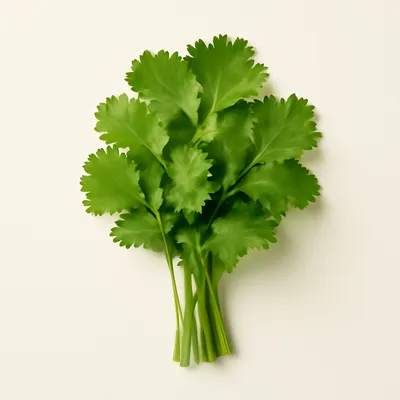
Serve directly from the brine on a chilled plate; garnish with fresh coriander. Do not rinse before serving.


