Female swimming crabs from the East China Sea, marinated raw in a brine of salt, Shaoxing wine, and ginger until the vivid red roe solidifies into a dense, custard-like richness and the white meat firms into silky sweetness. No heat, no cooking — just salt, time, and the cold-brine tradition of Ningbo's fishermen.
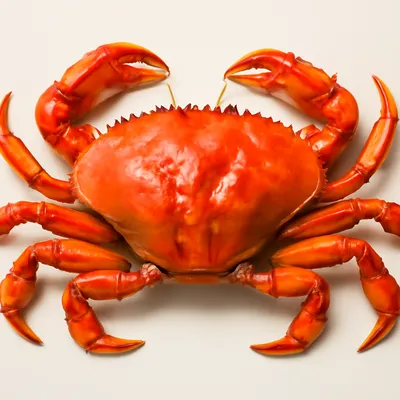

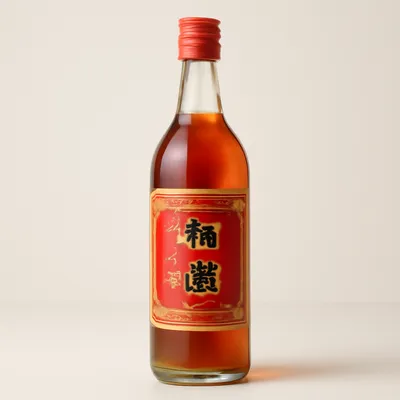



Ningbo, Zhejiang. The practice of preserving crabs in salt brine along the Ningbo coast is attested in Ningbo's local gazetteers, which record 'salted-brine preservation' (咸卤腌藏) of marine creatures as a long-standing coastal custom. The Northern Song text 《蟹谱》 (Crab Manual) by Fu Gong, preface dated 1059, recorded the salt-and-wine preservation of crabs in Jiangnan, and the Southern Song scholar Gao Sisun expanded on crab culinary traditions in 《蟹略》. Raw marinated crab was documented in Fu Gong's 《蟹谱》 as 洗手蟹 (wash-hand crab), named from the line 盥手毕,即可食 — the preparation was so swift the dish was ready by the time guests had finished washing their hands. The Ningbo-specific form emphasizing the female crab's red roe (红膏) was listed in 2012 as an intangible cultural heritage of Zhenhai District, Ningbo, and gained nationwide recognition through its appearance in the food documentary series 《风味人间》 (Once Upon a Bite), Season 2, produced by Tencent Video (2020).
Cold from the brine, the roe hits the tongue like a dense, oceanic custard — richly salty, then subtly sweet, with a vivid freshness that no heat could preserve. The meat is firm, almost crunchy, with a faint perfume of Shaoxing wine.
Salt-curing (炝) works primarily through osmosis: the high sodium chloride concentration of the brine draws cellular fluid outward through the semi-permeable cell membrane of the crab muscle, simultaneously denaturing surface proteins and compacting muscle fiber bundles — producing the characteristic dense, 'pudding-like' firmness. Alcohol from Shaoxing wine acts as a polar solvent, carrying aromatic compounds (ginger volatiles, wine esters) into the crab flesh through the shell joints. The roe (ovary mass) is rich in lipoproteins and carotenoids: astaxanthin gives it the vivid orange-red hue. Without heat, these pigments and lipid structures remain intact, preserving both the vibrant color and the fatty, unctuous mouthfeel that cooking would oxidize away. Refrigeration keeps microbial activity low enough to make the raw preparation safe within the marination window.
Variations
Male crabs marinated the same way — 白蟹炝蟹 — lack roe but yield firmer, sweeter muscle meat. Some Ningbo households add sliced fresh chili and a splash of high-proof Baijiu for a penetrating heat. The residual brine after marinating is prized as a dipping sauce for other cold seafood or mixed with rice.
On the Palate
Where Red-Roe Marinated Raw Crab sits in the Chinese flavor cloud
Ingredients
Serves 4
How it's made
7 steps · 20 min
- 110 min
Select live female swimming crabs (梭子蟹) in late autumn or early winter when roe is full and vivid orange-red; confirm liveliness by checking leg movement
- 25 min
Chill crabs in ice water until immobile; scrub the shell clean with a stiff brush; remove crab lungs (gills) and stomach sac; cut larger crabs in half or leave small ones whole; crack the claws lightly
- 310 min
Bring water to a boil and dissolve salt at a ratio of approximately 165 g salt per 1 kg water; let cool completely to room temperature; then add Shaoxing rice wine, ginger slices, and scallions
Watch outCool the salt brine completely before pouring it over the crab — warm brine starts cooking the raw flesh instead of curing it firm.
- 45 min
Place crabs in a clean ceramic crock or glass container, shell-side down and belly up; pour brine over until fully submerged
- 52 min
Set a heavy weight (a clean plate with a stone or jar on top) to keep all crab portions below the brine surface
Watch outWeight the crab down so every part stays under the brine — any piece above the surface won't cure and can spoil.
- 6480 min
Refrigerate for 8–24 hours: 8 hours gives a milder, more delicate flavor; 20–24 hours gives deeper, more concentrated salinity
- 75 min
Remove crabs; drain; plate shell-side up; serve cold with Zhenjiang vinegar and fresh young ginger shreds on the side


