Live greasyback shrimp marinated in sea salt, soy sauce, garlic and ginger for six hours until their shells blush silver-grey and the flesh inside turns just barely set — translucent at the core, saline-sweet, with the clean snap of very fresh prawn. A staple 打冷 side dish eaten alongside congee or plain rice.





The Teochew custom of eating raw shrimp (虾生) is attested in the Qianlong-era Chaozhou Prefecture Gazetteer (Zhou Shuxun, 1736–1796): 蚝生、虾生、鱼生之类,辄为至味. Sand prawns (沙虾) are native to the inshore shallow waters of the South China Sea and have been central to Teochew coastal fishing for centuries. Fishing communities along the Chaoshan coast traditionally packed surplus live catch in coarse sea salt — a practical step that over time evolved from preservation into a refined table condiment. A 2023 Central Radio Network report described raw-marinated sand prawns as 'a Teochew dish that should not be forgotten,' reflecting their deep embeddedness in local food culture even as production has scaled.
The shell is intact, so the diner peels each prawn at the table. The meat inside is barely set — the outer millimetre has gone opaque and firm from the salt, while the core stays translucent and almost creamy. Sweet, oceanic, with enough brine that you need rice or congee to bring the salt back into balance.
Sea salt draws moisture from prawn muscle cells by osmotic pressure, partially denaturing the myosin proteins without heat — converting the flesh into a semi-set state between raw and cooked. A 20-minute preliminary soak in baijiu and rice vinegar serves dual purposes: alcohol disrupts bacterial cell membranes on the surface, while the acid lowers surface acidity, inhibiting Vibrio parahaemolyticus growth during the curing window. After six hours at 4 degrees Celsius, the shells shift from transparent to silvery-grey as the underlying muscle scatters light differently through its partially crosslinked protein matrix.
Variations
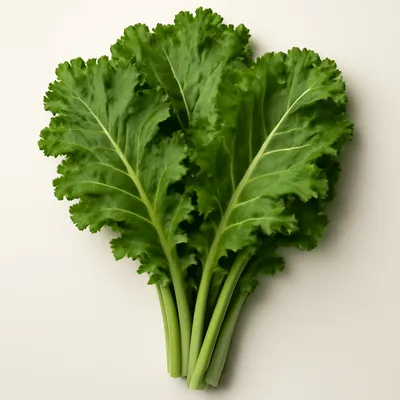
The same technique applies to banana prawns and tiger prawns, though marinating time increases with size. Some Teochew cooks add shredded mustard greens to absorb excess brine and add crunch. A soy-and-garlic variant skips the sea-salt phase and uses aged soy sauce as the sole curing agent for a richer, darker result.
On the Palate
Where Raw-Marinated Sand Prawns sits in the Chinese flavor cloud
Ingredients
Serves 2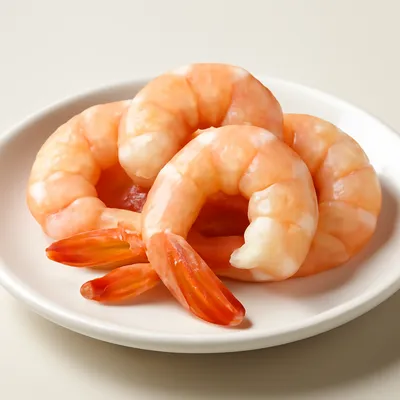


How it's made
7 steps · 30 min
- 15 min
Buy live sand prawns; rinse briefly under cold running water, drain, and trim long antennae with scissors.
- 220 min
Combine 2 tbsp baijiu and 2 tbsp rice vinegar; soak prawns for 20 minutes to disinfect and remove any muddy odour.
- 310 min
Drain the soak liquid; toss prawns with 1.5 tbsp coarse sea salt and let stand 10 minutes to draw out moisture.
Watch outSalt the prawns and let them stand until they weep moisture — that osmotic draw is what firms the raw flesh toward a set, cured texture.
- 45 min
Prepare marinade: mince 4 garlic cloves, grate 15 g ginger, slice 2 fresh red chillies; combine with 3 tbsp light soy sauce and 1 tsp fish sauce.
- 53 min
Combine prawns with the marinade in a clean container; add shredded mustard greens if using; toss to coat evenly.
- 6360 min
Seal and refrigerate at 4 degrees Celsius for 6 hours until the shells are silvery-grey and the flesh is translucent at the centre.
Watch outCure a full 6 hours at 4°C until shells turn silvery-grey and the flesh reads translucent at the center — that color shift signals it's ready and safe.
- 72 min
Serve cold directly from the container; accompany with steamed white rice or congee, and offer a small dish of rice vinegar for dipping.


