





Created at Kabe-no-Ana ("Hole in the Wall"), a Western-style restaurant founded in 1953 (originally in Nishi-Shinbashi, later Shibuya) in Tokyo; the cod-roe spaghetti emerged in the early 1960s after the move to Shibuya — but the dish is filed under Kyushu/Fukuoka because its load-bearing ingredient, mentaiko, is a Hakata product (introduced from Korean myeongnan-jeot by Toshio Kawahara at Fukuya in 1949). Founder Takayasu Narimatsu created it when a regular requested caviar pasta; caviar was too costly to keep on hand, so he substituted cod roe (tarako), and the swap stuck nationwide.
Created in 1967 at Kabe-no-Ana in Shibuya — Shigeru Niki ran out of caviar and substituted Hakata mentaiko, which Toshio Kawahara had introduced at Fukuya in 1949 from Korean myeongnan-jeot. Above 60°C the roe proteins seize chalky, so the technique is off-burner: melt cold butter into residual pan heat, mash the sacs in.
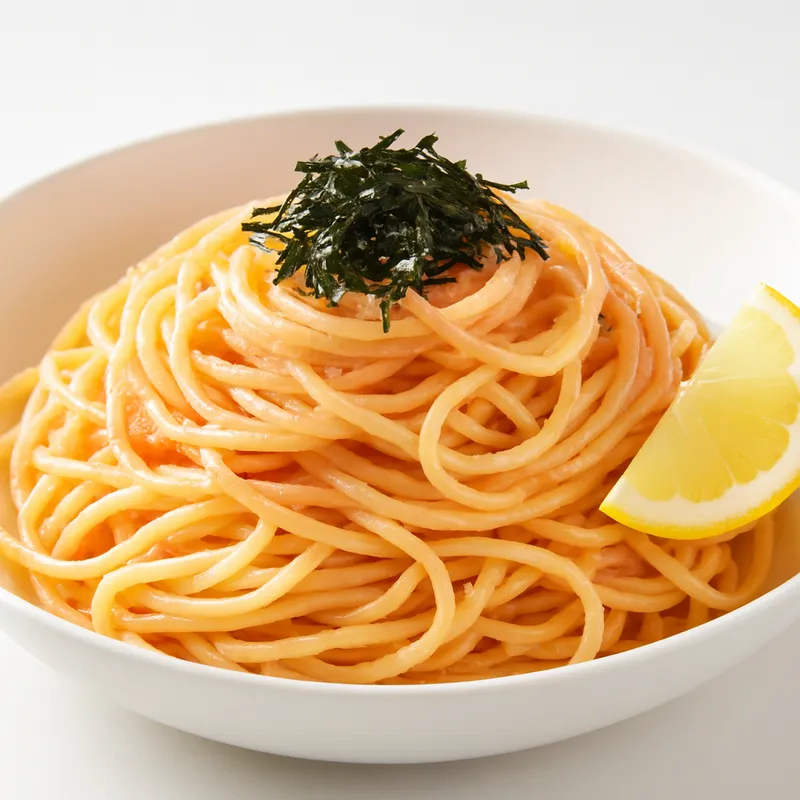
Spaghetti in a pale pink slick of butter and crushed mentaiko (spicy pollock roe), strewn with shredded nori and shiso ribbons, sometimes a squeeze of lemon. The roe pops in tiny grains against the teeth — saline, faintly chili-warm, almost cheese-like in umami. Served warm, not hot — high heat denatures the roe into chalk. If the sauce looks orange and oily-broken, the pan was too hot.
Mentaiko cooks like egg yolk — past 60°C the proteins seize and the texture turns grainy-chalky. The technique is to take the pan off heat, melt cold butter into the residual warmth, then stir in mashed roe sacs off-burner. Fukuya's original mentaiko uses a chili-marinade brine rather than dry chili powder — that's why authentic versions taste deeper and less hot than the supermarket-tube imitations.
Variations
Kabe-no-Ana (Shibuya, the 1967 founder, still serving the original); Spajiro chains it nationwide; Hakata Itoshima-style adds yuzu peel; Roman cacio-e-pepe-mentaiko crossover at Pasta Wadachi pairs it with pecorino; cold mentaiko-cream pasta is the summer Tokyo bistro version.
On the Palate
Where Mentaiko Spaghetti sits in the Japanese flavor cloud
Ingredients
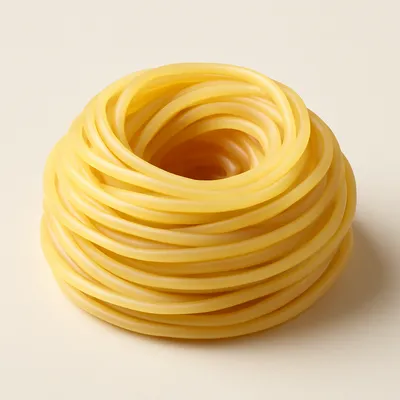

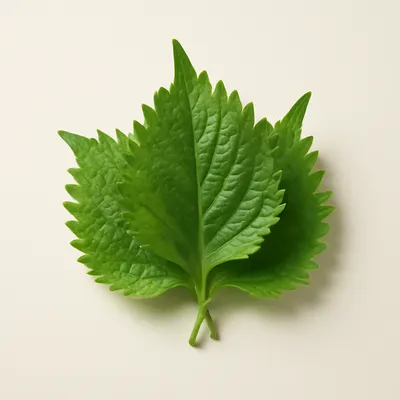

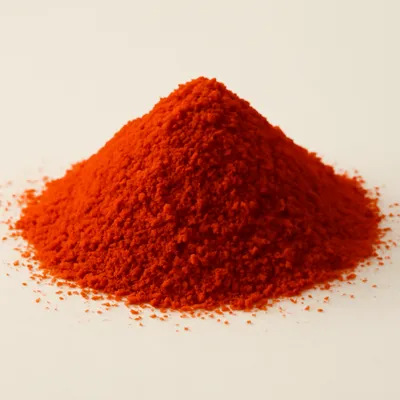

How it's made
5 steps · 22 min
- 110 min
Bring 4 liters of well-salted water to a rolling boil. Drop the spaghetti in, stirring occasionally, and cook until al dente, about 8 minutes. The pasta should have a slight bite when you taste it.
Watch outDon't let the spaghetti overcook — it should be firm to the bite, not mushy.
- 23 min
While the pasta cooks, slice the mentaiko open and scrape out the roe into a bowl. Mix with soy sauce and a squeeze of lemon juice until smooth and well combined.
- 32 min
In a large pan over medium heat, melt the butter until it foams and just starts to brown. Add minced garlic, sautéing until fragrant but not browned, about 1 minute.
Watch outWatch the butter closely to prevent it from burning; it should be foamy but not dark.
- 45 min
Drain the spaghetti, reserving a cup of pasta water. Add the hot spaghetti to the pan with garlic butter, tossing to coat. Add the mentaiko mixture and toss again, adding reserved pasta water as needed to achieve a creamy consistency.
Watch outDon't let the sauce sit too long in the pan — it can dry out quickly. Toss with pasta water to keep it silky.
- 52 min
Serve immediately, garnishing with sliced nori and finely chopped scallions for a fresh, aromatic finish.
Archive tool suggestions — not reviewed
These legacy suggestions have not been evidence-reviewed and are not presented as required tools.