Lijin's water-fried buns from Dongying, Shandong deliver a triple texture that no other bun technique matches: a shattering golden base, tender yielding sides, and a juicy braised-pork filling — all from a single flat pan in fifteen minutes. The flour-slurry method (面糊水) creates a crisp lacework crust at the bottom while steam keeps the top cloud-soft, earning the buns Shandong provincial intangible heritage status in 2016.



The buns are documented in Lijin County from the Guangxu reign of the Qing dynasty (1875–1908), when the Shang family of Yanwo Town had already earned a local reputation for them. In the early Republican era, Liu Mingyuan and his son Liu Fenggang — working from the county seat's west street — built on the Shang family technique and invented the flour-slurry pour that produces the distinctive crispy base, making the buns famous across northern Shandong. A saying of that era ranked them among the region's three great foods: "Lijin pan-fried buns, Putai noodles, Binxian guozi flatbread." In 2016 the craft was inscribed on Shandong's provincial intangible cultural heritage list.
Break through the paper-thin, shatteringly crisp base and the bun opens into a steam-moistened pocket of savory pork — the filling fragrant with bone broth, five-spice, and fermented bean paste. Three textures arrive in strict sequence: the crack of the base, the yield of the sides, and the burst of juice from the center. Eaten scalding hot from the pan, nothing else comes close.
The defining technique is the flour-water slurry (面糊水) poured into the pan after the buns are placed. As the water boils, steam rises through the slurry and penetrates the bun bodies from below, cooking the filling and keeping the tops soft. As the water evaporates, the starch in the slurry first gelatinizes into a thin continuous film across the pan base. When the pan temperature climbs past 160°C and the water is fully gone, the Maillard reaction between the reducing sugars and amino acids in the flour creates the characteristic golden, lacy, cracking crust — bonded to the bottom of every bun simultaneously.
Variations
Vegetarian versions with cabbage and tofu are common in spring. Some Lijin shops add a splash of aged rice vinegar and sesame oil to the filling for a lighter, more aromatic style. A square-shaped variant — said to resemble an official's mortarboard hat — is made for local festivals and lucky occasions.
On the Palate
Where Lijin Pan-Fried Buns sits in the Chinese flavor cloud
Ingredients
Serves 4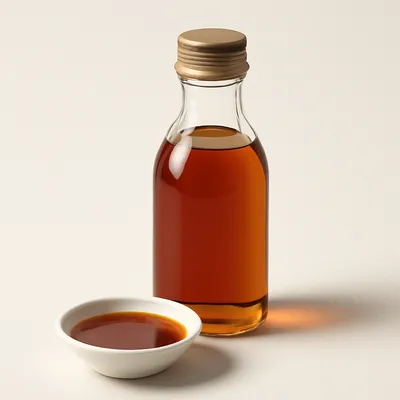

How it's made
7 steps · 1 hour 5 min active + 55 min waiting
- 152 min
Dissolve yeast in warm water; mix with flour to form a moderately soft dough; knead smooth, cover, and ferment 50 minutes until doubled.
- 215 min
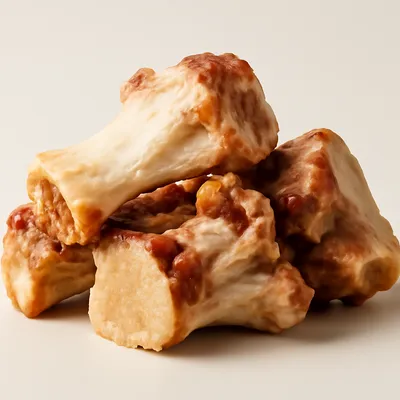
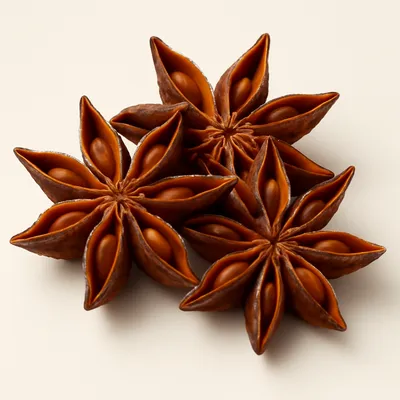
Prepare filling: finely mince pork belly by hand; separately simmer pork bones, skin, and aromatics (star anise, cinnamon, clove) to produce a rich gelatinous broth; cool to a jelly, dice, and fold through the minced pork with fermented bean paste, sesame oil, and scallion.
- 38 min
Divide dough into 50g portions; roll into thick, flat wrappers; place a generous portion of filling in the center and crimp firmly into a sealed oval bun.
- 415 min
Proof assembled buns at room temperature for 15 minutes.
- 55 min
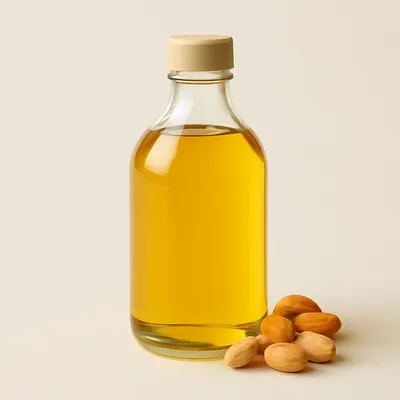
Heat a wide flat-bottomed pan with a thin film of peanut oil; place buns sealed-side up, not touching; fry on medium heat 2 minutes until the base is lightly set.
Watch outFry only until the base sets to a pale film — you want it anchored, not browned yet, since the real crust comes later.
- 610 min
Mix 2 tablespoons of flour with 400 ml cold water to form a thin slurry; pour around the buns until they are half-submerged; cover with a tight-fitting lid and cook on medium-high heat until the liquid is nearly absorbed, about 8 minutes.
Watch outCover and hold a steady boil till the slurry is nearly gone and you hear the sizzle turn from bubbling to frying — that switch means the water's spent.
- 715 min
Reduce to low heat; drizzle thin streams of peanut and sesame oil around the base of each bun; cook uncovered 3–4 minutes until the crust is deep gold and crackles; lift immediately onto plates and serve piping hot.
Watch outDrizzle the oil in and take it low until the base cracks deep gold and crackles — pull them the instant the lace crust sets or it scorches bitter.
Archive tool suggestions — not reviewed
These legacy suggestions have not been evidence-reviewed and are not presented as required tools.


