




Filipino, but the technique pre-dates the Spanish colonization (1565-1898) — Filipinos were already preserving meat in vinegar before the Spanish gave the dish its current name ("adobo" is Spanish for marinade/seasoning). The combination of soy sauce came from Chinese trade — soy sauce had reached the islands with Chinese merchants by around the 9th century and become common; the earliest adobo had no soy sauce at all, and the soy-and-vinegar base formed later. Every Filipino family has its own adobo ratio; the dish is the country's most-claimed national dish, although there's no official designation.
A dish that marries the tang of vinegar with the umami of soy, Adobo is the heart of Filipino comfort food.
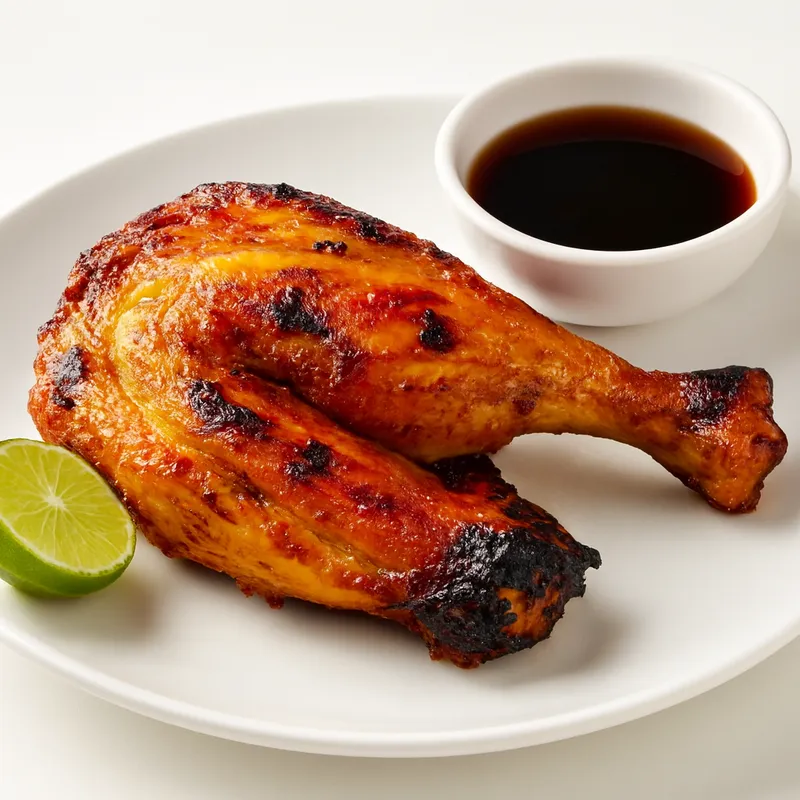
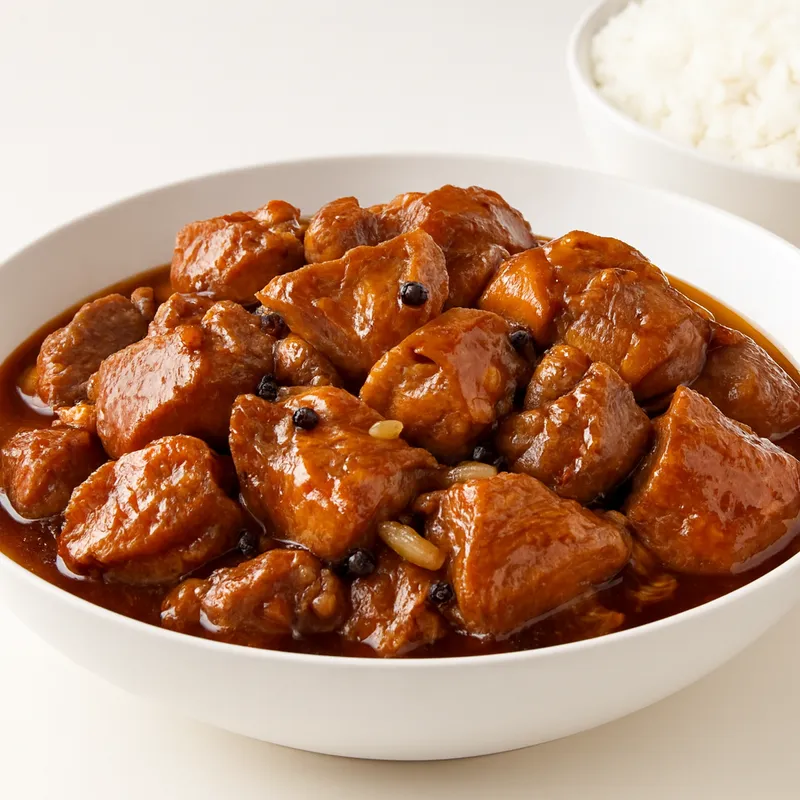
Chicken or pork pieces glazed dark mahogany, in a tablespoon of reduced sauce — equal parts soy and vinegar with bay leaves, peppercorn, garlic. Vinegar's edge has cooked off into roundness; what's left is salty-sour-savory with the meat fall-apart tender. Over white rice — the rice does half the work; adobo without rice is just protein.
The vinegar is preservation in disguise. Pre-refrigeration, an adobo would keep two weeks unrefrigerated in tropical heat — the acetic acid kills bacteria, the soy salt cures the meat, slow cooking renders the fat into the sauce. Filipino cooks know that adobo tastes better the next day because the flavors keep developing in the acidic environment. Reheated three times, it's at peak — by which point the sauce has reduced to almost nothing and is so concentrated it's used as condiment.
Variations
Adobong manok (chicken), adobong baboy (pork), adobong pusit (squid in its ink); Manila darker and saltier; Visayan adobo paler and more vinegar-forward; sa gata adds coconut milk.
On the Palate
Where Adobo sits in the Filipino flavor cloud
Ingredients





How it's made
5 steps · 1 hour 7 min active + 30 min waiting
- 15 min
In a large pot, combine soy sauce, vinegar, minced garlic, black pepper, and laurel leaves. Stir until the mixture is well-blended and fragrant.
- 25 min
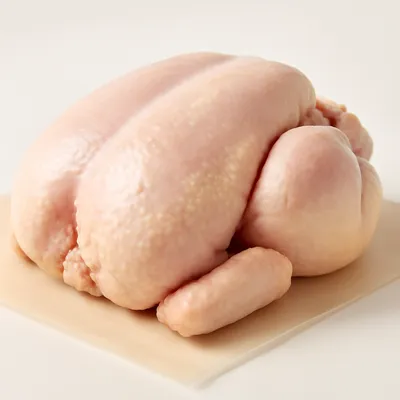
Add the meat to the pot, ensuring each piece is submerged in the marinade. Let it marinate for at least 30 minutes to absorb the flavors.
Watch outEnsure the meat is evenly coated and submerged for proper marination.
- 345 min
Place the pot over medium heat and bring the mixture to a gentle boil. Reduce the heat to low and let it simmer, covered, until the meat is tender and infused with the marinade's flavor.
Watch outKeep it at a bare simmer with the lid on — a lazy bubble, not a rolling boil — until a fork slips into the meat easily.
- 410 min
Remove the lid and increase the heat to medium-high. Allow the sauce to reduce and thicken, stirring occasionally to prevent sticking.
Watch outUncovered, the sauce should darken and turn glossy as it thickens; stir so the sugars don't scorch on the bottom.
- 52 min
Garnish with a sprinkle of paprika and a touch of sugar for a balance of flavors before serving hot with rice.
Watch outFinish when the sauce coats the back of a spoon and just a thin layer pools around the meat — that concentration is the payoff.