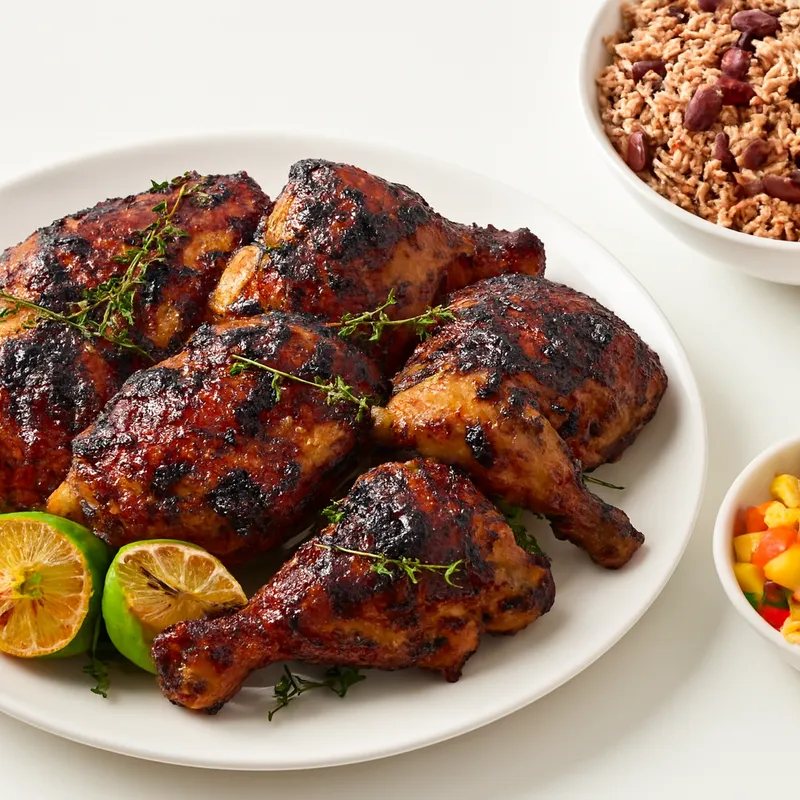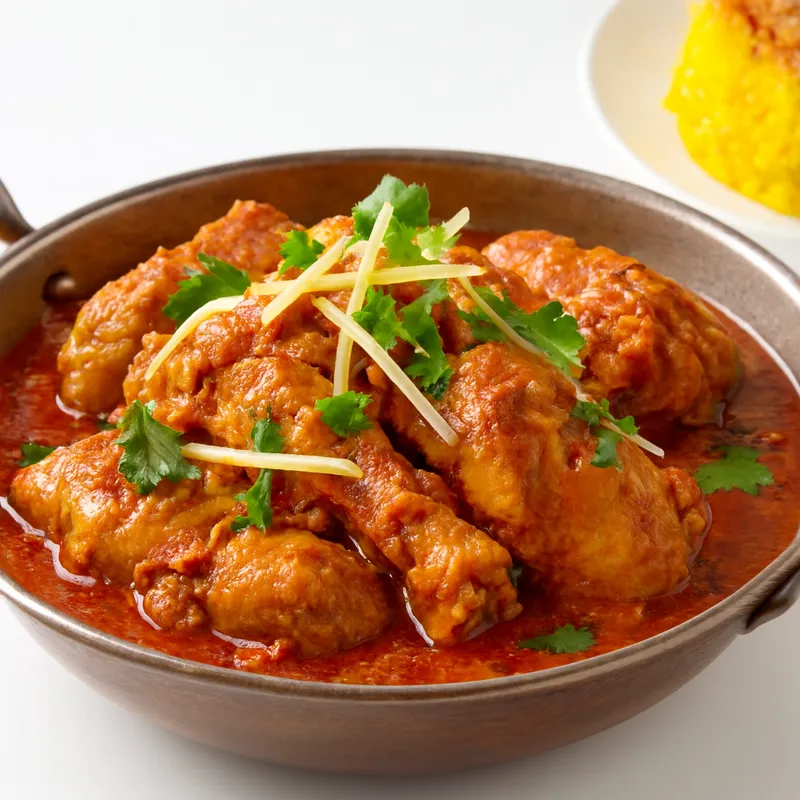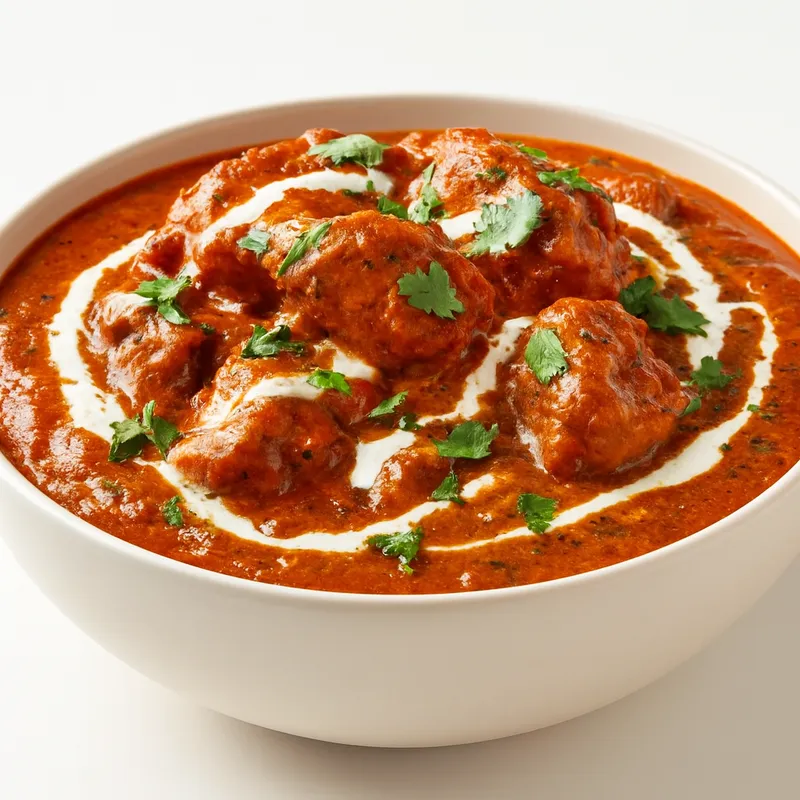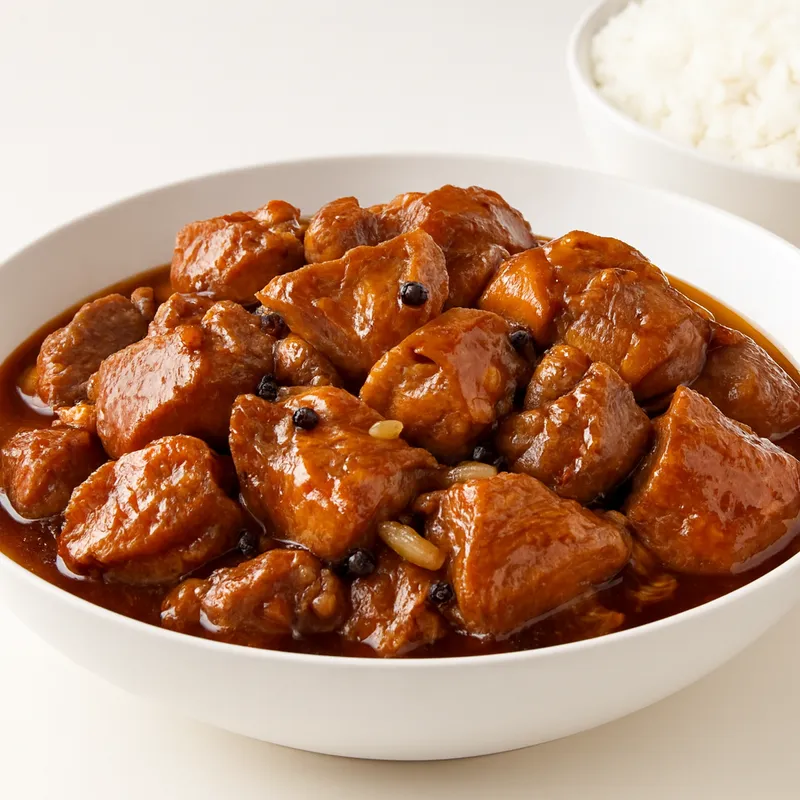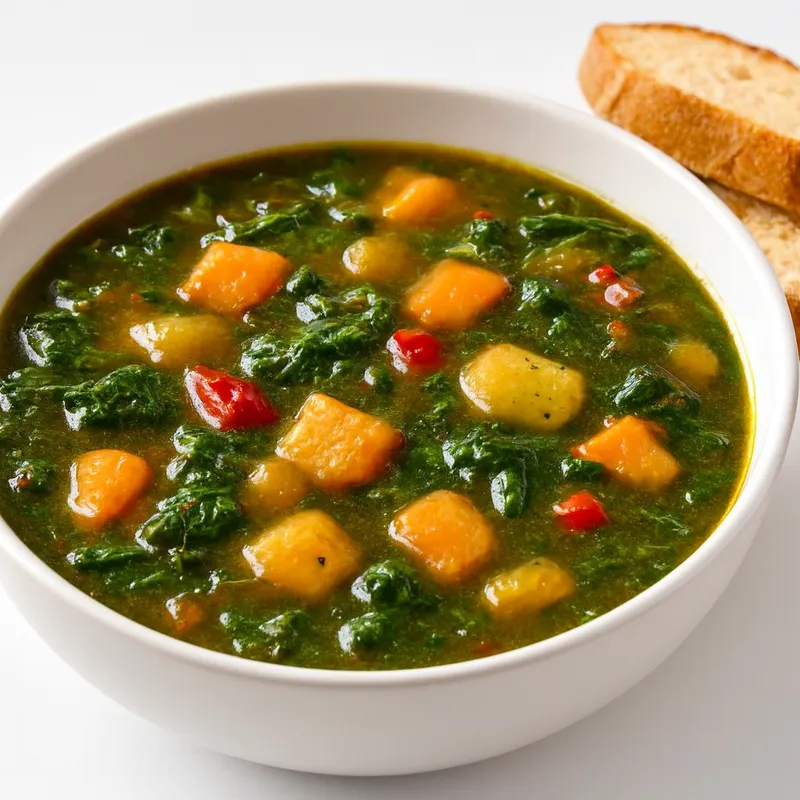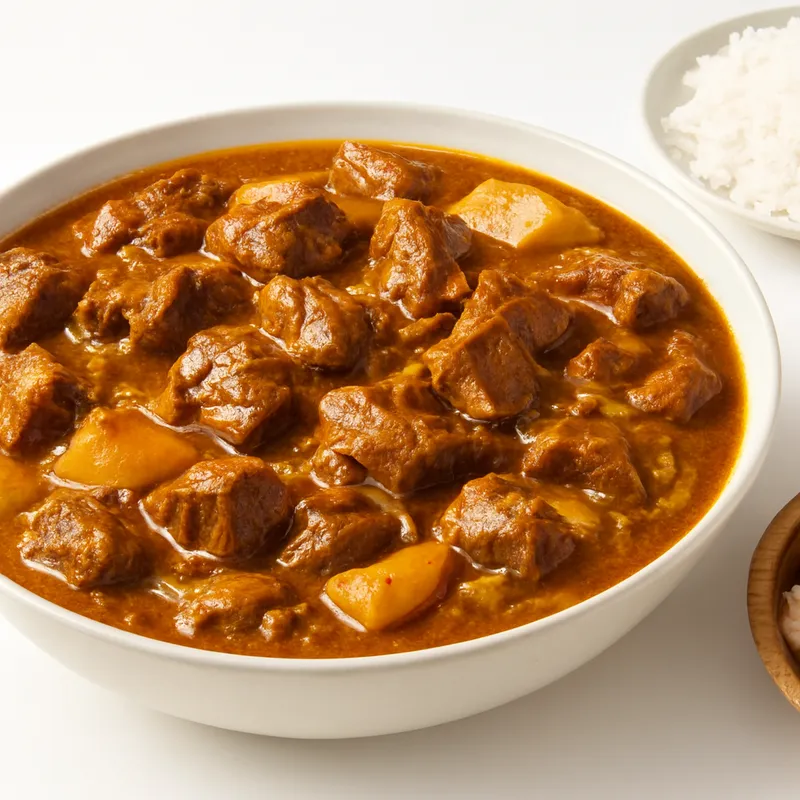
Tender goat meat stewed in a rich curry sauce.





Curry came to Jamaica with Indian indentured workers (1845 onward) sent to plantations after emancipation; goat was the affordable meat already familiar to Afro-Jamaican households (sheep doesn't thrive in the heat). The pairing is the dish: Indian spice technique applied to a West African / Maroon meat-stew tradition. Sunday lunch and wedding-banquet food across Jamaica.
Indian indenture food (1845 onward) plus Maroon stew tradition. Burning the curry powder in oil 30–60 seconds before the meat goes in is non-negotiable — Jamaicans call it cooking down the curry. Yellow gravy means raw powder.
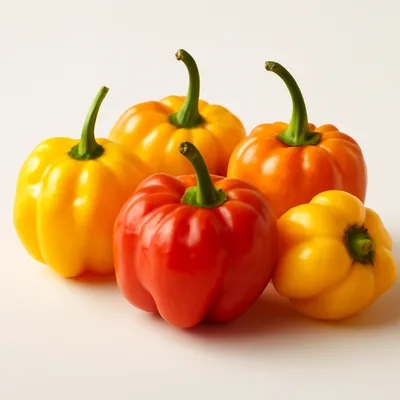
Bone-in goat shoulder or leg cut on the bone, marinated in green seasoning, then browned and stewed in curry powder, scotch bonnet, thyme, allspice, and a little potato to thicken. The meat takes 2–3 hours to give in. Served over rice and peas with the bones intact — Jamaicans suck the marrow. Sauce should be brown, not yellow; a yellow gravy means raw curry powder, never bloomed.
Burning the curry powder in oil before adding meat is non-negotiable — Jamaican cooks call this 'cooking down the curry.' Raw curry powder tastes dusty and yellow-bitter; bloomed in hot oil for 30–60 seconds it goes nutty, dark amber, and dissolves into the gravy. Goat itself benefits from being marinated overnight with vinegar or lime — the acid breaks down the connective tissue that makes goat tougher than lamb.
Variations
Trinidadian curry goat goes greener with chadon beni and amchar masala; Guyanese version uses massala and skips the potato; Jamaican Boston Bay cooks blunt the heat with extra thyme and pimento.
On the Palate
Where Curried Goat sits in the Jamaican flavor cloud
Bloom the curry powder in hot oil for 30–60 seconds before the meat goes in — 'cooking down the curry' turns it from dusty and yellow-bitter into nutty dark amber that dissolves into the gravy.
Ingredients

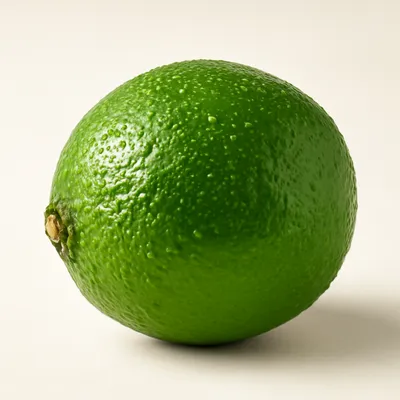
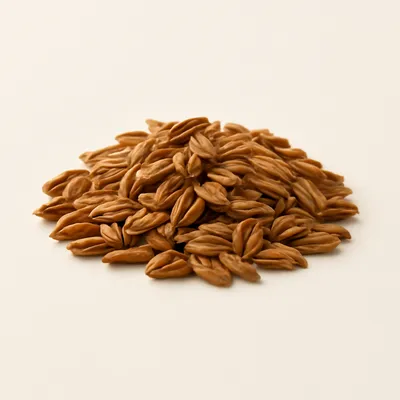
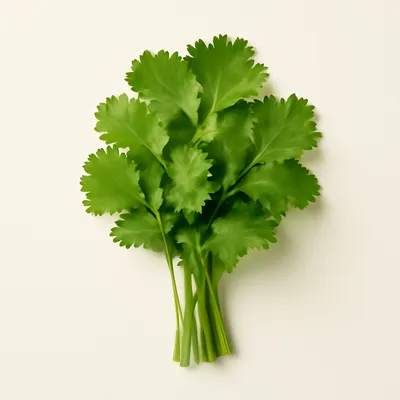





How it's made
4 steps · 30 min active + 12 hours waiting
- 15 min
In a dry skillet over low heat, toast the cumin, coriander, fenugreek seeds, and ground turmeric until they release a fragrant aroma, about 2 minutes. Let cool, then grind into a fine powder using a spice grinder or mortar and pestle.
Watch outToast the whole spices only until they smell fragrant, about two minutes — push further and they scorch bitter.
- 210 min
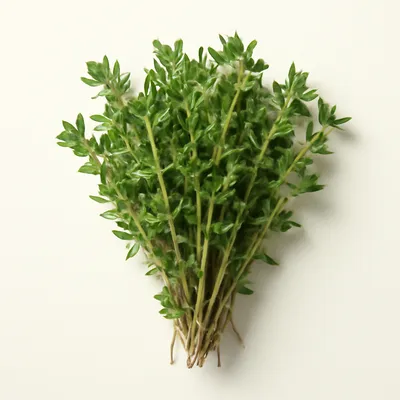
Place the goat meat in a large bowl. Add sliced onions, minced garlic, sliced Scotch bonnet, thyme sprigs, seasoned salt, black pepper, and half of the prepared curry powder. Massage the mixture into the meat using gloves, ensuring each piece is well-coated.
Watch outWork the seasoning paste into every piece so the acid and spice reach the whole surface, not just the outside faces.
- 30 min
Transfer the seasoned goat meat to an airtight container and refrigerate for at least 12 hours, allowing the flavors to penetrate deeply into the meat.
- 415 min
In a large pot or Dutch oven, combine the marinated goat meat with chopped potatoes and 2 cups of water. Bring to a boil over medium-high heat, then reduce to low and cover. Simmer gently, stirring every 20 minutes until the potatoes break down and the meat is tender, about 1.5 to 2 hours.
Watch outIt's done when the potatoes have broken down and thickened the gravy and the meat gives with no resistance.
Archive tool suggestions — not reviewed
These legacy suggestions have not been evidence-reviewed and are not presented as required tools.
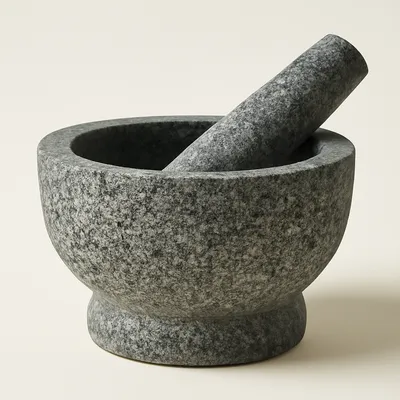
The simplest tool in any kitchen: a heavy bowl and a club to bash things in it. Different cuisines use different stones — Thai cooks pound green papaya in a tall granite mortar (krok hin); pesto Genovese requires the soft-pored Carrara marble; Indian masalas grind down on rough basalt. The bash-don't-cut motion releases volatile oils that a blade keeps sealed in the cell wall.

A heavy, single-piece cast iron pan, 25-30 cm across, weighing 1.5-2.5 kg. Once preheated, the thick mass holds 230°C+ even when a cold steak hits the surface — that's the secret to a deep crust. A well-seasoned skillet (multiple thin layers of polymerized oil baked into the iron) is essentially nonstick, gets better with use, and lasts a century. Lodge skillets from Tennessee have been in continuous production since 1896.

A heavy enameled or bare cast-iron lidded pot, 4-7 liters, with thick walls and a snug lid. The mass evens out hotspots; the lid traps moisture for braising. Sears on the stovetop, then transfers to a 150°C oven for 3-4 hours of even, contained heat — the structural difference between a beef bourguignon that comes out luminous and one that turns to gray mush. Le Creuset and Staub are the celebrated versions; an old American Wagner is functionally identical.