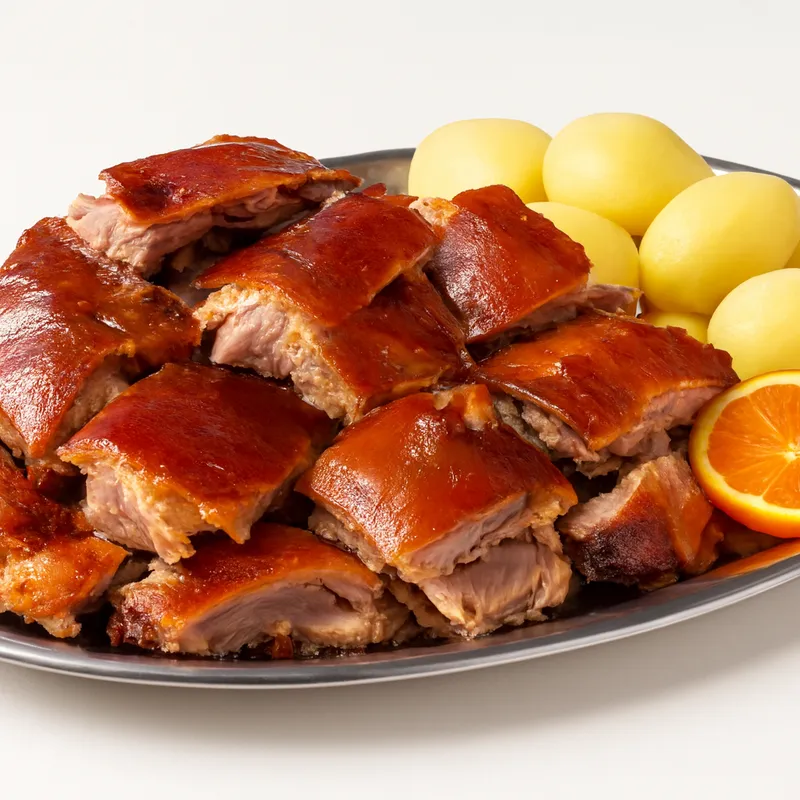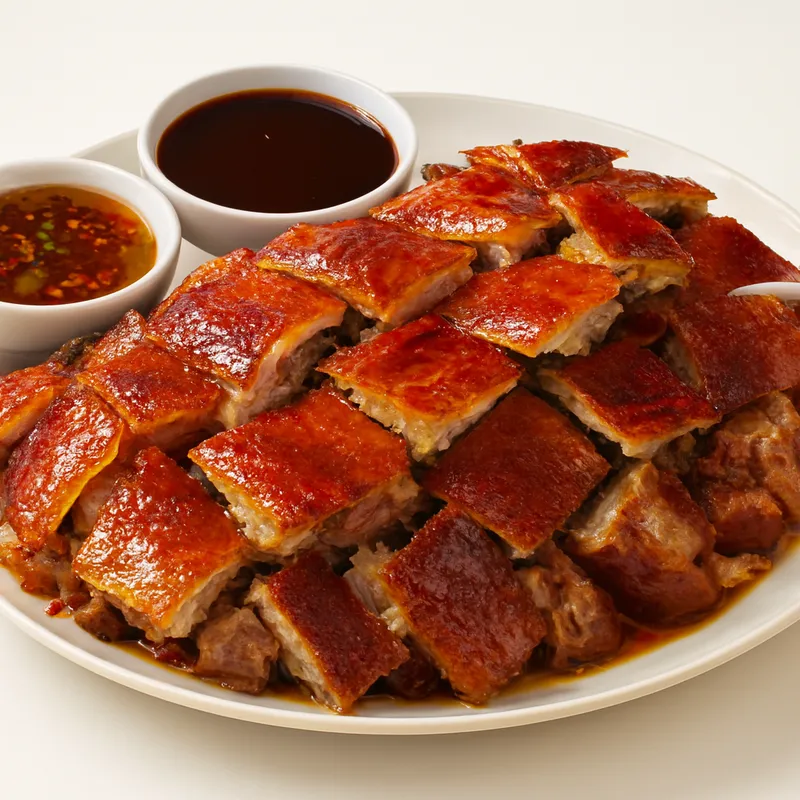
Filipino whole roasted pig with intensely crispy skin and succulent meat, the centerpiece of every celebration.





Spanish colonial introduction ("lechón" is Spanish for suckling pig), but the Philippines turned it into a different dish than Iberian lechón: the Filipino version uses a whole adult pig and a lemongrass-garlic-bay-leaf cavity stuffing. Cebu in the Visayas is the regional capital — Cebu lechon is internationally famous, with no sauce needed because the pork is so flavorful on its own. Roasting one is a 6+ hour communal event; "lechon" means "party" in practice.
Spanish word, Filipino dish — whole adult pig with a lemongrass-garlic-bay cavity stuffing, not the Iberian suckling. Cebu is the regional capital; the head goes to the eldest at table.
A whole pig, skin lacquered glass-amber, roasted on a long bamboo pole/spit over charcoal for 4–6 hours. The skin shatters with a knife tap; the meat underneath is moist, lightly salt-and-garlic-seasoned. Cebu lechon needs no sauce; Manila version comes with liver-vinegar. Cut into chunks, eaten by hand at family parties; the head goes to the eldest.
The skin's glass-shatter texture comes from a continuous spit-rotation: the pig must turn evenly the entire 4-6 hours, with the skin basted in coconut water or annatto-oil to caramelize and shrink-tighten. Stop turning even briefly and you get one charred side and one pale. The cavity stuffing isn't garnish — it perfumes the meat from inside, reaching tissue that surface marinades can't. Each region (Cebu, Iloilo, Manila) has its own stuffing ratio.
Variations
Cebu lechon (Visayan, no sauce, lemongrass-heavy stuffing); Manila lechon (served with liver-vinegar sauce); Iloilo runs sweeter; lechon kawali is the deep-fried small-batch belly cut for daily eating.
On the Palate
Where Lechon sits in the Filipino flavor cloud
Keep the skin turning and basting the entire roast so it caramelizes evenly into glass-shatter crackling — stop even briefly and one side chars while the other stays pale and rubbery.
Ingredients


How it's made
5 steps · 4 hours 30 min
- 110 min
Preheat your oven to 375°F (190°C). Prepare the pig by cleaning it thoroughly, ensuring all bristles are removed. Pat it dry with paper towels to ensure a crisp skin.
Watch outThe skin should feel dry and slightly tacky to the touch before it goes in — no visible moisture.
- 210 min
Stuff the pig's cavity with a mixture of crushed lemongrass, garlic cloves, sliced onions, black pepper, and bay leaves. This will infuse the meat with aromatic flavors as it roasts.
- 35 min
Rub the pig's skin generously with salt and lemon juice. This helps to achieve the signature crispy skin that crackles when roasted.
Watch outSalt and lemon rubbed in should leave the skin tightening and looking matte, not wet.
- 4240 min
Place the pig on a roasting rack inside a large roasting pan. Roast in the oven, basting occasionally with its own juices, until the skin is golden and crispy, and the meat is tender, about 3 to 4 hours.
Watch outSkin is done when it's deep amber and taps hollow and hard like glass; keep basting until then.
- 55 min
Let the lechon rest for at least 20 minutes before carving. This allows the juices to redistribute, ensuring moist, flavorful meat.
Watch outDuring the rest, juices should stop actively running when pressed — that's when it's ready to carve.
Archive tool suggestions — not reviewed
These legacy suggestions have not been evidence-reviewed and are not presented as required tools.