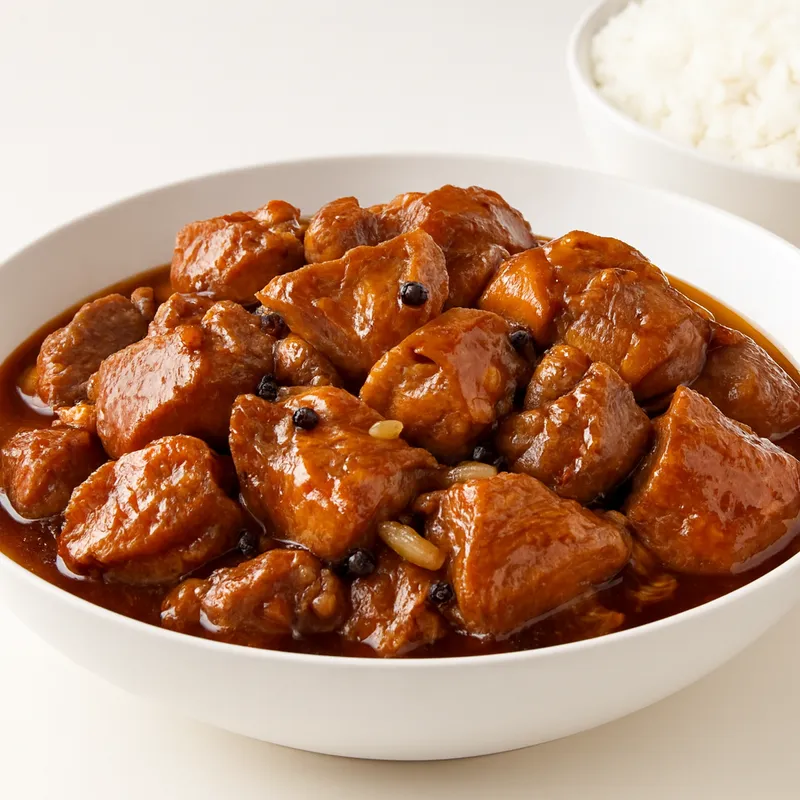
A Pampanga offal dish, also called kilawing Kapampangan, of diced pork shoulder cooked with liver and minced pork lungs in vinegar and spices. Everything is sautéed, then simmered low until the meats turn tender and the liquid reduces to a thick, glossy sauce. Garlic, onion, bay and pepper round out the sour-savory braise, sharpened with chili in many kitchens. Like adobo, it keeps well and is a favorite packed lunch, said to taste even better a day or two on.





Kilayin is a long-standing home dish of Pampanga, the province widely regarded as the Philippines' culinary heartland. Its name shares a root with kilawin, the broad Filipino term for dishes dressed or cooked in vinegar — but unlike the raw vinegar-cured kilawin of the coasts, this Kapampangan version is fully simmered. It reflects a thrifty, nose-to-tail use of the pig, combining muscle and organ meats that might otherwise be sold off, and the keeping power of a vinegar braise made it practical as baon for students and workers. No single inventor or date is recorded.
The pork shoulder stays in soft little cubes, while the liver lends a faint mineral richness and the minced lung melts into the sauce, thickening it almost to a paste. The first taste is the bright, mouth-puckering tang of vinegar cooked down sweet, followed by deep garlicky savor and a peppery, bay-scented warmth. Spooned over hot rice, the glossy sauce soaks in and the chili leaves a slow heat at the back.
The aromatics and meats are sautéed first to build a savory base, then vinegar is poured in and — crucially — left to come to a boil undisturbed before stirring, the classic vinegar-cook step that burns off the raw, harsh acetic edge and leaves a mellow tang. Long, low simmering then does two jobs at once: it tenderizes the tougher shoulder and the chewy lung, and the minced lung releases its proteins to thicken the braise. As the liquid reduces, vinegar and rendered fat concentrate into a clinging sauce, and the acidity is what lets the dish sit for days without souring.
Variations
Some cooks leave out the lung for a milder, liver-forward version. Pork heart or kidney is sometimes added to the mix, and a spoon of pork blood turns it toward a richer, dinuguan-like stew. The chili can be dialed up or left out entirely for children.
On the Palate
Where Kilayin sits in the Filipino flavor cloud
Ingredients
Serves 4

How it's made
9 steps · 25 min
- 18 min
Dice the pork shoulder and liver into small cubes and finely mince the pork lung.
- 24 min
In a pot, sauté garlic and onion in oil until soft and fragrant.
- 34 min
Add the pork shoulder and brown lightly, then add the liver and minced lung.
- 44 min
Pour in the vinegar and let it come to a boil without stirring.
Watch outPour the vinegar in and let it come to a full boil untouched before you stir — this burns off the raw, harsh acetic edge and leaves a mellow tang; stir too early and it stays sharp.
- 52 min
Stir, then add bay leaf, peppercorns and a little water to cover.
- 630 min
Lower the heat and simmer gently, stirring now and then, until the meats are tender.
- 72 min
Add chili and season with salt or fish sauce to taste.
- 88 min
Continue simmering uncovered until the sauce reduces and turns thick and glossy.
Watch outSimmer uncovered at the end until the sauce reduces thick and glossy — the minced lung releases its proteins to thicken the braise, so let it cling to the meat, not pool watery.
- 91 min
Serve hot over steamed rice.