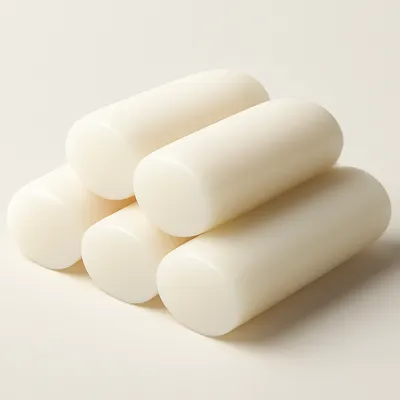
Chewy and slightly sweet, Korean rice cake offers a delightful texture that transforms when grilled or boiled, releasing a subtle nuttiness. Its versatility makes it a staple in traditional Korean dishes like tteokbokki and rice cake soup.
Where it comes from
Rooted in Korean culinary traditions, rice cakes have been enjoyed for centuries, often featured in celebrations and rituals. Their name, 'tteok,' encompasses a wide variety of preparations across the region.
In the kitchen
Korean rice cake adds a unique chewiness and body to dishes, serving as a canvas for various flavors, from spicy to sweet. It absorbs surrounding sauces beautifully, enhancing the overall experience of any meal.
Nutrition (per 100g)
150kcalCal
2.0gProtein
0.5gFat
35.0gCarbs
1.0gFiber
Values are AI-estimated, not from a laboratory database
Pairs well with

Gochujang
Simmer rice cakes in gochujang sauce. The heat softens the cakes, while the sauce clings, adding a spicy-sweet kick.

Soy Sauce
A quick stir-fry with soy sauce gives a savory depth, enhancing the rice cake's subtle flavor without overpowering.

scallions
Add scallions at the end of cooking. Their sharpness lifts the chewy rice cakes, adding freshness and a hint of green.
