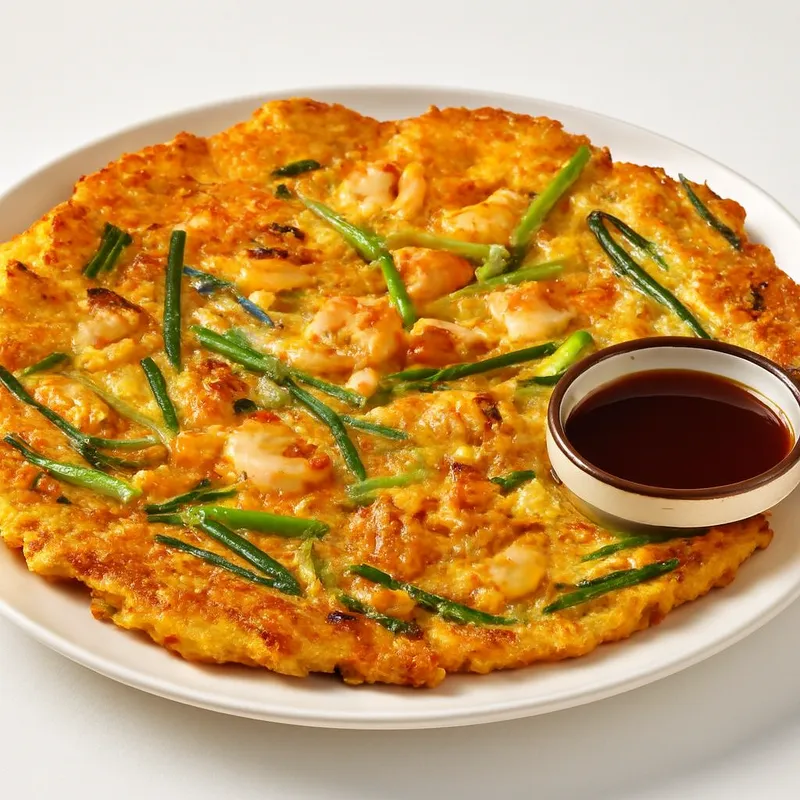




Pajeon ("scallion pancake") is documented across the Korean peninsula for centuries as peasant batter food; the seafood version belongs to the southern coast — Busan and Dongnae in particular — where market-fresh shellfish made the addition obvious. Dongnae pajeon, the most famous variant, is recorded as a regional speciality from at least the Joseon era and was reportedly served as tribute to the royal court.
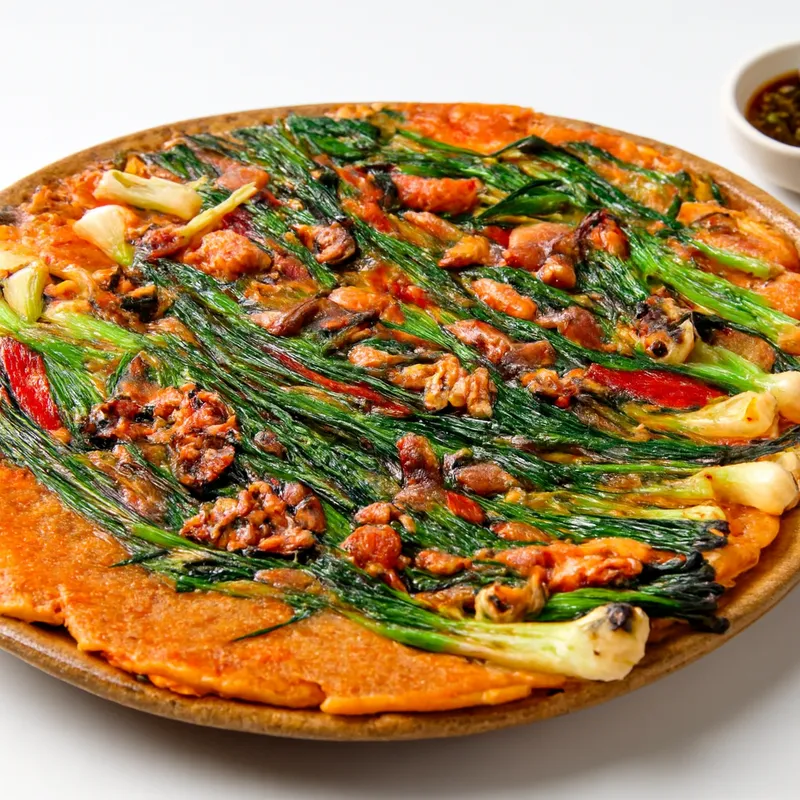
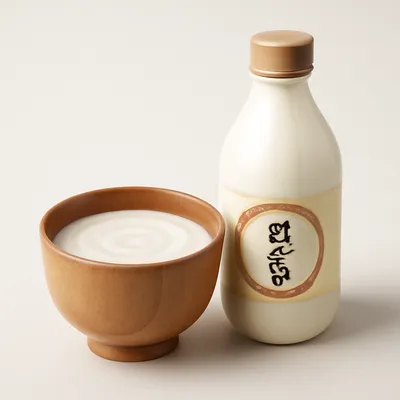
Busan's rainy-day pancake — scallions held together by a thin wheat-and-rice batter, studded with squid, oyster, and shrimp. Drinks pair: makgeolli, always. The crispy edge against the gummy center is the whole point.
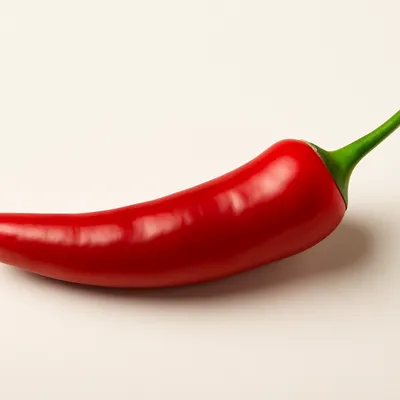
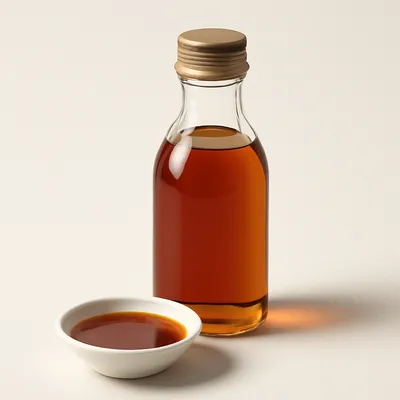
A flat pancake the size of a dinner plate, dense with whole green onions laid lengthwise and dotted with squid rings, shrimp, mussels, sometimes oyster. Crisp at the edges, custardy in the middle where the seafood juices meet the batter. Tear with chopsticks, dip in soy-vinegar with chili. Best with makgeolli, especially when it's raining outside — that's the Korean reflex.
Two batters layered: a wet rice-flour-based mix poured first, then beaten egg poured over before flipping. The double pour is what gives the contrast — flour side crisps, egg side stays soft. A common home-cook mistake is one batter only, which yields either a hard biscuit or a soggy omelette. Fry in real oil depth, not a film — pajeon is shallow-fried, not pan-cooked.
Variations
Dongnae pajeon (Busan's pricier rice-flour-heavy version, served with soy-vinegar dip); kimchi-jeon (kimchi pancake); bindae-tteok (mung-bean version, Pyongyang-style); gamja-jeon (potato pancake from Gangwon).
On the Palate
Where Haemul Pajeon sits in the Korean flavor cloud
Layer two batters — the wet rice-flour mix poured first, beaten egg poured over before the flip — so the flour side fries crisp while the egg side stays soft; one batter alone gives you either a hard biscuit or a soggy omelet.
Ingredients






How it's made
5 steps · 29 min
- 15 min
In a large bowl, sift the flour and gradually whisk in cold water until the batter is smooth and lump-free. Add soy sauce, salt, and a pinch of black pepper, whisking until fully incorporated. Cover and refrigerate while you prepare the seafood.
- 210 min
Clean the squid and shrimp, slicing them into bite-sized pieces. Slice the zucchini into thin rounds and cut the scallions into long strips.
- 35 min
Heat a generous amount of oil in a large skillet over medium-high heat until shimmering. Pour half the batter into the pan, spreading it evenly. Arrange half the seafood, zucchini, and scallions over the batter, pressing them gently into place.
Watch outOil should shimmer before the batter goes in; press the toppings down so they bed into the flour side.
- 44 min
Cook the pajeon until the edges are crispy and golden brown, about 4 minutes. Carefully flip the pancake and cook the other side until equally crispy, pressing down gently with a spatula.
Watch outListen and look for edges turning crisp-golden before you commit to the flip — that's your four-minute mark.
- 55 min
Transfer the pajeon to a towel-lined plate to drain excess oil. Repeat with the remaining batter and ingredients. Cut into pieces and serve hot with a dipping sauce, if desired.
Watch outRest it briefly on a towel so the crisp holds instead of steaming soft on the plate.
Archive tool suggestions — not reviewed
These legacy suggestions have not been evidence-reviewed and are not presented as required tools.