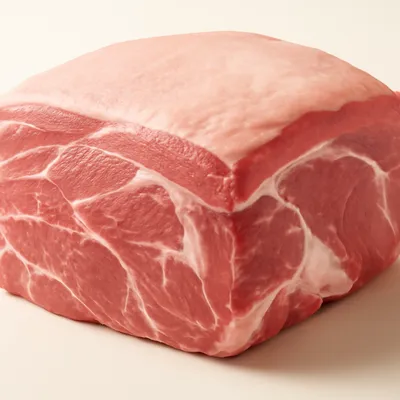


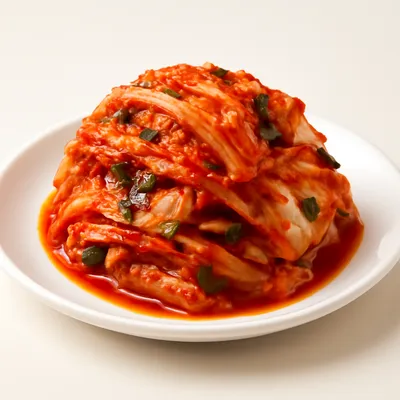
Bossam is recorded in Joseon-era Korean cookbooks as a winter dish tied to gimjang — the annual late-fall mass kimchi-making, when households boiled pork to feed the women working all day on hundreds of cabbage heads. The fresh just-salted cabbage and oyster-laden bossam-kimchi are direct gimjang byproducts. The restaurant form arose in mid-20th-century Seoul.
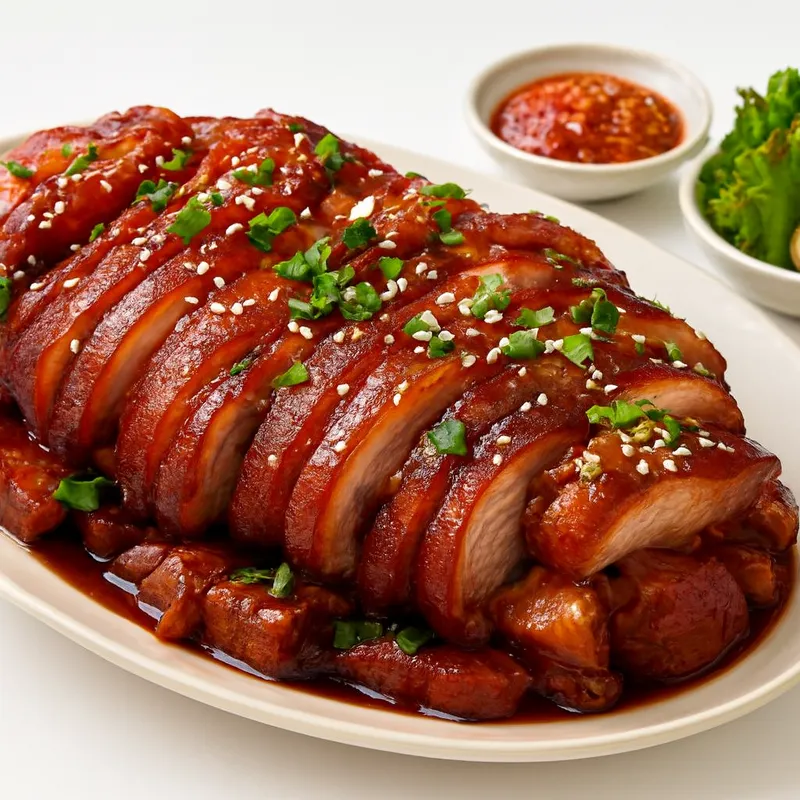
Pork belly poached in doenjang water with whole spices, sliced thin, wrapped in salted napa leaves with raw oyster, garlicky kimchi, and saeujeot. Seoul wedding food before it became drinking food.
Thick slices of boiled pork belly, just-cooked and still warm, laid on a platter. You build each bite at the table: a leaf of napa cabbage or red lettuce, a smear of ssamjang (doenjang plus gochujang plus garlic), a slice of raw garlic, a tongue of fresh oyster-radish kimchi (bossam-kimchi), the pork on top. Fold tight, eat in one. Lean and clean compared to grilled pork — you taste the meat itself.
The boil is everything — water plus doenjang, soybean paste, ginger, garlic, leek, coffee, sometimes a whole onion and a cinnamon stick — about an hour for a slab of belly, until a chopstick passes cleanly. Boiling pulls the strongest pork odor out (which grilled belly leaves in); doenjang then deodorizes further. Cut against the grain, served warm not hot — too hot melts the cabbage leaf when wrapped.
Variations
Classic bossam with kimchi-buchu-mu (same-day radish-and-leek kimchi); gul-bossam (with raw oysters in fall-winter); manul-bossam (garlic-heavy); Wangbi-jib in Jongno is the tourist standard, Wonjo Jokbal in Gongdeok the local one.
On the Palate
Where Bossam sits in the Korean flavor cloud
Simmer the pork slab in the doenjang-and-aromatics broth for about 90 minutes until a chopstick slides through cleanly — that long gentle boil, not a hard one, is what pulls the strong pork odor out and leaves the belly tender.
Ingredients










How it's made
4 steps · 1 hour 50 min
- 110 min
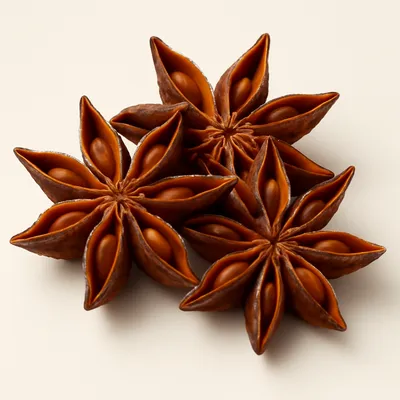
Tie the pork shoulder and belly with kitchen twine to hold their shape. In a large pot, combine water with star anise, ginger, scallion roots, garlic, doenjang, coffee powder, and tea leaves. Submerge the pork completely in this aromatic broth.
- 290 min
Bring the broth to a gentle boil over medium heat, then reduce to a simmer. Cook for about 90 minutes, until the pork is tender and infused with the broth's flavors.
Watch outOnce it reaches a boil, back the heat off to a lazy simmer with just a few bubbles breaking the surface — never a rolling churn.
- 35 min
Carefully remove the pork from the broth and rinse it under cold water to stop the cooking process. Untie the twine and wrap the pork in a clean cotton cloth. Press lightly to maintain its shape.
Watch outPoke the thickest part with a chopstick — it should slide in and out with no resistance before you lift the pork out.
- 45 min
Once cooled, slice the pork into thin pieces. Arrange on a platter and serve with lettuce, garlic slices, and ginger. Optionally, add fresh raw oysters for gul-bossam.
Watch outLet it cool to just warm before slicing thin against the grain, so the slices stay supple enough to wrap without tearing the leaf.
Archive tool suggestions — not reviewed
These legacy suggestions have not been evidence-reviewed and are not presented as required tools.