
Bavarois, or Bavarian cream, is a cold molded dessert built from three classical components: a crème anglaise (a stirred egg-yolk custard), gelatine, and whipped cream folded in for lightness. The warm custard is set with bloomed gelatine, cooled until it begins to thicken, then lightened with the cream and chilled in a mould for several hours. Unmoulded, it stands as a pale, quivering dome that is cool, smooth, and barely set, melting on the tongue between a panna cotta and a mousse. More than a dessert in its own right, it is a foundational building block of French pâtisserie: the cream that fills charlottes lined with ladyfingers, layers diplomate puddings, and sets molded entremets.



Bavarois is a classic of French haute pâtisserie that was codified in the early 19th century. Marie-Antoine Carême detailed and popularised it in Le Pâtissier royal parisien (1815), where he treated it under the older name fromage bavarois and described versions on an egg-custard base, flavoured with fruits or nuts and set with gelatine; the preparation was carried forward and further fixed through Escoffier's later codification. Despite the name, the dessert is French, and its link to Bavaria is genuine but not firmly documented: it is traditionally explained either as an homage to a distinguished Bavarian — the Wittelsbach princes, for whom French chefs are said to have cooked in the 17th and 18th centuries — or simply as an exotic flourish, while the word fromage is sometimes read not as 'cheese' but as a reference to the mould or shaped form (from the Latin forma). No single inventor or precise founding event can be confidently assigned. What is well attested is its role as a structural cream: the base of charlottes, diplomates, and molded entremets across the classical repertoire.
Turned out from its mould, a bavarois is a pale dome that wobbles when the plate is nudged. The texture is cool and creamy, set just firmly enough to hold its shape yet softening the instant it meets the tongue — lighter than panna cotta, denser than mousse, with no rubber or bounce in a well-made one. It is delicately sweet, perfumed with vanilla or brightened by fruit, and is typically served in a pool of fruit coulis or crème anglaise that cuts its richness. The mark of a good bavarois is restraint: barely set, so it melts rather than springs back.
A bavarois is set in three stages. First, the crème anglaise base: egg yolks and sugar are whisked, tempered with hot vanilla-infused milk, and cooked gently while stirring to about 82–85°C, the point at which yolk proteins thicken the custard to the nappe (it coats the back of a spoon and a finger leaves a clean line). Pushed past roughly 85°C the proteins coagulate too far and the custard curdles into scrambled grains — the classic failure. Second, gelatine bloomed in cold water is stirred into the warm custard, where it dissolves (gelatine goes into solution above about 50°C); as the mixture cools, the collagen-derived protein strands re-link into a thermo-reversible gel network that begins to set below roughly 15–20°C and firms fully when chilled. Too little gelatine and the cream will not unmould; too much and it turns rubbery and bouncy. Third, whipped cream is folded into the cooling, just-thickening custard: timing is everything, because if the base is still too warm the cream's fat melts and the foam deflates, while if the base has set too far it folds in lumpy and seizes. The aerated cream is then chilled in a mould for several hours; a brief dip in warm water loosens the gel at the wall so the dome releases cleanly when turned out.
Variations
Bavarois is flavoured in countless ways: vanilla, chocolate, coffee, praline, or a fruit bavarois made by folding in raspberry, strawberry, or passion-fruit purée. Structurally it underpins several named desserts — it is the cream piped into a charlotte (a mould lined with ladyfingers), the body of a diplomate, and a layer in molded entremets, and it appears in modern guise in verrines or as a chilled insert inside cakes. Its close relatives are worth distinguishing: the charlotte is essentially a bavarois in a sponge-finger case, the diplomate a related set cream, and panna cotta is the Italian cousin — cream set with gelatine but with no egg custard at its base, which makes it denser and plainer than the lightened bavarois.
On the Palate
Where Bavarois sits in the French flavor cloud
Ingredients
Serves 8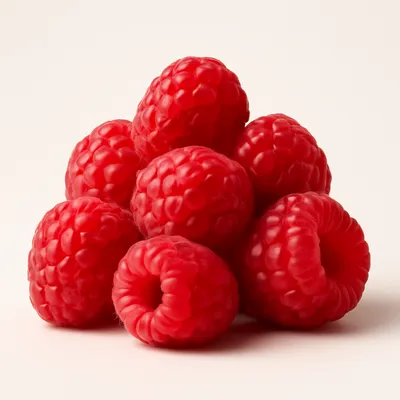
How it's made
7 steps · 4 hours 30 min
- 110 min
Split a vanilla pod and warm 500 ml milk with the seeds and pod until steaming, then leave to infuse off the heat.
- 28 min
Whisk 6 egg yolks with 120 g sugar until pale, then temper in the hot milk in a thin stream while whisking.
- 312 min
Return to gentle heat and stir constantly until the custard thickens to the nappe and reaches 82–85°C; do not let it boil or it will curdle.
Watch outPull the custard right at the nappe, 82–85°C, when it coats the spoon and a finger leaves a clean line — a few degrees more and the yolks scramble into grains.
- 410 min
Stir 8 g gelatine, bloomed in cold water and squeezed, into the hot custard until fully dissolved, then strain and cool the base until it just begins to thicken.
Watch outCool the base until it just begins to thicken before folding in cream — fold too warm and the cream melts and the mousse won't stay light.
- 58 min
Whip 350 ml cream to soft peaks and fold it gently into the cooling custard in two or three additions, keeping the mixture light.
Watch outFold the whipped cream in gently in additions — beat it in and you knock out the air, giving a dense set instead of a light one.
- 6240 min
Pour into a lightly oiled mould (or individual moulds), tap out air bubbles, and chill for at least 4 hours until fully set.
- 75 min
Dip the mould briefly in warm water, invert onto a plate to turn out the bavarois, and serve with a fruit coulis or crème anglaise.
Archive tool suggestions — not reviewed
These legacy suggestions have not been evidence-reviewed and are not presented as required tools.


