In Practice
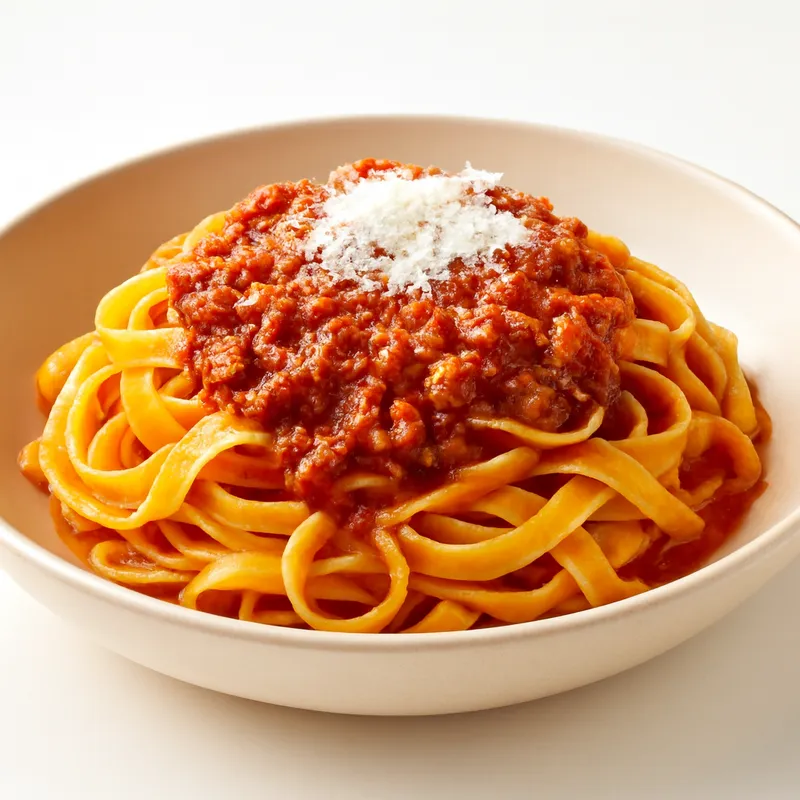
Standard Italian ratio 2:1:1 onion:celery:carrot, all cut to ~3mm dice (battuto). Roughly 30ml olive oil per 200g vegetables in a heavy-bottomed pan over low heat (induction setting 3-4 of 9). Stir every 2-3 minutes for 20-30 minutes total. Done when onion is fully translucent-to-pale-gold, never brown — color = burned alliums = bitterness. Some Bolognese variants add pancetta for porky depth. Failure modes: high heat browns the alliums before the carrots soften, leaving a bittersweet base; under-dicing leaves crunchy carrot bits in the finished sauce; rushing past 20 minutes leaves raw-onion sulfur in the background.
Background
In the sun-dappled kitchens of medieval Tuscany, the soffritto was born out of necessity and abundance. The 14th century saw a rise in small-scale farming, where vegetables like onions, carrots, and celery thrived in the region’s fertile soil. These ingredients, readily available and affordable, became the cornerstone of everyday cooking, providing a depth of flavor to the simplest of dishes. It was here, amidst the rolling hills and bustling markets, that the trifecta of aromatics found its place simmering gently in olive oil.
As trade routes expanded during the Renaissance, the technique traveled throughout Italy, adapting to local flavors and ingredients. In southern regions, garlic might join the mix, while in the north, butter replaces olive oil. The soffritto’s influence even spread beyond Italy’s borders, inspiring the Spanish sofrito, which includes tomatoes and peppers, and the French mirepoix, which omits garlic entirely. Yet, the Italian soffritto remains distinct, its balance of ingredients unchanged, grounding countless regional dishes.
How It Works
Slow sweating at 90-130°C in fat (not browning) drives off cellular water from finely-cut alliums and umbelliferae, breaks down their cell walls, and triggers two reactions: onion sulfides (propanethial S-oxide) hydrolyze into sweeter mercaptans, and carotenoid-rich carrots release lipid-soluble flavor into the oil phase. Long-chain glutamates from the aromatics dissolve into the fat, building a flavor scaffold that distributes evenly through the eventual sauce.


Through Time
Roots in Roman pulmentum and medieval Italian cucina povera. Named soffritto (sub-fried) in Tuscan-Emilian recipe collections from the 14th century. Pellegrino Artusi's 1891 *La Scienza in Cucina e l'Arte di Mangiar Bene* codified the modern 2:1:1 battuto. Marcella Hazan's 1973 *Classic Italian Cookbook* set the English-language standard; Lidia Bastianich and Massimo Bottura carry the contemporary canon. Regional cousins: Spanish sofrito (tomato-forward), French mirepoix (no oil-sweating step required), Cajun trinity (bell pepper subs for carrot).
Related cooking knowledge
Mirepoix is the French parallel — same trinity in similar ratio but typically raw-added to a long-cook stock rather than pre-sweated. Sofrito (Spanish) is tomato-forward and shorter. Cajun trinity replaces carrot with bell pepper. Indian bhuna for masala bases uses ginger-garlic-onion sautéed darker. Cantonese aromatic base (ginger-scallion-garlic) is the equivalent in stir-fry traditions.


