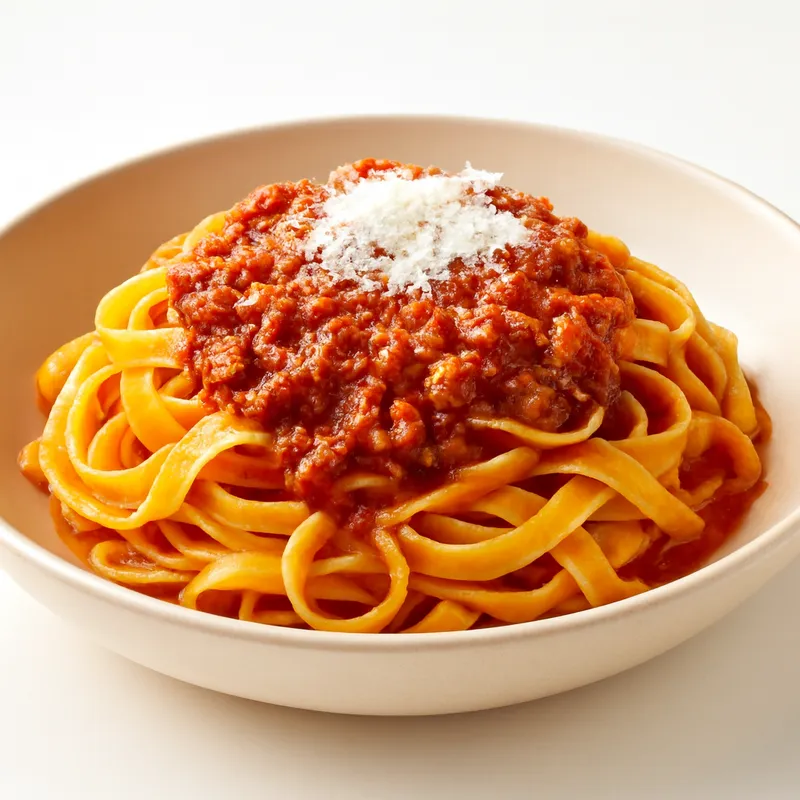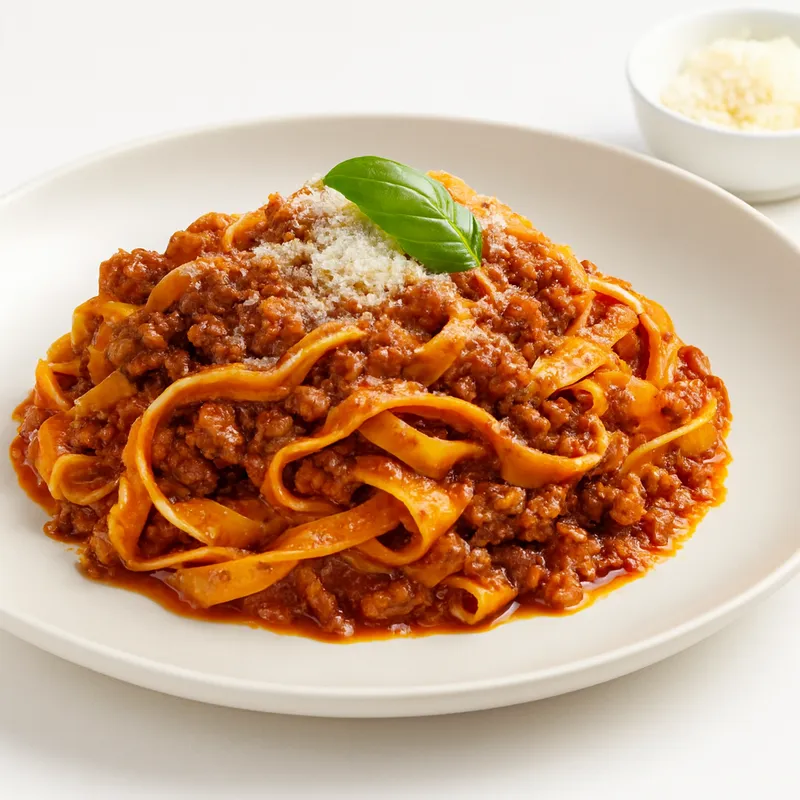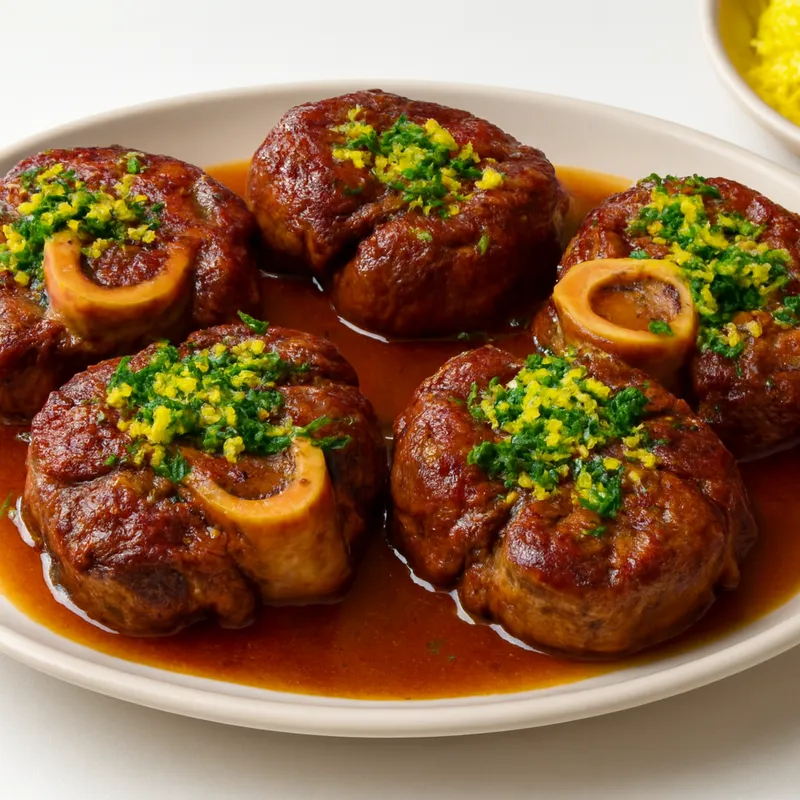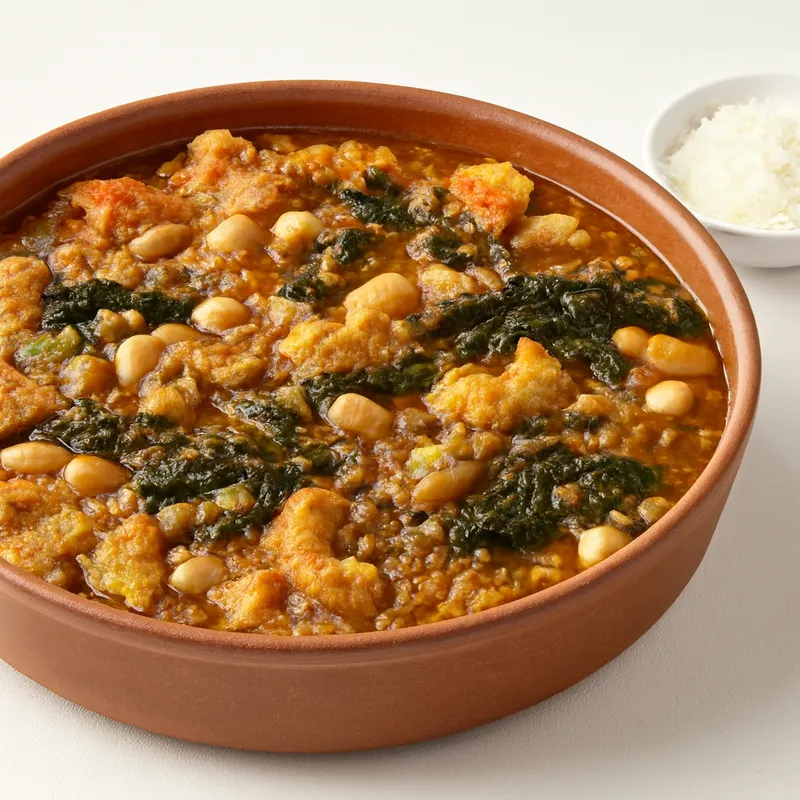



Despite the name, Genovese is Neapolitan — documented in Naples since the 15th century. One theory says it's named after Genoese sailors and merchants who ran taverns near the port of Naples and cooked it; another that "genovese" was a Naples kitchen term for any onion-heavy braise. Either way, it's been on Naples Sunday tables for 500+ years and isn't eaten in Genoa.
Despite the name, a Naples Sunday dish for 500-plus years and not eaten in Genoa. Two kilos of onions for 500g of pasta, cooked five hours down to brown jam — no tomato, no sugar; the sweetness is all Maillard.
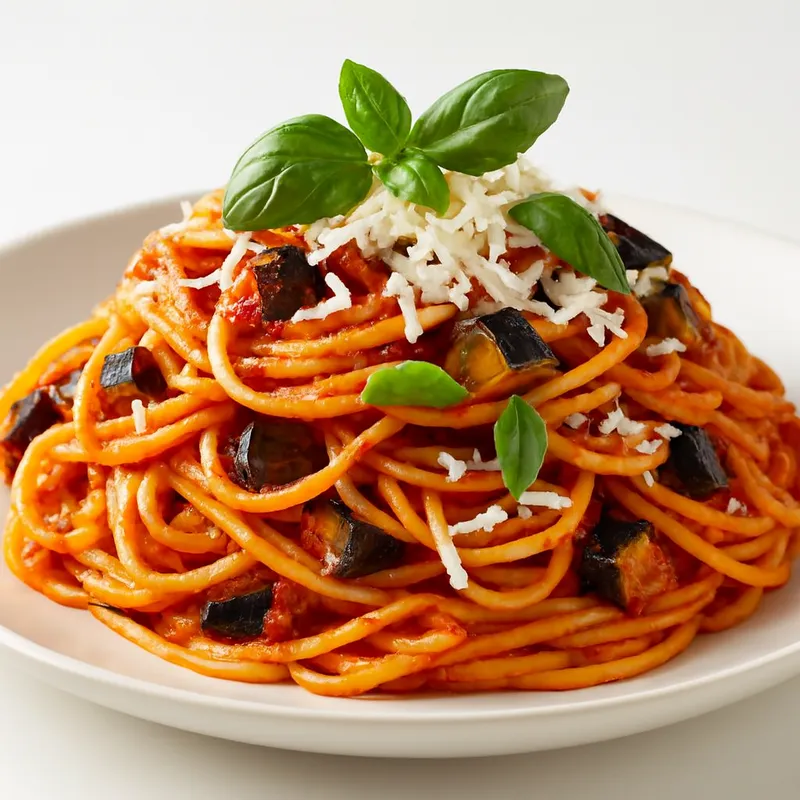
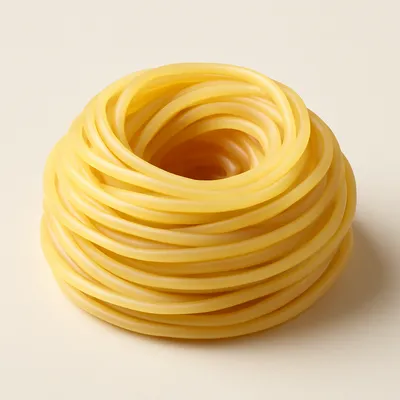
Tubes of ziti or rigatoni in a slumping brown onion sauce, scraps of beef shredded through it. No tomato, despite being Neapolitan — confusingly named after Genoa. The onions have cooked five hours and gone sweet, jammy, almost the color of a long roux. Tastes of onion candy and braised meat. Sharp grated cheese on top to cut the sweetness.
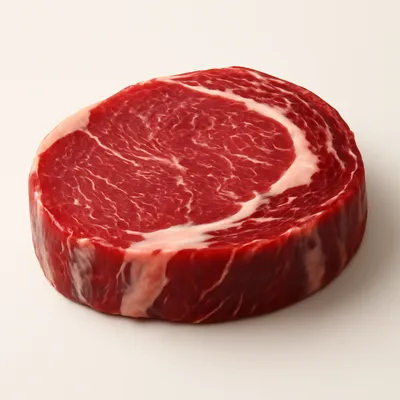
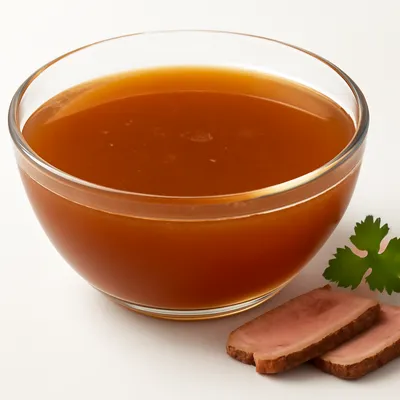
The dish lives or dies on onion volume and patience: 2kg of onions for 500g pasta is normal, sliced thin and cooked covered for the first hour to sweat without color, then uncovered for three to four more to caramelize down to a fraction of original volume. No tomato, no sugar — the sweetness is purely Maillard. A piece of beef (gamboncello) cooks in the same pot and is shredded back in.
Variations
Classic Neapolitan uses gamboncello (beef shank) and ziti spezzati; the genovese bianca skips the meat for a vegetarian Lent version; a Campanian seafood variant called la genovese di mare (or di polpo) swaps the beef for octopus, which braises down sweet and tender in the same onion sauce.
On the Palate
Where Pasta alla Genovese sits in the Italian flavor cloud
This is an onion dish that happens to have beef in it: pile in twice the onions you think you need and cook them low and slow for hours, first covered to sweat, then uncovered to caramelize — all the sweetness is Maillard, so rushing the onions or reaching for sugar wrecks it.
Ingredients



How it's made
6 steps · 45 min active + 3 hours waiting
- 110 min
Heat olive oil in a large, heavy-bottomed pot over medium heat until shimmering. Add finely chopped onion, carrot, and celery, stirring occasionally until the vegetables are soft and translucent, about 10 minutes.
Watch outSweat the soffritto only until soft and translucent, no color — this is the gentle base, so pull back the heat if the edges start to catch.
- 215 min
Add the beef, stirring to break it into small pieces. Cook until the meat is browned and any liquid has evaporated, about 15 minutes.
Watch outEnsure the meat is browned evenly; if too much liquid accumulates, increase the heat slightly to evaporate it.
- 35 min
Pour in the white wine, scraping up any brown bits from the bottom of the pot. Simmer until the wine is reduced by half, about 5 minutes.
- 40 min
Cover the pot with a lid and reduce the heat to low. Let the mixture simmer gently for 2-3 hours, stirring occasionally, until the beef is tender and the flavors are melded.
Watch outUnder the lid at a bare simmer, the beef should go completely fork-tender and the onions melt into a soft jammy mass — barely a bubble, or it dries out.
- 510 min
Bring a large pot of salted water to a rolling boil. Add the ziti and cook until al dente, according to package instructions, about 10 minutes.
Watch outMake sure to stir the pasta occasionally to prevent sticking.
- 65 min
Drain the pasta and add it to the pot with the beef sauce. Toss to coat the ziti thoroughly. Serve with grated Pecorino Romano and Parmigiano-Reggiano on top.
Watch outToss the drained pasta straight into the sauce over heat so it drinks up the onion braise and turns glossy — a little starchy pasta water loosens it if it tightens.
Archive tool suggestions — not reviewed
These legacy suggestions have not been evidence-reviewed and are not presented as required tools.