




Milanese, documented from around the 18th century, with the dish first codified and popularized in Pellegrino Artusi's 1891 cookbook La scienza in cucina e l'arte di mangiar bene. The name simply means «bone with a hole», naming the marrow cavity. The «in bianco» (white) original predates tomato in Italian cooking; the red-tomato «ossobuco moderno» is a 20th-century variant that locals still consider second-tier.
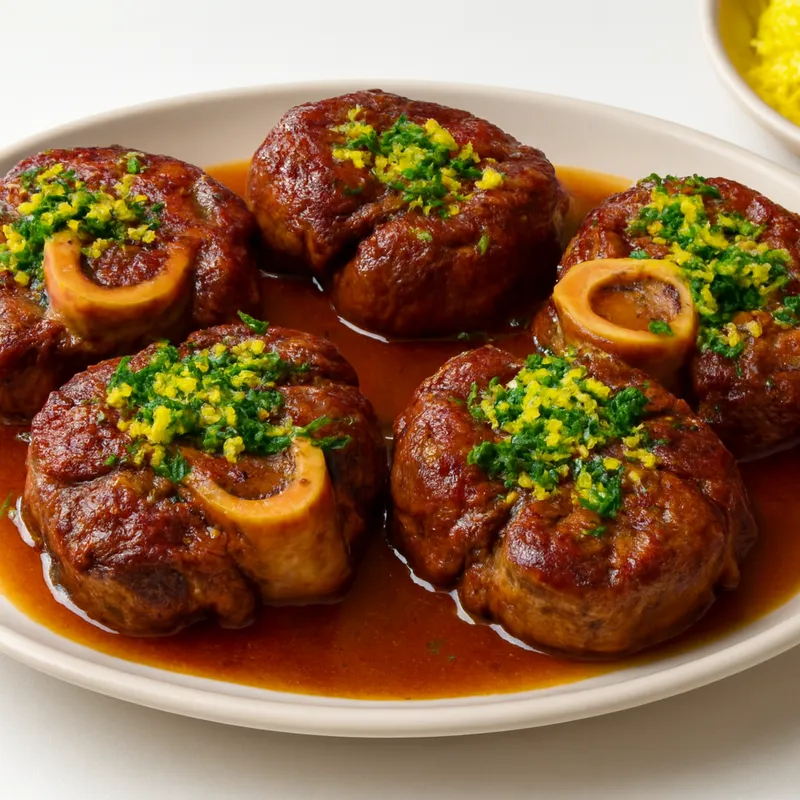
This Milanese classic is all about the tender meat and the rich, marrow-filled bone. The gremolata is the zesty finishing touch that brightens it all.
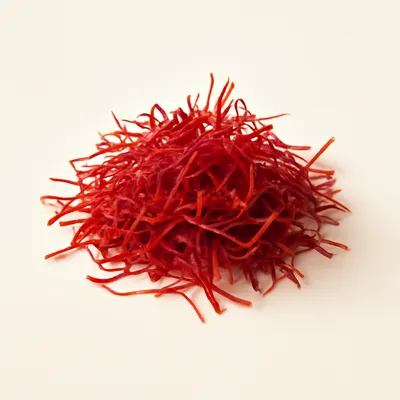
Cross-cut veal shank, two fingers thick, braised until the meat slumps but still holds the bone. Marrow sits in the center hole — pull it out with a small spoon, that's the prize. Pale broth-and-wine sauce, no tomato in the Milanese original. Gremolata (raw lemon zest, parsley, garlic) goes on at the end. Served over saffron risotto alla milanese.
Tie the shank with twine before searing — without it, the connective ring lets go and the disc falls apart. Braise low, never above 90°C in the liquid, for 90 minutes; collagen melts to gelatin and the marrow stays in the bone. Gremolata is added raw at the table, not cooked in: the lemon-garlic sharpness is supposed to cut through the rich braise, and heat would dull it.
Variations
Osso buco in bianco (no tomato, the older version); osso buco con risotto alla Milanese is the canonical pairing; some regions sub lamb shank for veal.
On the Palate
Where Osso Buco sits in the Italian flavor cloud
Tie each shank around its middle with kitchen twine before searing and braise it barely at a simmer — the twine holds the connective ring so the disc keeps its shape, and gentle heat melts the collagen to silk while the marrow stays put in the bone.
Ingredients
Serves 4





How it's made
6 steps · 38 min active + 2 hours waiting
- 110 min
Pat the veal shanks dry with paper towels and season them with salt and pepper. Dredge each piece lightly in flour, shaking off any excess. Heat olive oil in a heavy pot over medium-high heat until shimmering, then add the shanks. Sear them until golden brown on all sides, about 10 minutes.
Watch outSear until deep golden-brown crust on every face — pale meat means no fond, and the fond is where the sauce gets its backbone.
- 28 min
Remove the shanks and set them aside. Lower the heat to medium and add chopped onion, carrot, and celery to the pot. Stir until the vegetables are soft and fragrant, about 8 minutes.
- 35 min
Add minced garlic and a sprig of thyme, stirring briefly until the garlic is aromatic. Pour in the white wine to deglaze the pot, scraping up any browned bits. Let it simmer until the wine reduces by half, about 5 minutes.
Watch outLet the wine bubble down until the raw alcohol smell is gone and it's reduced by half, leaving a mellow, concentrated tang.
- 45 min
Return the veal shanks to the pot, nestling them among the vegetables. Pour in enough broth to come halfway up the sides of the shanks. Add chopped tomatoes and bring the liquid to a simmer.
- 55 min
Cover the pot and transfer it to a preheated oven at 325°F (160°C). Braise until the meat is tender and almost falling off the bone, about 2 hours.
Watch outIt's ready when a fork twists the meat apart easily but the disc still clings to the bone — pull it before it slides off entirely.
- 65 min
Remove the pot from the oven. Serve the osso buco with a sprinkle of freshly chopped parsley and lemon zest to brighten the rich flavors.
Archive tool suggestions — not reviewed
These legacy suggestions have not been evidence-reviewed and are not presented as required tools.