In Practice
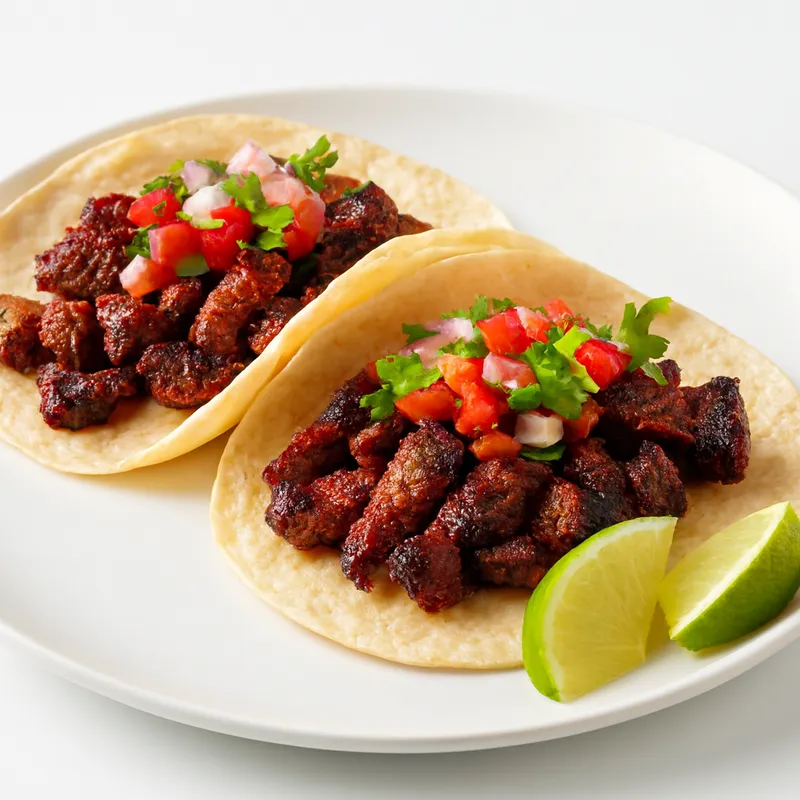
Slice across grain after 5-min rest — fibers parallel to bite means tender, perpendicular means stringy. Char grate to 250°C minimum before meat hits. Marinade should not contain oil that pools (causes flare-up) or sugar that burns at high heat. Tortillas warmed on the same grate absorbing rendered juices. Failure modes: marinating past 12 hr in citrus chemically 'cooks' surface to a chalky layer; thin cuts overshoot fast — 15 sec late is medium-well.
Background
Carne Asada emerged in the rugged landscapes of northern Mexico during the 19th century, a testament to the region's cattle-ranching tradition. The abundance of cattle and the necessity for communal gatherings forged this grilling ritual, where cowboys, or vaqueros, would gather around open fires, searing beef cuts over mesquite wood. The harsh desert climate and sparse vegetation made this an ideal cooking method, infusing the meat with the wood's distinctive smokiness.
As Mexico's borders shifted and cultures mingled, Carne Asada traveled, embedding itself into the culinary identities of neighboring regions and even crossing into the southwestern United States. While variations exist, such as using citrus marinades or different wood types, the Norteño version remains the archetype, relying on simplicity and the primal allure of fire and smoke.
How It Works
Thin-cut beef (skirt, flank, arrachera) marinated 2-12 hr in lime juice (pH ~2.2), citrus, garlic, cumin, achiote. Citric acid partially denatures surface proteins, opening structure for flavor diffusion without the prolonged tenderizing that would mush the meat. Hardwood or mesquite at 320-400°C delivers Maillard plus mesquite-pyrolysis phenols (cresol, syringol) in 90-180 seconds per side.



Through Time
Norteño vaqueros of Chihuahua, Sonora and Coahuila 1700s-1800s grilled fresh-slaughtered beef over mesquite. Diana Kennedy's *The Cuisines of Mexico* (1972) documented the regional technique; Rick Bayless's *Authentic Mexican* (1987) and Roberto Santibañez carry the contemporary US canon. The arrachera cut became a national emblem of northern Mexican grill culture.
Related cooking knowledge
Grilling is the parent — Carne Asada is its acid-marinade, thin-cut, mesquite-specific variant. Asado is the Argentine relative working with whole cuts. Marinating supplies the citrus-cure step. Tandoor shares the yogurt-acid marinade principle for a flame-meat finish.

