In Practice
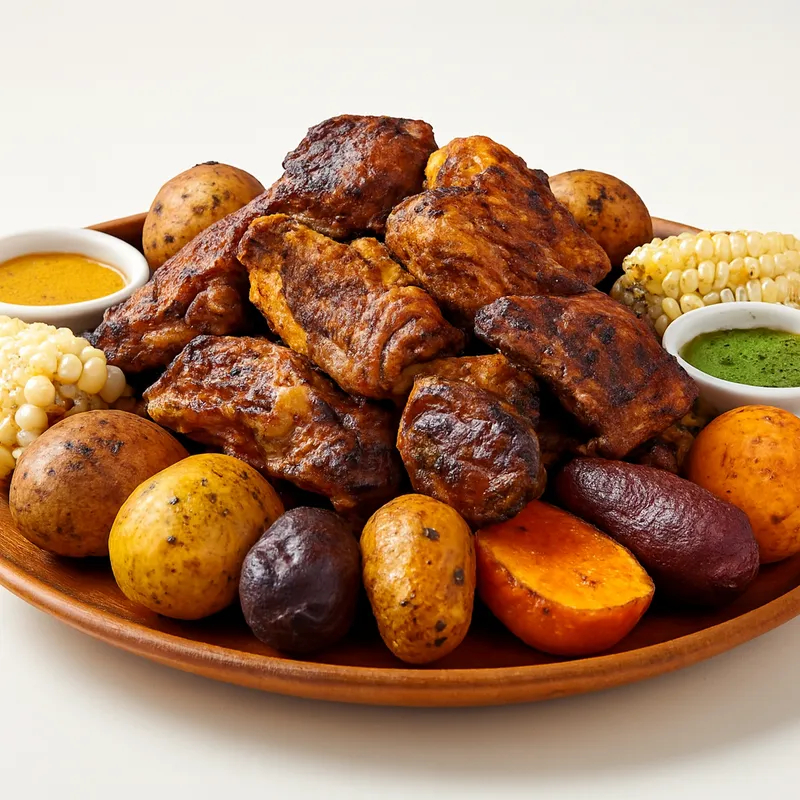
Dig 80cm-deep pit, line and stack with river stones, fire burned over 2-3 hours until stones glow. Marinated meats (huacatay, chicha de jora, garlic) wrapped first, then potatoes and beans, oca, sweet potato in upper layer, fava pods and cheese (humita) on top. Seal with chala, banana leaves, wet sacks, earth. Cook 1-1.5 hr. Open ceremonially. Failure modes: stones not hot enough means undercook with smoke taint; pit sealed before steam builds blasts dirt through gaps.
Background
Pachamanca emerged over two millennia ago in the Andean highlands, a testament to the ingenuity of the pre-Incan civilizations. The rugged terrain and the abundance of natural stones provided an environment ripe for innovation. In this mountainous region, where the soil was rich and varied, communities developed a method of cooking that celebrated the earth itself, using heated stones to slow-cook meats and tubers buried in the ground.
With the Spanish conquest, Pachamanca evolved, incorporating flavors and ingredients introduced by the Europeans, such as lamb and pork. The technique spread across Peru, each region adding its own flair, from the herbs used to the types of meat. While the central method remains unchanged, regional variations reflect a tapestry of cultural influences, maintaining its status as a communal dish for celebrations and rituals.
How It Works
Volcanic stones heated 3-4 hours in an open fire reach 400-500°C surface temperature, retain that heat as massive thermal reservoir when buried with food in an earth pit. Radiant + conductive heat through banana or chala (corn husk) leaves cooks meat and tubers in their own moisture; clay-and-earth seal traps steam. Ash and stone minerals impart subtle alkaline notes; herb layer (huacatay, chincho, marmaquilla) infuses through the steam phase.



Through Time
Pre-Incan Wari and Tiwanaku cultures c. 800 CE practiced stone-pit cookery in the Ayacucho and Junín highlands; the technique is documented in the 16th-century Inca Garcilaso de la Vega's *Comentarios Reales*. Gastón Acurio's Astrid y Gastón restaurant brought pachamanca into modern Peruvian fine-dining canon; Virgilio Martínez's Mil restaurant near Moray reconstructs ceremonial pits at altitude.
Related cooking knowledge
Earth-oven cousins include Polynesian umu, New England clambake, and Mexican barbacoa de pozo — all share the heated-stone-and-earth principle. Dum Cooking encloses the same steam mechanism in a metal pot. Steaming and Roasting share components Pachamanca combines.