
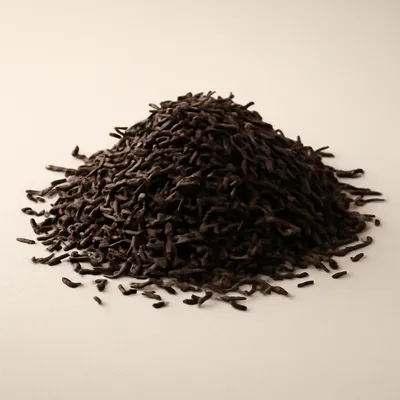
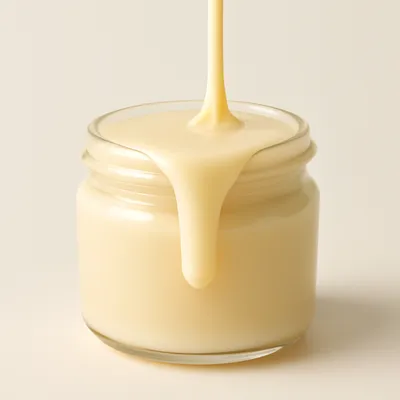
Pulled milk tea — strong Ceylon black + sweetened condensed milk poured between two pitchers from arm's length to froth. Mamak signature.

Teh tarik traces back to Indian-Muslim immigrants recruited to the Malay Peninsula under British rule to work the rubber estates and tin mines. As early as the 1870s these immigrants had set up tea stalls at the entrances to rubber plantations, originally serving the masala chai of their homeland to the labourers. The transformation into teh tarik is generally dated to after World War II: amid postwar hardship, stalls switched to cheap tea dust to cut costs, and added condensed milk to mask the resulting bitterness — the prototype of today's drink. The pulling technique itself likely derived from the Indian chai-wallah habit of pouring tea between two vessels to cool it; in this region the distance was deliberately stretched higher and wider, both to speed cooling and as a draw for customers. Malaysia's Department of National Heritage has listed teh tarik as part of the national heritage and it is regarded as the national drink. Its precise birthplace remains disputed — Penang and Kuala Lumpur each lay claim, and neighbouring Singapore also claims a share, with no settled answer.
On 22 February 2014, 5,393 people pulled tea simultaneously in Putrajaya for a Malaysia Book of Records mass-pull event. Mansoor's in Bangsar, KL, has pulled teh tarik since 1972; the family still hand-blends Sri Lankan BOPF with broken-leaf Assam.
Topped with a 2cm collar of beige foam that survives 5 minutes. Underneath: tannic Ceylon, intensely sweet from condensed milk, with a malted edge from the aeration. Served in a thick-walled glass, scalding. Pulled correctly, no skin forms.
The pull does two things: cools to drinking temp without dilution, and aerates condensed-milk fat into a stable foam. Distance matters — minimum 60cm pour to get the foam right. Tea must be brewed at restaurant strength (roughly 4× home tea-bag concentration).
Variations
Teh tarik halia (with fresh ginger juice, traditional flu remedy), teh ais (poured over ice, no foam), and teh c (with evaporated milk instead of condensed, Penang style — less sweet). Ipoh whitens it further with extra evaporated milk.
On the Palate
Where Teh Tarik sits in the Malaysian flavor cloud
Ingredients
Serves 1How it's made
4 steps · 6 min active + 5 min waiting
- 15 min
Brew 30 g loose Ceylon black tea in 500 ml just-boiled water 5 min.
Watch outBrew it restaurant-strong — near four times a home teabag — or the pull froths thin and the milk swamps it.
- 22 min
Strain into a metal pitcher; stir in 4 tbsp sweetened condensed milk.
- 33 min
Pull (pour) the tea between two pitchers from arm's length to froth.
Watch outPull from a full arm's length — the long fall is what whips the condensed-milk fat into foam.
- 41 min
Repeat 5–7 times until a thick foamy head forms; serve in glass cups.
Watch outKeep pulling until a thick creamy head stands on top — that stable foam is the whole point.


