In Practice
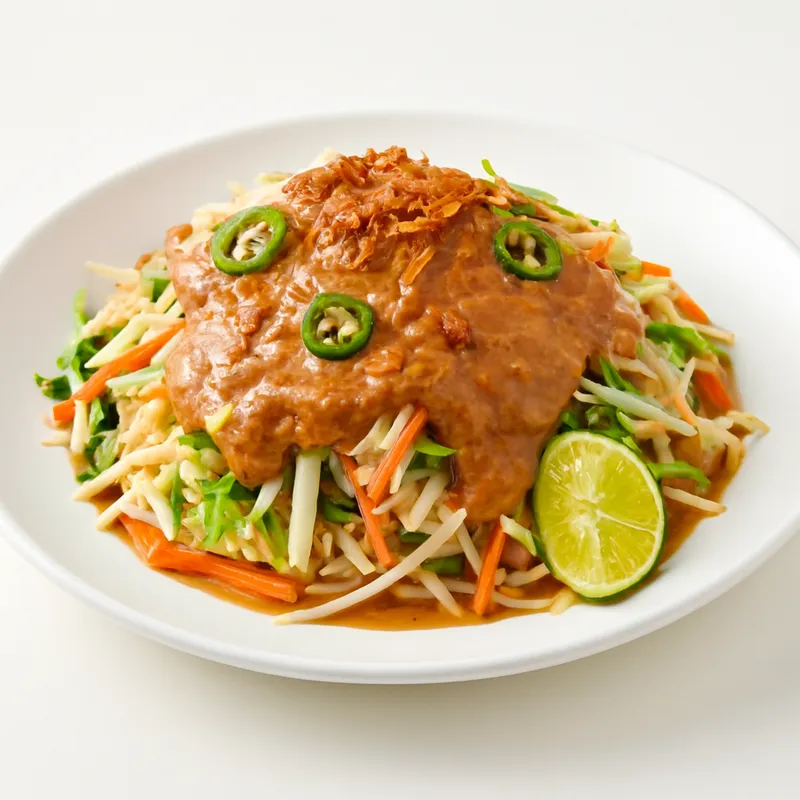
Vegetables: kemangi (lemon basil — woody stems removed), daun pohpohan (Pilea trianervia, served whole), young petai, jengkol slices, mentimun cut on the bias 4-5 mm. Sambal terasi: 8-10 cabai rawit + 2 cm terasi toasted to golden + tomat + jeruk limau, stone-mortar pounded (cobek). Failure mode: blender-processed sambal — the cell-wall rupture profile differs from cobek pounding, releasing more bitter capsaicin and less aromatic oil.
Background
In the verdant hills of West Java during the 19th century, Lalapan emerged as a staple in Sundanese cuisine. The Sundanese people, known for their deep connection to nature, embraced the bounty of their lush environment. With fertile soils yielding an abundance of fresh produce, the technique of serving raw vegetables was born out of necessity and respect for the land. The region's humid climate preserved the crispness of these vegetables, making them ideal candidates for raw consumption.
As trade routes expanded and cultures intermingled, Lalapan traveled beyond the Sundanese heartland. While the core concept remained, variations sprouted across the Indonesian archipelago. In central Java, for instance, some versions incorporate fried tempeh or tofu, adding layers of texture. Despite these variations, the Sundanese original, marked by its simplicity and reliance on raw, natural flavors, remains distinct and cherished.
How It Works
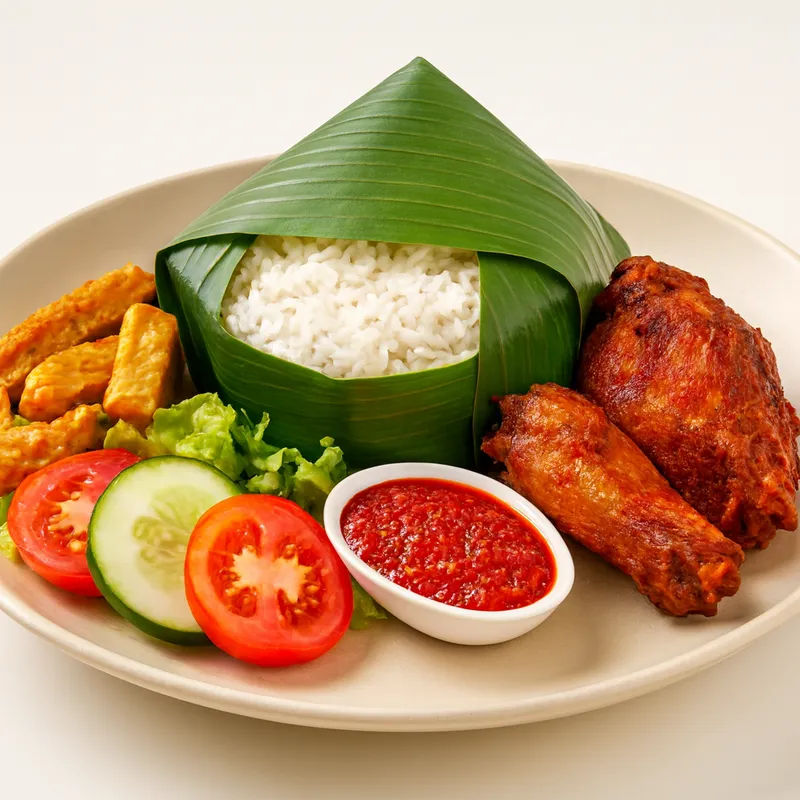
A Sundanese plate-architecture pairing raw or briefly blanched vegetables (mentimun, kemangi, daun singkong, kacang panjang) with a sambal — typically sambal terasi (fermented shrimp paste). The cultural mechanism is *thermal contrast*: cold crunchy vegetable + room-temperature fiery sambal + hot steamed rice, all in one bite — the rice rebalances the chili, the vegetable rebalances the rice.

Through Time
Indigenous to the Sundanese (西爪哇) of West Java, predating Dutch colonial records. First written reference appears in Raden Ayu Maria Ulfah's 1937 *Boekoe Masak-masakan*. Bandung's Saung Mang Engking and Cibiuk restaurant chain (founded Garut, expanded 1990s) industrialized the format. Cibiuk's village-style sambal is now a national reference.
Related cooking knowledge
Banchan-Sundanese parallel: both serve raw vegetable cleansers alongside a fiery anchor (kimchi vs sambal). Pounding is the foundational technique for the sambal itself. Mezze shares the raw-cold-vegetable-as-meal-spine logic; rice replaces mezze's bread. Mala parallels the sambal's chili-heat axis but lacks lalapan's raw-cold counterpoint.