The Brussels dialect name for head cheese — pork cheeks, tongue, ears, and trotters simmered for hours until the collagen-rich tissue releases enough natural gelatin to set the chopped meat in a vinegared jelly; served cold, sliced, often tucked into a crisp Brussels pistolet roll.


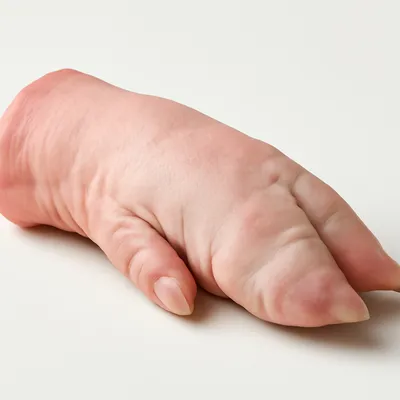


Kip-kap is the Brussels vernacular name for head cheese (fromage de tête in French, hoofdkaas in Dutch). The preparation belongs to a pre-industrial tradition of whole-animal butchery in which every part of the pork head — cheeks, tongue, ears, snout, and trotters — was rendered edible through long simmering, the collagen-rich liquid setting naturally into a jelly on cooling. The Brussels name 'kip-kap' appears in 19th-century local dialect records and is associated with the network of triperies (specialist offal and charcuterie shops) that were concentrated around Brussels' old covered market halls, near today's Bourse district. What distinguishes kip-kap from its French and Dutch counterparts is the prominent use of white wine vinegar: the acidulated jelly gives the Brussels version a sharp, clean finish that serves both as flavour accent and mild preservative. Traditionally the preferred filling for a pistolet — the Brussels soft white roll with a crisp crust that has been the city's daily bread since at least the 18th century — kip-kap was both a market-stall snack and a charcuterie staple. The etymology of the name is disputed; it may derive from the rhythmic sound of the knife chopping the cooked head meat.
Cold from the knife — each slice holds together under gentle pressure, then yields: the jelly melts almost instantly on the tongue, releasing chopped pork cheek, the slight chew of ear cartilage, and a clean vinegar brightness that cuts through the richness. Best with grain mustard and a cornichon.
The gelatin matrix is the structural core of kip-kap. Collagen from pork head skin, ears, trotters, and rind — rich in type I and type III collagen — denatures and hydrolyses into soluble gelatin at 80–95°C during the 3–4-hour simmer; concentrations above 3–4g per 100ml of cooking liquid are sufficient to set a firm jelly on cooling below 35°C. White wine vinegar lowers the jelly's pH to approximately 4.5–5.0; mild acidity slows gelatin cross-linking slightly, producing a softer, more yielding set than a neutral jelly, while acetic acid simultaneously inhibits spoilage bacteria. The overnight refrigeration (4°C) allows gelatin triple-helix structures to form slowly and completely, producing a clean-cutting, stable terrine. Overheating the cooking liquid above 95°C, or excessive reduction, can partially degrade gelatin into smaller peptides that do not set.
Variations
Some recipes add cloves, allspice, and fresh thyme alongside bay and peppercorns for a more aromatic profile. A few Brussels versions incorporate a small amount of chicken alongside the pork head, though the purely porcine version is considered traditional. Kip-kap may also be served plain on toast or rye bread, with pickled onions as accompaniment.
On the Palate
Where Kip-kap sits in the Belgian flavor cloud
Ingredients
Serves 8

How it's made
9 steps · 30 min
- 1120 min
Have the butcher split the pork head in half. Rinse all pieces — head halves, tongue, ears, trotters — under cold running water. Soak in a large pot of cold salted water for 2 hours to draw out blood.
- 210 min
Drain and transfer all pieces to a large pot. Cover with cold water, bring to a boil, and boil for 5 minutes. Drain and rinse everything thoroughly under cold water — this removes impurities and produces a clearer final jelly.
- 35 min
Return all pieces to the pot with fresh cold water to cover generously. Add the quartered onion, sliced carrot, bay leaves, thyme sprigs, and black peppercorns, plus a splash of white wine vinegar.
- 4215 min
Bring to a boil, then reduce to a gentle simmer. Cook uncovered or partially covered for 3–4 hours, skimming foam and fat regularly, until all meat is very tender and the oxtail (if used) falls from the bone.
Watch outSimmer 3-4 hours skimming often until the meat falls off the bone — this long cook is what pulls enough collagen out to set the jelly firm.
- 510 min
Lift all cooked pieces onto a large board. Strain the cooking liquid through a fine sieve into a clean saucepan; discard the spent aromatics. Reserve the liquid.
- 620 min
While the meat is still warm, strip all flesh from the bones. Chop the cheek meat, tongue (peeled), and ears into small, even pieces about 1cm. Discard bones and any large fat deposits.
- 715 min
Test the cooking liquid for gelatin strength: chill a small spoonful on a cold plate for 2 minutes — it should set to a firm, barely-wobbly jelly. If thin, reduce by simmering until it sets firmly in the test. Season with salt, white pepper, and white wine vinegar until pleasantly sharp.
Watch outTest-set a spoonful on a cold plate before you pour — if it doesn't firm up, reduce further, or the terrine won't slice and will slump.
- 85 min
Combine the chopped meat in a bowl; pour over enough seasoned cooking liquid to submerge. Pour into terrine moulds or a loaf pan lined with cling film. Cool to room temperature, then refrigerate overnight.
- 9480 min
Unmould, slice cold, and serve in a pistolet roll or on bread with grain mustard and cornichons.
Archive tool suggestions — not reviewed
These legacy suggestions have not been evidence-reviewed and are not presented as required tools.



