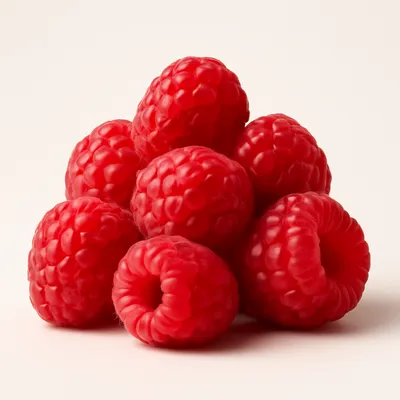
A cone-shaped Belgian candy from Ghent with a hard gum-arabic shell and a soft, gelatinous raspberry-flavored liquid center, nicknamed 'neuzeke' (little nose) in Flemish and 'chapeau-de-curé' (priest's hat) in French. The outer crust forms over seven days at 55°C in a warm chamber; the candy deteriorates within three weeks as the interior crystallizes, making it virtually un-exportable.


Belgian confectionery tradition holds that the cuberdon was discovered by chance in 1873 by pharmacist De Vynck in Ghent, who found that a failed medicinal gum-arabic syrup preparation had developed a hard outer crust while remaining liquid inside—the defining characteristic of the finished candy. An alternative tradition attributes the recipe to a clergyman in Bruges, which may explain the French name 'chapeau-de-curé.' During World War II, gum-arabic imports to Europe ceased, nearly causing the cuberdon to disappear; production resumed after the war when imports restarted. On 3 April 2009, VLAM officially recognized cuberdon as a traditional Flemish regional product.
Crack through the faintly grainy gum-arabic shell and intensely sweet, slightly floral raspberry syrup floods the mouth—the drama of hard exterior meeting liquid interior is the entire point of the candy.
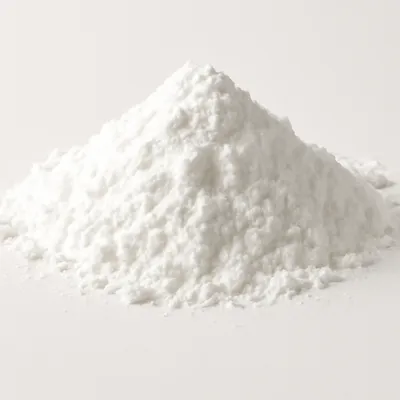
Gum arabic (an acacia-tree exudate) dissolves readily in water but forms a rigid polysaccharide network as moisture evaporates. The syrup is poured into cornstarch molds and held at 55°C: the starch absorbs surface moisture while the warm temperature accelerates evaporation at the exposed face. Gum-arabic chains concentrate and cross-link via hydrogen bonds at the outer layer, building an increasingly thick rigid shell from outside inward, while the interior—protected by the forming shell—retains its liquid, supersaturated state. After approximately three weeks at room temperature, moisture continues migrating outward until the interior sugar solution reaches its crystallization threshold, the center solidifies, and the textural contrast that defines the candy is lost.
Variations
Classic purple raspberry; since the early 21st century, over 25 flavors including strawberry, cherry, lemon, banana, peppermint, lavender, jenever (Ghent gin), and violet. Modern extensions include cuberdon ice cream, dessert sauce, and jenever-infused liqueur.
On the Palate
Where Cuberdon sits in the Belgian flavor cloud
Ingredients
Serves 24How it's made
7 steps · 30 min
- 110 min
Dissolve gum arabic powder in warm water (40°C), stirring until fully clear; combine with sugar and raspberry syrup in a heavy saucepan.
- 215 min
Heat gently over low heat, stirring, until all sugar is fully dissolved; do not allow a vigorous boil.
- 310 min
Bring to a gentle simmer and cook to 105–110°C to concentrate the syrup slightly; remove from heat and let cool to around 60°C.
- 410 min
Prepare starch molds: fill a shallow tray with fine cornstarch and press cone-shaped forms (2.5cm base diameter) into the starch at even intervals to create mold impressions.
- 55 min
Carefully ladle or pipe the warm syrup into each starch impression, filling to just below the surface.
- 610080 min
Transfer the tray to a chamber or oven set at 55°C and maintain this temperature for 5–7 days until a firm gum-arabic shell has formed around each candy while the interior remains liquid.
Watch outHold the starch tray at 55 degrees for the full 5 to 7 days — this slow drying is what builds the firm shell while the centre stays liquid; rush it and the shell won't set.
- 715 min
Gently lift each cuberdon from the starch, brush off excess cornstarch with a soft brush, wrap individually in cellophane, and consume within 3 weeks.
Archive tool suggestions — not reviewed
These legacy suggestions have not been evidence-reviewed and are not presented as required tools.



