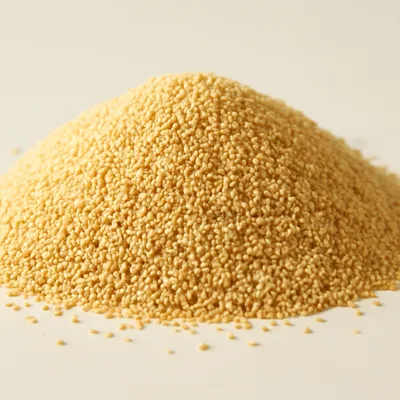
Nutty and slightly sweet, amaranth has a unique, grainy texture that lends a hearty chew to dishes. This ancient grain, revered by the Aztecs, brings a rich earthiness to both savory and sweet preparations.
Where it comes from
Amaranth has deep roots in Mesoamerican cultures, where it was a staple food and sacred plant. Its resilience and nutritional profile made it a symbol of sustenance during challenging times.
In the kitchen
In cooking, amaranth serves as a gluten-free alternative in baking and can be used as a thickener for soups or stews. Its seeds can be popped for a crunchy topping or toasted for added depth.
Across cuisines
Amaranth is an herb with a nutty and slightly sweet flavor, often used for its grainy texture that adds a hearty chew to dishes. It is valued for its rich earthiness in both savory and sweet preparations. Amaranth is also used in traditional dishes across various cultures, particularly in Central and South America.
Nutrition (per 100g)
AI-estimated; model and run unavailable.


