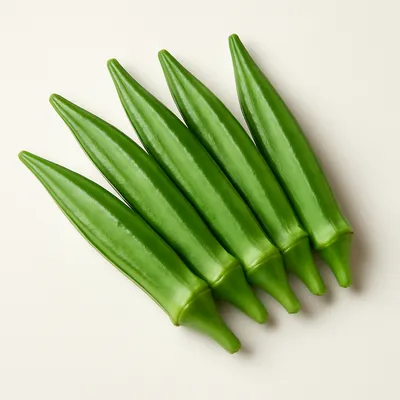
Okra
Tender and succulent, okra has a unique texture that is both crisp and slightly slimy, with a mild, grassy flavor that absorbs spices beautifully. Its distinctive shape adds visual interest to dishes.
Where it comes from
Okra is believed to have originated in Africa, where it's a staple in many cuisines, particularly in Southern U.S. cooking and various African and Middle Eastern dishes.
In the kitchen
Okra is commonly used in stews and gumbo, where it acts as a thickener, while also being fried or pickled for added texture and flavor.
Across cuisines
Okra — folded into fungee for the signature silky texture, and a vegetable in pepperpot. Source: Wikipedia (Fungee).
Okra is the natural thickener of soup kandja — the sliced pods release a mucilage that gives the broth a silky-glossy body. Also stewed whole as a side. The Senegalese version of the dish typically combines okra with palm oil, fresh fish, and rice or fonio as the starch.
Okra — sliced and folded into the cornmeal for cou-cou; its mucilage gives the dish its signature silky texture. Source: Wikipedia (Cou-cou and flying fish).
Nutrition (per 100g)
AI-estimated; model and run unavailable.


