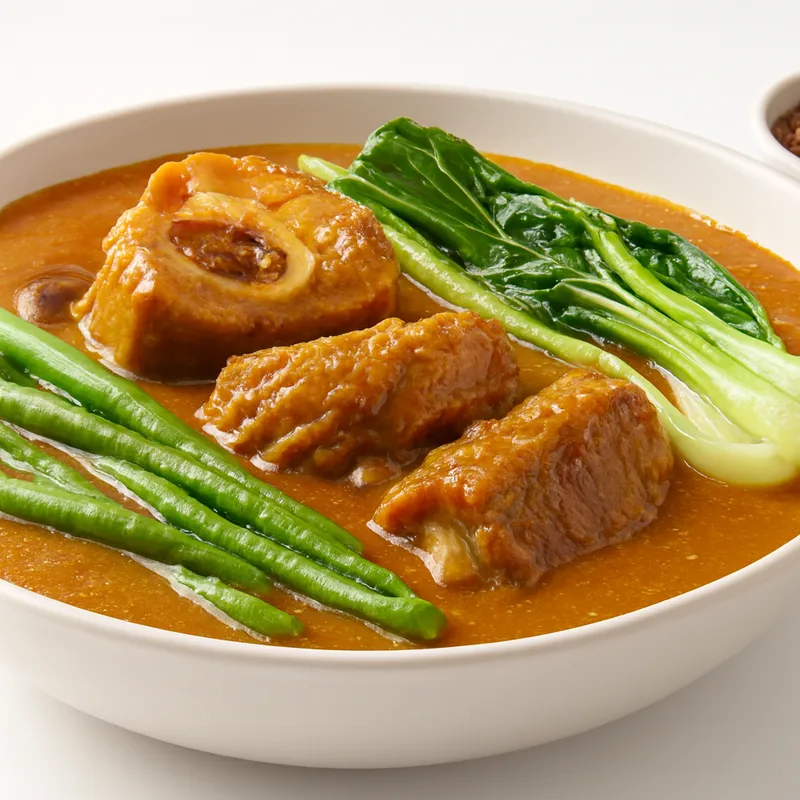




From the Ilocos region of northern Luzon — the name comes from the Ilocano word pinakebbet, meaning "shrunken" or "shriveled," referring to the way the vegetables cook down in their own moisture. Documented in Ilocano culinary writing since the 19th century. The Tagalog version (further south) adds tomato and a little water, but Ilocano purists maintain that pinakbet should never see added liquid — the steam comes from the vegetables themselves.
From the Ilocano word pinakebbet (shrunken), documented in Ilocano cookery since the 19th century. Ilocano purists never add water — steam comes from the vegetables. Stirring breaks the eggplant and clouds the bagoong; this dish is layered, never tossed.
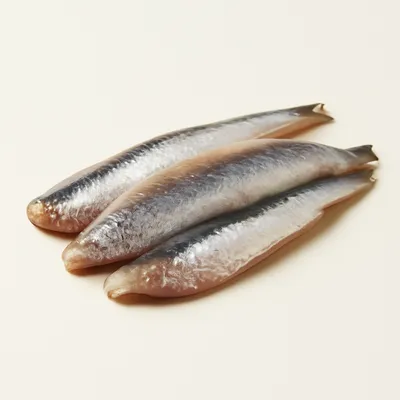
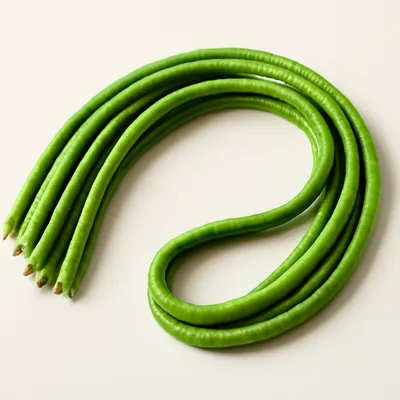
A shallow dish of mixed vegetables stewed in their own steam: bitter melon (ampalaya), eggplant, okra, long beans, squash, sometimes a few pieces of pork belly. Bound by bagoong — fermented anchovy or shrimp paste — that turns the pan liquor brown and salty-funky. The vegetables should keep their shape and color, not collapse. The bitter melon is the load-bearing flavor; without it the dish reads like a generic vegetable stew.
The vegetables go in by water content and density, in order: squash and long beans first (they release least), then eggplant, then okra, bitter melon last. The pan is covered and the heat kept low so the cell walls collapse just enough to release moisture without browning. Stirring is the enemy — it breaks the eggplant and clouds the bagoong. A real pinakbet is layered, never tossed.
Variations
Pinakbet Ilocano (no water, bagoong isda — fish paste); pinakbet Tagalog (Bulacan-Manila — adds tomato and a splash of water, often shrimp paste bagoong alamang); some Cagayan kitchens add fried fish; Vigan version is the densest, almost no liquid in the pan.
On the Palate
Where Pinakbet sits in the Filipino flavor cloud
Ingredients




How it's made
6 steps · 1 hour
- 18 min
Sauté garlic and onion in a pan until translucent.
- 25 min
Add pork and cook until browned.
- 38 min
Stir in bagoong and sauté for additional flavor.
Watch outSauté the bagoong just until it smells nutty and toasted, not until it scorches bitter.
- 45 min
Add tomatoes, squash, and bitter melon, cooking slightly.
Watch outNestle squash and bitter melon in first; they take longest, so give them the head start on the heat.
- 53 min
Mix in eggplant, okra, and long beans, stirring well.
- 615 min
Simmer until vegetables are tender and flavors meld.
Watch outDone when the eggplant is silky and a knife slides through the squash, with a shiny glaze of released juices at the bottom.