An unleavened rice-flour flatbread cooked on a dry griddle without oil, naturally gluten-free and feather-light in texture. The daily bread of the Malabar Mappila Muslim community of northern Kerala, it is made from finely ground roasted rice flour scalded with boiling water, then rolled thin and dry-roasted until the surface develops faint golden spots and the disc puffs with trapped steam.


Pathiri is the ancestral bread of the Malabar Mappila Muslims, whose community formed through the settlement of Arab traders along Kerala's northern Malabar coast from the 7th century onward. The name is widely understood to derive from the Arabic term for a simple unleavened flatbread, reflecting the Mappila effort to replicate Arab bread culture using locally abundant rice in place of wheat. The dish is inseparable from Mappila ceremonial life: ten days before a wedding, the bride's family gathers for Arikuthu Cheral, the ritual communal hand-pounding of rice into fresh flour for pathiri, puttu and idiappam, explicitly rejecting commercial substitutes as an act of collective memory and culinary ethics. Pathiri anchors the Ramadan Iftar table across Malabar, served alongside coconut-milk meat curries and fish preparations. Ethnographic records of Mappila cuisine note nearly forty distinct pathiri varieties, driven partly by a wedding custom requiring a mother-in-law to serve a different variety each day of the forty-day post-wedding sojourn without repetition.
Soft and pliable at the center, slightly firmer at the edges, pathiri tears cleanly without crumbling. Its flavor is clean, nearly neutral rice starch, a deliberate restraint that lets the fierce spicing of the accompanying curry dominate—the flatbread provides a cooling, starchy foil, absorbing sauce and tempering heat with each bite.
The key technique is scalding: boiling salted water is poured directly onto the roasted rice flour, partially gelatinizing the starch granules before any kneading begins. This pre-gelatinization creates a cohesive dough without gluten—the gelatinized starch acts as its own binder. On the dry griddle, intense heat rapidly dries the surface while interior moisture converts to steam; the steam, trapped between the partially gelatinized starch layers, causes the disc to puff visibly, confirming internal doneness. Because no gluten network forms, the crumb never toughens and remains soft even as it cools.
Variations
Ney Pathiri deep-fries the same dough in coconut oil or ghee, producing a crisp golden shell for festive occasions. Irachi Pathiri encases spiced minced meat inside the dough before griddle-cooking. Meen Pathiri uses fish filling. Chatti Pathiri assembles multiple pathiris into a layered baked pastry cooked in a clay pot. The gluten-free rice tradition has driven the development of over forty varieties within Mappila cuisine alone.
On the Palate
Where Pathiri sits in the Indian flavor cloud
Ingredients
Serves 4How it's made
7 steps · 20 min
- 110 min
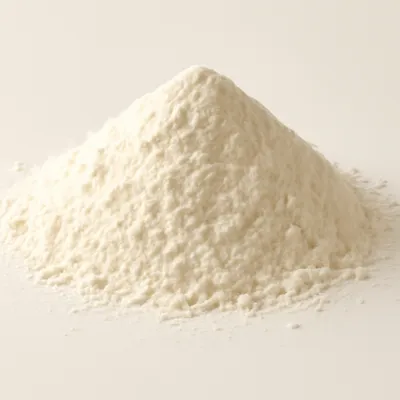
Dry-roast raw rice flour in a heavy pan over medium heat for 8–10 minutes, stirring constantly, until it smells nutty and turns slightly off-white. Skip this step if using ready-made pathiri podi.
- 22 min
Bring salted water to a full rolling boil. Remove from heat, then pour gradually into the roasted flour while stirring vigorously with a wooden spoon, forming a shaggy, steam-releasing mass. Use roughly equal parts flour and water by weight.
Watch outPour the boiling water gradually into the flour, stirring hard — the scald pre-gelatinizes the starch and is what binds this gluten-free dough; lukewarm water won't bind it.
- 34 min
Let the dough cool until handleable, about 3 minutes, then knead with lightly oiled hands for 4 minutes until smooth, pliable and crack-free. The dough should feel like firm, non-sticky playdough.
- 41 min
Divide into lime-sized balls of about 40–45 g each. Keep covered under a damp cloth to prevent drying.
- 55 min
On a surface lightly dusted with rice flour, roll each ball into a thin round 15–18 cm in diameter and about 2–3 mm thick.
- 610 min
Heat a dry tawa or cast-iron griddle over medium-high heat until very hot. Cook each pathiri for 1–2 minutes per side until faint golden spots appear and the disc puffs slightly with steam.
Watch outWatch for the disc to puff with steam on the griddle — that puff means it's cooked through inside; faint golden spots tell you to flip.
- 71 min
Stack finished pathiris and cover with a cloth to keep warm and pliable. Serve immediately alongside meat or fish curry.
