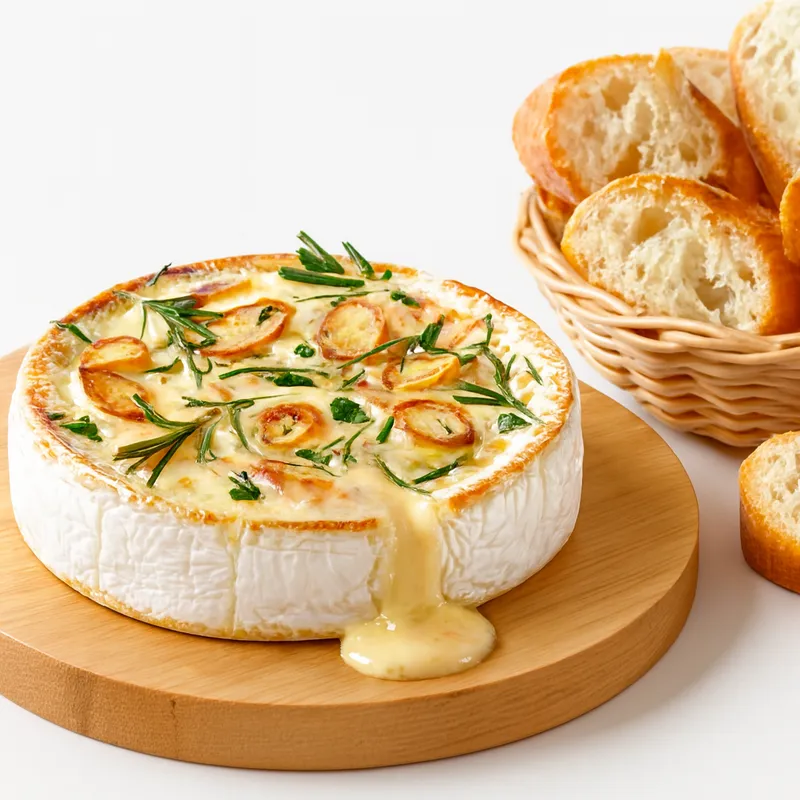
A soft washed-rind cow's milk cheese of Burgundy, made in small flat cylinders and washed repeatedly during aging with Marc de Bourgogne, so that the rind turns sticky orange and the interior softens to a pungent, spoonable cream. Created by Cistercian monks at the Abbey of Epoisses, revived in 1956 by the Berthaut dairy. AOC granted in 1991.


Epoisses is a soft washed-rind cow's milk cheese of the village of Epoisses in the Cote-d'Or of Burgundy. Wikipedia documents its creation by Cistercian monks at the Abbey of Epoisses, with the recipe later popularized by the Brillat-Savarin family in the nineteenth century. The cheese nearly disappeared in the mid-twentieth century and was revived in 1956 by the Berthaut dairy. It received its Appellation d'Origine Controlee in 1991. The defining feature is the repeated washing of the rind during affinage with water cut with Marc de Bourgogne — the local grape pomace brandy — with the marc concentration increasing toward the end of aging.
An Epoisses arrives in its wooden box, the rind a deep orange-brown, sticky and pungent, the cheese sagging under its own weight. A spoon breaks the rind and sinks into a glossy, almost liquid paste; the flavor is intense, beefy, and salty, with a clear alcoholic warmth from the marc. Eaten with a spoon, with bread alongside; pairs naturally with a glass of Marc de Bourgogne or Sauternes.
Epoisses's spoonable texture and powerful aroma come from the marc-brine wash. During affinage, the wheels are washed one to three times a week with water cut with Marc de Bourgogne, the marc concentration increasing toward the end. The alcohol-and-salt environment selects for surface bacteria — chiefly Brevibacterium linens — that thrive in the wet, alcoholic, salty conditions. These bacteria secrete proteases that ripen the paste from the outside in, softening it progressively into the fluid, glossy cream; the same bacteria produce the orange-brown sticky rind and the powerful aroma through the sulfur compounds they generate. The increasing marc concentration toward the end of affinage deepens both the rind color and the alcoholic warmth of the paste. The short aging of four to six weeks keeps the paste high in moisture, which is why the cheese can become nearly liquid.
Variations
Made in three sizes — Epoisses, Epoisses petit, and Epoisses grand; the marc wash and the soft, spoonable texture are the constants.
On the Palate
Where Epoisses sits in the French flavor cloud
Ingredients
Serves 8How it's made
6 steps · 45 min
- 130 min
Warm cow's milk and add starter and rennet; let the curd set.
- 230 min
Ladle the curd gently into small cylindrical molds and drain.
- 315 min
Demold, lightly salt the wheels, and move to a humid cellar.
- 460 min
Wash the rind one to three times a week with water cut with Marc de Bourgogne, increasing the marc concentration over the affinage.
Watch outWash the rind with the marc-and-water regularly, upping the marc toward the end — this feeds the surface bacteria that ripen the paste to a spoonable cream.
- 530 min
Age four to six weeks, until the rind is sticky orange-brown and the paste is fluid.
- 65 min
Release in its wooden box; serve with a spoon.