A soft washed-rind cow's milk cheese of Alsace and the Vosges, made in flat discs and washed repeatedly with a lightly salted brine during aging, developing a sticky orange rind and a famously powerful barnyard aroma. Traced to Benedictine monks who founded a monastery in the Munster valley in the seventh century. AOC granted in 1969.


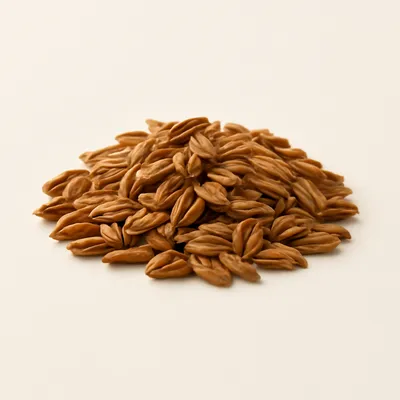
Munster is a soft washed-rind cow's milk cheese of Alsace and the Vosges, named for the Munster valley where Benedictine monks founded a monastery in the seventh century; the name derives from the Latin for monastery. The cheese is also called Munster-gerome after the town of Gerardmer. Wikipedia documents its AOC status as granted in 1969; the AOC area covers seven departments of the Vosges massif. The cheese is made in disc form, washed every two days with a lightly salted brine, sometimes with local white wine or cumin added; the repeated washing develops the sticky orange rind and the famously powerful aroma.
A wedge of Munster has a sticky, moist, orange rind that releases a powerful, pungent aroma of damp earth and barnyard; the paste beneath is smooth and glossy, softer and milder than the smell promises. The flavor is beefy and savory, with a long, slightly sweet finish. Eaten traditionally with boiled potatoes and a sprinkle of cumin, and washed down with a glass of Gewurztraminer or Alsatian beer.
Munster is defined by its washed-rind technique. During affinage the wheels are turned and washed every two days with a lightly salted brine, sometimes with white wine or cumin added. The repeated brining creates a salty, moist surface environment that selects for Brevibacterium linens and related corynebacteria; these bacteria produce the sticky orange rind and the powerful aroma from sulfur compounds generated as they break down proteins. The bacteria also secrete proteases that ripen the paste from the outside in, softening it progressively to the smooth, glossy texture. The minimum affinage of about three weeks develops the full character; the cumin sometimes added to the wash or sprinkled on serving is a traditional aromatic complement.
Variations
Made in small and large formats; sometimes washed with cumin or served with cumin seeds. Pairs classically with Gewurztraminer or Alsatian beer.
On the Palate
Where Munster sits in the French flavor cloud
Ingredients
Serves 10How it's made
6 steps · 40 min
- 125 min
Warm cow's milk and add starter and rennet; let the curd set.
- 225 min
Ladle the curd into disc molds and drain.
- 315 min
Demold, lightly salt the wheels, and move to a humid cellar.
- 460 min
Turn and wash every two days with lightly salted brine, with white wine or cumin if used.
Watch outTurn and wash the wheels with brine every two days — the salty damp surface is what grows the orange bacterial rind and its powerful aroma.
- 530 min
Age for a minimum of about three weeks (longer for the large format), until the rind is sticky orange and the paste is smooth.
Watch outAge at least three weeks until the rind is sticky-orange and the paste smooths out — cut too young and the centre is still chalky and bland.
- 65 min
Release at the desired ripeness; serve with boiled potatoes and cumin.
