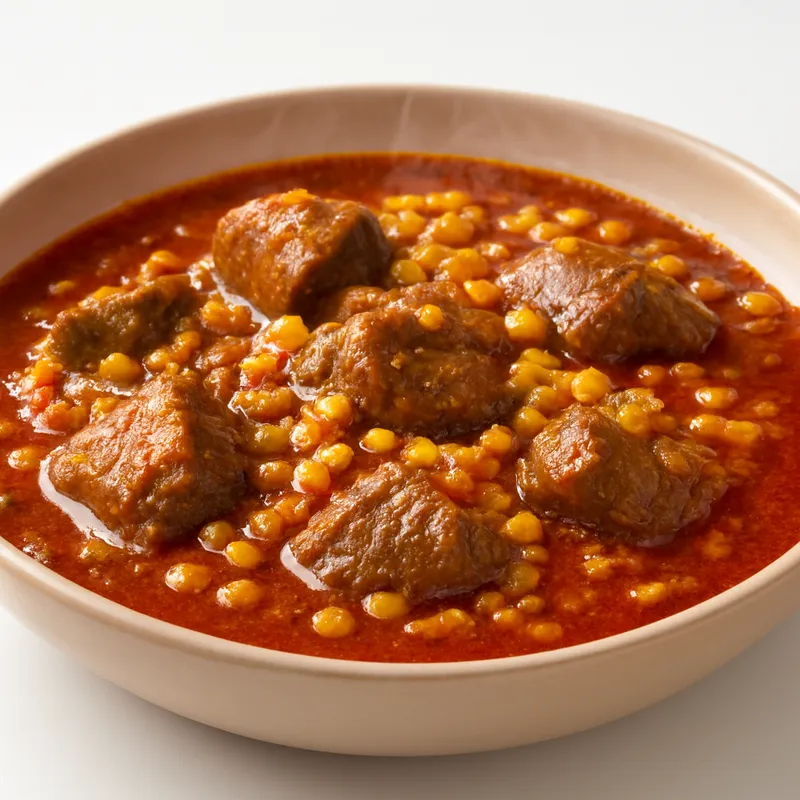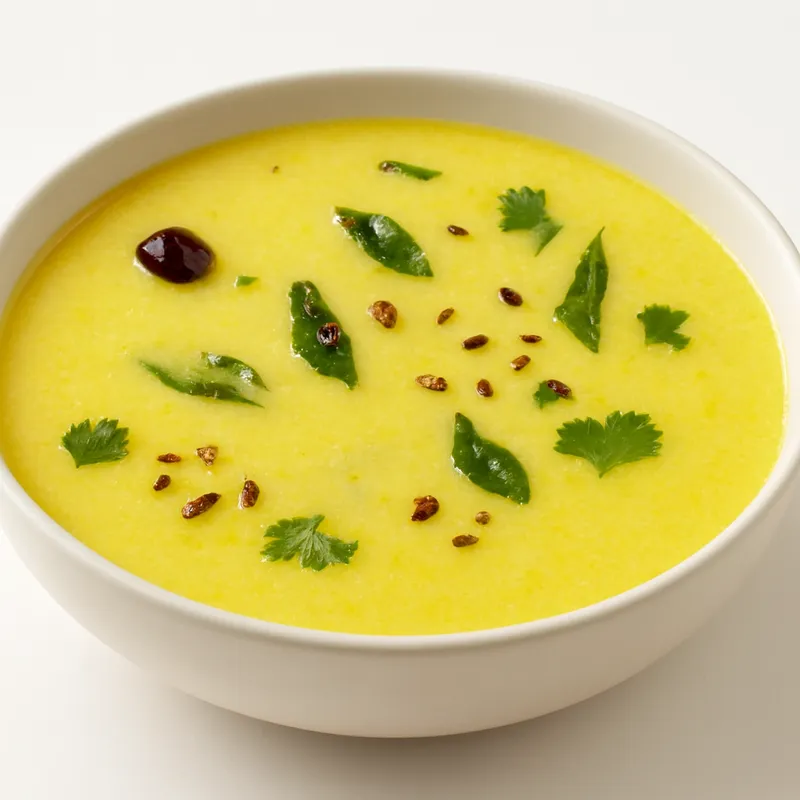




The national dish of Jordan, rooted in the Bedouin tribes of the Transjordan plateau. Jameed — yogurt salted, drained, and dried into hard balls — was the Bedouin shelf-stable dairy, made in spring when sheep milked heavily and stored for months. Mansaf was originally only served at weddings, funerals, and major guest occasions because slaughtering a sheep was a serious commitment. It was declared Jordan's national dish in the 20th century.
Jordan's national dish, eaten with the right hand off a shared shrak-bread platter — lamb in fermented dried-yogurt jameed broth over rice. The jameed is what makes it; without it you have lamb pilaf.
A platter of shrak flatbread soaked in lamb broth, topped with yellow rice and bone-in lamb pieces, the whole thing flooded with jameed sauce — a tangy, salty broth made from rehydrated dried fermented yogurt. Toasted almonds and pine nuts on top. Eaten with the right hand, standing or seated around the platter, in shared bites pressed into balls.
Jameed cannot be substituted with fresh yogurt — its acidity has been concentrated and its proteins partially fermented, which is why the sauce stays smooth and tangy without curdling when reheated with the lamb. Fresh yogurt would split immediately at simmering temperature. The dried jameed balls are soaked, blended, then strained, and only added to the lamb in the last twenty minutes — long simmering breaks even jameed.
Variations
Bedouin original was bulgur, not rice (rice came in mid-20th century); Karak (southern Jordan) makes the thickest jameed; Palestinian version sometimes adds saffron; Levantine Christian households serve mansaf at weddings.
On the Palate
Where Mansaf sits in the Palestinian flavor cloud
Add the jameed only in the last twenty minutes and keep it just under a simmer — long boiling or fresh yogurt will curdle the sauce, and a smooth tangy sauce is the whole point of mansaf.
Ingredients


How it's made
5 steps · 1 hour 5 min
- 110 min
Cut the lamb on the bone into large sections, ensuring the pieces are uniform for even cooking. Place the pieces in a pot with boiling yogurt, ensuring the meat is fully submerged. Reduce the heat to maintain a gentle simmer.
- 2120 min
Simmer the lamb in the yogurt broth over a low, steady heat. The broth should be just below a boil, with occasional bubbles breaking the surface. This slow cooking will tenderize the meat and infuse it with flavor.
Watch outThe broth should sit just below a boil — only the odd bubble breaks the surface. A rolling boil here makes the meat tough and clouds the sauce.
- 320 min
Prepare the rice by rinsing it under cold water until the water runs clear. Cook the rice in ghee, adding water and a pinch of salt, until tender and fluffy.
- 45 min
Toast almonds in a dry pan over medium heat until golden and fragrant, stirring constantly to avoid burning. Set aside for garnish.
Watch outPull the almonds the moment they turn golden and smell nutty — a dry pan tips them from toasted to burnt in seconds.
- 510 min
Arrange the ''shrak'' bread on a large serving platter. Layer the cooked rice evenly over the bread, then place the tender lamb pieces on top. Pour the creamy yogurt sauce generously over the dish, allowing it to soak into the rice and bread.
Watch outPour enough sauce that it visibly soaks into the rice and bread; a dry platter is the classic under-seasoned miss.
Archive tool suggestions — not reviewed
These legacy suggestions have not been evidence-reviewed and are not presented as required tools.