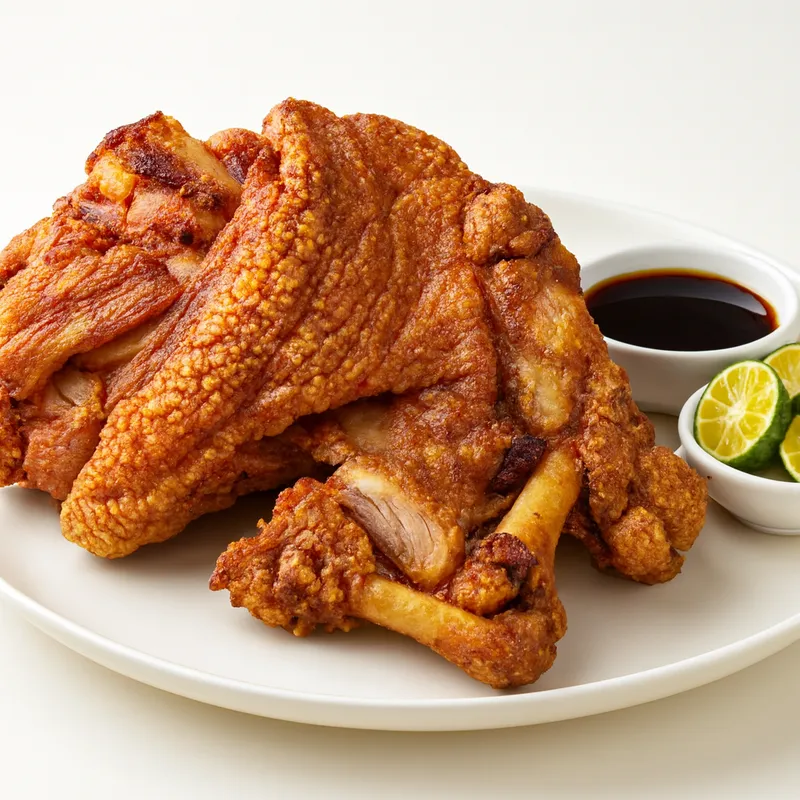
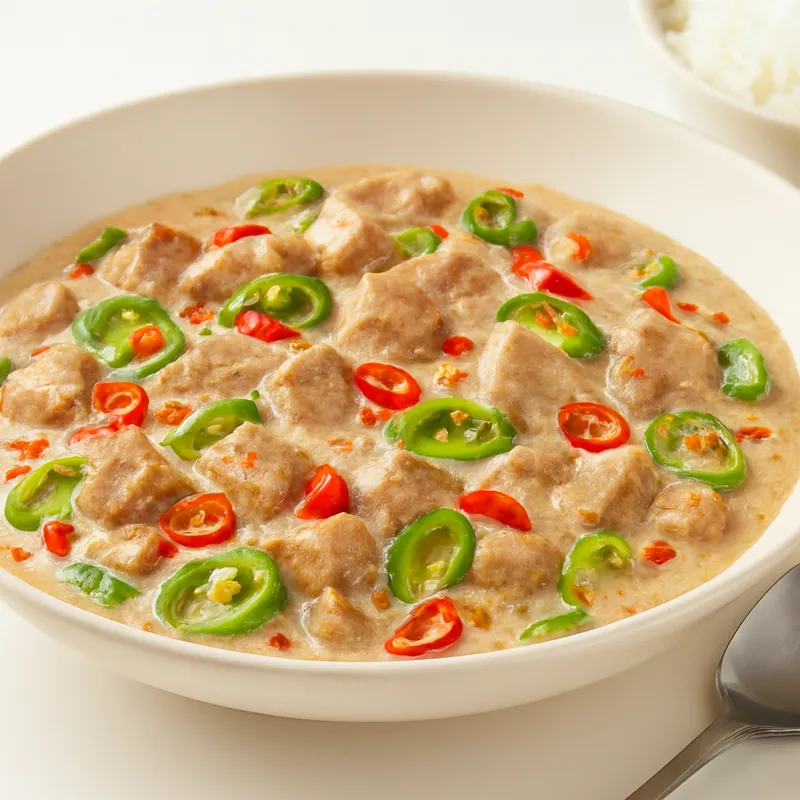
Cordillera highland pork cured with rock salt and salted, then sun-dried and/or smoked for weeks to months (Igorots prefer alder/'alnos' wood, with guava as substitute). The mountain Igorot answer to bacon — used as flavor base in pinikpikan or sliced thin as cured-meat appetizer.


Igorot villages across Mountain Province preserved pork this way before refrigeration; the 7-day smoke gives shelf life of months at altitude. Ceremonial meat for Cordillera rituals.
Dense smoky-salty pork with deep woodsmoke aroma; pinkish-grey color, firm bite. Eaten thinly sliced raw or stewed into greens.
Salt cure draws moisture; pine smoke deposits phenols that preserve and flavor; air-drying at cool altitude concentrates protein and stabilizes pH.
Variations
Benguet etag is firmer with shorter cure; Ifugao etag is softer with longer smoke. Both fundamental to Cordillera kitchen.
On the Palate
Where Etag sits in the Filipino flavor cloud
Ingredients
Serves 4How it's made
4 steps · 30 min active + 7 days waiting
- 14320 min
Rub 1 kg pork belly with 80 g rock salt; pack into clay jar; cure cool 3 days.
- 22 min
Hang pork on smokehouse rack above smoldering pine wood at 30–40 °C.
Watch outKeep the pine wood smoldering, not flaming — you want steady smoke at 30-40°C, so if a flame licks up, smother it; open fire cooks the pork instead of curing it.
- 310080 min
Cold-smoke 7 days, rotating daily; check for dry firm exterior with pink interior.
Watch outAfter the week of smoke, the outside should be dry and firm to the press with the inside still rosy — a wet or tacky surface means it needs more time.
- 45 min
Slice thin for serving; or chop and add to pinikpikan/sayote stew as flavor base.
Archive tool suggestions — not reviewed
These legacy suggestions have not been evidence-reviewed and are not presented as required tools.