
Romania's ubiquitous street pretzel: a chewy ring of yeasted dough dipped in an alkaline bath, showered with poppy or sesame seeds and coarse salt, then baked until glossy and deep brown. Sold hot from corner kiosks everywhere.



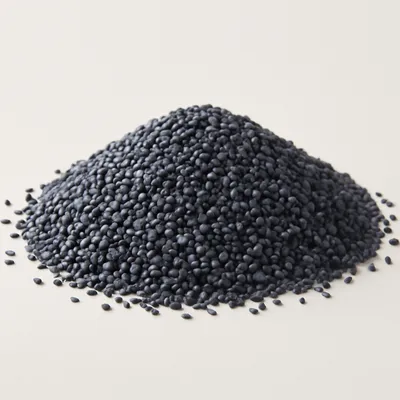
Part of the wider German-pretzel family, possibly reaching back to the Saxon (German) settlers who came to Transylvania in the 12th century. Its fame in Romania, however, rests on the eastern town of Buzău: legend holds that Greek merchants who settled there introduced the recipe around 1800, and Buzău pretzels have been renowned ever since — 'Covrigii de Buzău' earned an EU protected-origin mark in 2007. Sold from ubiquitous street kiosks (covrigării) from Bucharest to every provincial town, it is the national grab-and-go snack.
The crust is glossy, chewy and faintly tangy from the alkaline dip, crackling with salt and nutty seeds, while the inside stays soft and bready. Best eaten still warm from the kiosk, when the steam fogs the paper bag.
The alkaline bath raises the surface pH, boosting Maillard browning for that deep mahogany crust and the pretzel's signature tang. Strong kneading develops gluten so the crumb turns springy and chewy rather than crumbly.
Variations
Plain salted; topped with poppy seeds, sesame or coarse salt; sweet versions brushed with sugar; some are filled with chocolate, Turkish delight (rahat), or cheese.
On the Palate
Where Covrigi sits in the Romanian flavor cloud
Ingredients
Serves 8
How it's made
8 steps · 25 min
- 115 min
Make a yeasted dough from flour, water, yeast, a little oil and salt, and knead until smooth and elastic.
Watch outKnead until the dough turns smooth and springs back when poked — that gluten is what makes covrigi chewy instead of crumbly.
- 260 min
Cover and let it rise until doubled, about an hour.
- 310 min
Divide the dough and roll each piece into a long rope, then twist into a pretzel ring or knot.
- 415 min
Let the shaped covrigi proof briefly while you prepare the bath.
- 53 min
Dip each one in a warm baking-soda solution to gelatinize the surface.
Watch outJust a quick dip in the warm soda bath — a few seconds a side; leave them in too long and the surface goes slimy.
- 63 min
Lift out, then immediately coat with poppy or sesame seeds and coarse salt.
- 75 min
Arrange on lined trays and let rest a few minutes.
- 815 min
Bake in a hot oven until deeply browned and glossy, then eat warm.
Watch outPull them when the crust is deep mahogany and glossy — the alkaline skin browns fast, so watch the color, not just the clock.


