A leavened Calabrian bread baked as a large flat ring with a hole in the middle, most closely associated with the Catanzaro area but found across the region. The dough is a simple one of soft '0' flour, yeast, water, olive oil and salt, shaped into a low disc, pierced through the centre to open a ring, and baked until pale gold. Where it differs from ordinary bread is in how it is used: the round is split horizontally and filled, most famously with morzello, the city's offal stew, or with suffritto of pork and giblets, the crumb soaking up the sauce. In some areas a smaller, fluffier bagel-like form is eaten, and on the Tyrrhenian coast there is a fried version dressed with honey.




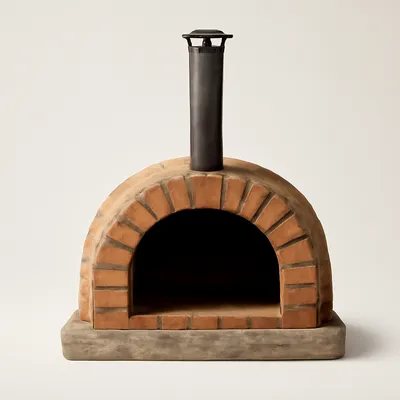
Pitta belongs to the old everyday bread tradition of Calabria, and the Catanzaro country seems always to have been its heartland; the word there long meant simply flat bread. It was a humble product, regarded as lesser than a proper loaf, and was often baked first as a way to test the heat of the wood oven before the day's bread went in. The name is generally derived from the Latin picta, «painted», which is itself usually traced back to the ancient Greek pikté, a fermented or baked pastry — the same root that gives both the Greek pita and, by many accounts, the Italian pizza; this shared Mediterranean ancestry, and the bread's survival in Greek-speaking villages of the south, is taken to point to Hellenic roots, though the deep origin is not firmly documented. The dough also underlies a celebrated Christmas sweet, the pitta 'mpigliata of the Cosenza area.
Fresh from the oven a good pitta has a thin, crisp crust giving way to a soft, open, slightly chewy crumb, faintly rich with olive oil. Plain, it is mild and bready, a vehicle more than a flavour in itself. Its moment comes split and filled: the warm crumb drinks up the red, peppery juices of morzello or suffritto and turns savoury and yielding at the cut face while the outer crust stays firm enough to hold the sandwich together. A stale or over-baked pitta is dry and hard and will not take up the sauce; the whole point is a crumb soft enough to soak.
Pitta is a straightforward yeast-leavened bread, and its character comes from shape and crumb rather than any special technique. Yeast ferments the dough's sugars to carbon dioxide, which the gluten network traps as the bread proves and then sets in the oven, giving the open, springy crumb; the olive oil shortens the gluten a little for tenderness and helps keep the crumb moist. The ring shape is functional: with a hole in the middle and a thin profile the bread bakes quickly and evenly, with no thick, doughy centre to stay raw — which is exactly why it suited testing a wood oven's heat. Splitting and filling the round turns that absorbent, open crumb into a sponge for the sauce of whatever it holds.
Variations
The form shifts across Calabria: around Catanzaro the pitta is the classic split-and-filled ring; in the Reggio and Vibo Valentia areas it is rounder, softer and more bagel-like; at Bova, a historically Greek-speaking town, the lestopitta is a quick unleavened version cooked on a greased pan. The biggest leap is from savoury to sweet: the pitta 'mpigliata (also pitta 'nchiusa), tied to the Cosenza town of San Giovanni in Fiore, takes a thin oil-and-wine pastry, fills it with walnuts, raisins, candied peel, cinnamon and cloves, rolls it into coils set in a ring and bakes it glazed with honey — a Christmas sweet that shares the pitta's ring shape but little else.
On the Palate
Where Pitta Calabrese sits in the Italian flavor cloud
Ingredients
Serves 6How it's made
6 steps · 30 min active + 2 hours waiting
- 110 min
Dissolve fresh yeast in warm water and combine with soft '0' flour, olive oil and salt.
- 2120 min
Knead to a smooth, elastic dough, then cover and leave to rise until doubled, about one to two hours.
Watch outKnead until the dough is smooth and elastic, then let it rise until doubled — under-proved and the crumb bakes dense instead of open and springy.
- 35 min
Knock back the dough and shape it into a low, flat round.
- 410 min
Open a wide hole through the centre with your fingers to form a ring, and let it rest briefly.
- 530 min
Bake in a hot oven until the crust is firm and pale gold, about 30 minutes.
Watch outBake the ring until the crust is firm and pale gold — the hole in the middle lets the thin bread bake through evenly with no raw doughy center.
- 610 min
Cool slightly, then split the ring horizontally and fill the warm crumb with morzello or suffritto.
Archive tool suggestions — not reviewed
These legacy suggestions have not been evidence-reviewed and are not presented as required tools.