
A soft, enriched Sicilian sweet bread, oval-bodied and crowned with a small round knob of dough pressed into the top. The crown gives the bun its name: the «tuppo» is the low coiled bun of hair that Sicilian women once wore. The dough is a brioche enriched with butter, egg, milk and often a little lard, scented with citrus zest, leavened, shaped, glazed with egg, and baked until deep gold and feather-light inside. It is the fixed companion of Sicilian breakfast: split open and stuffed with granita in summer, or with gelato, so the cold filling soaks into the warm crumb. It is served sweet, as breakfast or a hot-weather snack, across the island.






The brioche col tuppo is a 19th-century Sicilian pastry that took hold in the cafés and pastry shops of Palermo, Catania and Messina, where it has long been served alongside granita and gelato. Its exact birthplace is unrecorded and is claimed by several towns — Catania and Messina both press the case, and one often-repeated legend credits the cook Francesco Procopio dei Coltelli — so no single inventor or date can be confirmed. What is documented is the name: «tuppo» is the Sicilian word for the coiled bun of hair traditionally worn by the island's women, which the dough crown imitates; the word is generally traced back through Norman and French roots (the French «toupet», a tuft of hair). The bun spread across Sicily as the everyday vehicle for granita and ice cream and remains the standard breakfast bread of the island.
Pull the round tuppo off the top first — that is the custom and the best bite, a dense little knot of crust and crumb. The body tears in soft, buttery, slightly stringy strands, eggy and faintly sweet, with a thin burnished crust from the egg wash. Split and filled with granita, the contrast is the whole point: warm pillowy bread against icy almond, lemon or coffee granita, the crystals melting into the crumb as you eat. Filled with gelato it turns into a handheld ice-cream sandwich. A good one is light and fragrant of butter and zest; a bad one is dry, dense or yeasty from a rushed or over-proofed dough.
This is an enriched, sweet leavened dough, and the high proportion of butter, egg and milk is what makes the crumb so soft. Fat coats the flour proteins and shortens the gluten strands, so the bread tears tender rather than chewy, while the eggs add richness and a tender set; a long, slow rise (often with a portion of dough left overnight) develops flavour and a fine, airy crumb. The two-piece shape is made by hand: a larger ball for the body and a small ball pressed firmly into a dimple on top to form the tuppo, which must be anchored well or it topples during the rise and bake. An egg wash brushed on before baking gives the deep-gold, glossy crust through the Maillard browning of its proteins and sugars. Baked hot and not too long, around 180°C, the inside stays moist and light; over-baking dries the rich crumb quickly because so much of its softness depends on retained moisture.
Variations
Regional rivalries shape it: Catania, Messina and Palermo each claim their own. The dominant tradition pairs the bun with granita — almond, lemon, coffee, mulberry, pistachio or strawberry, by season and by town — eaten dipped or filled. In the colder months it is split and filled with gelato instead, or simply eaten plain with breakfast coffee. Some bakers scent the dough with vanilla in place of or alongside the citrus zest, and recipes vary in their use of lard versus all butter. The same enriched dough, hollowed and filled, also underlies other Palermo sweets such as the fried iris.
On the Palate
Where Brioche col Tuppo sits in the Italian flavor cloud
Ingredients
Serves 8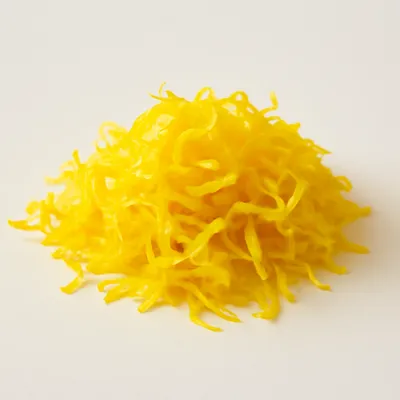

How it's made
9 steps · 40 min active + 2 hours 40 min waiting
- 110 min
Warm the milk, dissolve the yeast in it with a little sugar, and let it foam.
- 215 min
Mix the flour with sugar, the remaining warm milk, eggs, citrus zest and salt, add the yeast, and knead to a smooth dough.
- 320 min
Work in the softened butter (and a little lard, if using) a piece at a time until the dough is glossy and elastic, then cover and let it rise until doubled.
Watch outWork in the butter a piece at a time until the dough is glossy and elastic — add it too fast and the dough stays greasy and won't build a fine crumb.
- 48 min
Knock back the dough, divide into portions, and from each cut off a small piece for the tuppo.
- 510 min
Roll each large piece into a smooth ball, press a deep dimple in the top, and seat a small ball firmly into it to form the knob.
Watch outPress the small ball firmly into a deep dimple so the tuppo anchors — seat it shallow and the knob topples off during the rise and bake.
- 690 min
Set the shaped buns on a lined tray, cover, and let them prove until puffy.
- 75 min
Brush all over with beaten egg, taking care around the tuppo so it keeps its shape.
- 822 min
Bake at about 180°C until deep golden and risen, then cool on a rack.
Watch outBake to deep golden and risen — an enriched dough pulled pale is doughy and dense inside despite a set crust.
- 93 min
Serve split and filled with granita or gelato, or plain with coffee.
Archive tool suggestions — not reviewed
These legacy suggestions have not been evidence-reviewed and are not presented as required tools.


