Struffoli are the traditional Christmas sweet of Naples: pea-to-hazelnut-sized balls of a soft egg dough — flour, eggs, sugar, a little butter or lard, citrus zest and often a splash of liqueur such as anisette or limoncello — deep-fried until golden and crisp, then tossed in warm melted honey so they clump together. The sticky balls are piled into a tall mound or a ring shaped like a wreath, scattered with candied citron and orange (canditi) and tiny coloured sugar sprinkles called diavolilli. They are made in big batches over the Christmas and Epiphany season, kept on the sideboard, and shared with family and visitors. Struffoli are a recognized traditional agri-food product (PAT) of the Campania region.




Struffoli are the classic Christmas sweet of Naples and belong to a wide family of honey-coated fried-dough sweets found across the former Magna Graecia and the Mediterranean. Honey-soaked fried dough is genuinely ancient in the Greek world — the poet Archestratus (4th century BC) describes an enkris, a dough ball fried in oil, in a text preserved by Athenaeus's Deipnosophistae. The dish's name is said to come from the Greek strongoulos (στρογγύλος), 'rounded', describing the shape; this Greek etymology is widely repeated but not firmly documented. By tradition the sweet is also said to have been perfected in Neapolitan convents — the nuns of the Croce di Lucca and dello Splendore convents are often named — who made it in quantity at Christmas to gift to noble benefactor families; the convent attribution is repeated in local histories but rests on weak documentation. What is solid is that struffoli is an entrenched Campanian Christmas tradition, recognized as a Prodotto Agroalimentare Tradizionale (PAT) of Campania. Close relatives carry other names by region: cicerchiata in Abruzzo, the Marche and Molise, scalilli in Calabria, and pignolata in Sicily; the Greek loukoumades (honey-soaked fried dough balls) are a living cousin in the same tradition.
A good struffolo has a thin, light shell that gives a faint crisp crack, then a soft, almost cake-like interior — the dough is tender, not bready. Over it sits a thin, glossy coat of honey, sticky and barely sweet-sharp, carrying the perfume of lemon or orange zest and a whisper of anise from the liqueur. The candied fruit adds chewy citrus bursts and the diavolilli a faint sugary crunch. Eaten within a day or two the balls still have some bite; left too long, or drowned in too much honey, they go soft and cloying — the honey should bind and gloss them, not soak them into a sticky paste. The pieces pull apart from the mound a few at a time, eaten with the fingers.
Two pieces of technique decide the result: the fry and the honey. The balls are deep-fried at about 170-180°C; at that heat the water near the surface flashes to steam and puffs the dough slightly, the surface dehydrates and browns through the Maillard reaction, and because each ball is so small its high surface-to-volume ratio lets it crisp through quickly while the centre stays soft. Too cool an oil and they sit and soak up fat, turning greasy; too hot and the shell colours before the inside cooks, leaving a raw centre. The honey is gently warmed — heat lowers its viscosity so it turns thin and pourable and coats every ball evenly; some cooks add a little sugar. As the honey cools it thickens again and its concentrated sugars set to a tacky glaze, which is what glues the balls into a single mound or ring. The pieces must be hot or warm when tossed, and the honey not boiled hard, or it stiffens and seizes rather than coating.
Variations
The same honey-fried-dough sweet takes different names and shapes around southern and central Italy. In Abruzzo, the Marche and Molise it is cicerchiata — the name from the cicerchia (grass pea), whose little balls the dough mounds resemble — usually built into a ring or crown and, there, more a Carnival sweet than a Christmas one. In Calabria it is scalilli, in Sicily pignolata (sometimes glazed with chocolate and lemon icing rather than honey). Decoration varies: candied citron and orange, coloured diavolilli sprinkles, and in some versions toasted almonds or a dusting of cinnamon. Across the Ionian Sea the Greek loukoumades — fried dough balls bathed in honey syrup — belong to the same Mediterranean lineage, as do the related xerotigana of Crete.
On the Palate
Where Struffoli sits in the Italian flavor cloud
Ingredients
Serves 8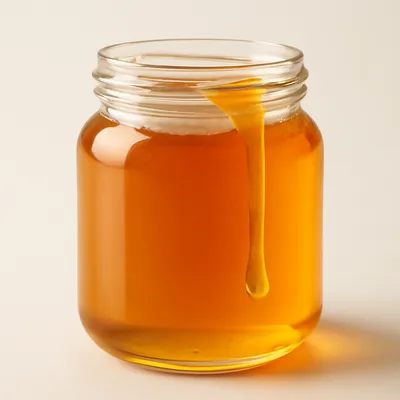


How it's made
8 steps · 40 min
- 140 min
Beat the eggs with the sugar, then work in the flour, softened butter, a pinch of salt, the citrus zest and a splash of anisette to a smooth, soft dough; rest it, covered, for about 30 minutes.
- 220 min
Roll the dough into thin ropes and cut them into small pieces, then roll each into a ball the size of a pea to a hazelnut.
- 318 min
Heat the oil to about 170-180°C and deep-fry the balls in batches until golden and crisp, stirring so they colour evenly.
Watch outHold the oil at 170-180C — too cool and the balls soak up fat and go greasy; too hot and the shell colors before the centers cook.
- 45 min
Lift the balls out with a slotted spoon and drain them on paper towels.
- 56 min
Warm the honey gently in a wide pan until it is fluid and thin, without letting it boil hard.
Watch outWarm the honey just until it turns thin and fluid — don't let it boil hard, or it darkens and turns brittle instead of coating glossy.
- 66 min
Take the honey off the heat, add the fried balls and most of the candied fruit, and turn gently until every ball is coated.
Watch outTake the honey off the heat before folding the balls in — tossing them in a still-boiling pot fries the honey and dulls the coat.
- 75 min
Tip the struffoli onto a serving plate and shape them with damp hands into a tall mound or a ring.
- 810 min
Scatter with the diavolilli sprinkles and the remaining candied fruit, and leave to set before serving.
Archive tool suggestions — not reviewed
These legacy suggestions have not been evidence-reviewed and are not presented as required tools.